
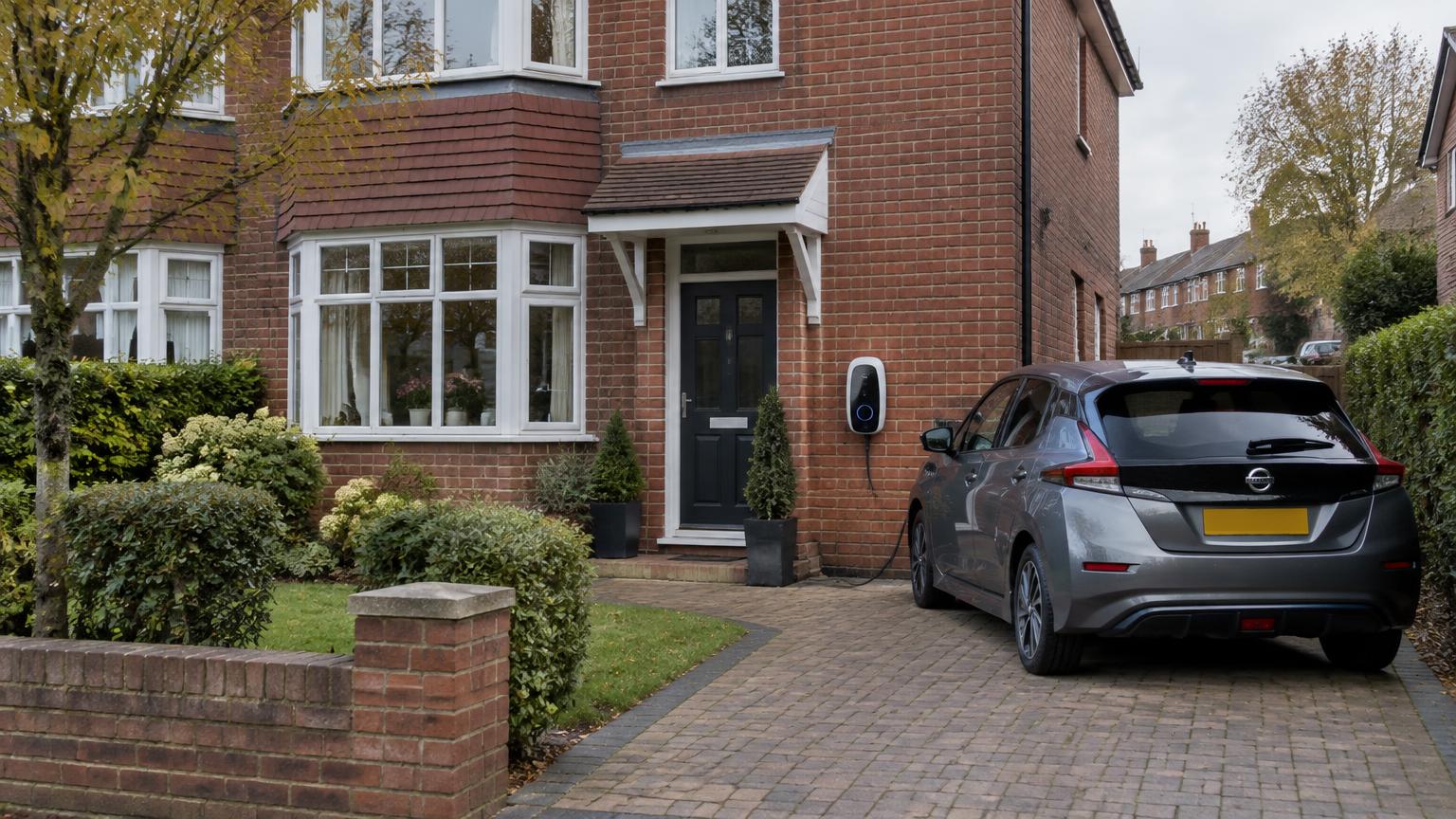
Check that your property can accommodate the charger before comparing models: measure the available wall space and cable route, and check where the car’s charging socket sits when parked.
The charger’s cable must reach without crossing a path or creating a trip hazard.
Your car’s onboard charger sets the maximum AC charging rate, so a higher-powered wall unit may not charge it faster; also check your electrical supply and installation costs.
Identify Your Vehicle’s Charging Needs
Check the vehicle’s charging port and maximum AC charging rate, measured in kW. A home charger with a higher rating can’t make the car charge faster than its onboard charger allows.
Check the battery capacity in kWh and your usual daily mileage. These help estimate how much energy you need to replace overnight; the right amount depends on your driving and when the car is parked at home.
If you have more than one EV or expect to change cars, check that the charger will suit both vehicles.
Compare EV Charging Levels
Level 1: Standard domestic socket
Level 2: Dedicated charge point
Speed: Depends on charger rating
Best for: Different charging routines
Check: Vehicle and charger specifications
Level 1 vs. Level 2
Level 1 uses a standard UK 230V socket and is usually too slow for regular charging unless your mileage is low and the car can stay plugged in for long periods.
Check the vehicle’s charging rate and the socket’s condition; avoid extension leads, and don’t use a socket that’s damaged or overheating.
Level 2 charging means a dedicated 240V supply in UK product descriptions, typically a 7kW home charger on a single-phase supply. It needs a suitable circuit, protective devices and an installation assessment.
A competent DIYer can compare charger specifications and check their parking and electricity setup, but shouldn’t install or wire the circuit.
Use an electrician registered with a competent person scheme, such as NICEIC or NAPIT, to install the charger and check compliance with Part P of the Building Regulations.
The electrician should assess the consumer unit, cable route and available electrical capacity before quoting.
Installation costs vary with the property and any electrical upgrades, so compare itemised quotes rather than assuming a standard price.
Typical cost: £800 to £1,500 installed
Best for: regular home charging
Level 1: low mileage, long parking
Level 2: dedicated 7kW charger
Check first: consumer unit and cable route
Prices vary: check current quotes
Good
- Level 1 can use an existing socket if it’s suitable and safely assessed.
- A 7kW Level 2 charger can add charge faster than a standard socket.
- A dedicated circuit supports regular charging at home.
- Smart chargers can schedule charging around a suitable tariff.
Not so good
- Level 1 may not replace a day’s driving overnight.
- Level 2 installation can cost more if the consumer unit needs upgrading.
- A long cable route can increase installation work and cost.
- A smart tariff only helps if its rates and charging schedule suit you.
A Level 2 charger suits drivers who need dependable overnight charging and can justify the installation cost through regular use.
Level 1 may be enough for low mileage, but it isn’t worth paying for faster charging if the car sits unused for long periods.
A qualified electrician must install the circuit and charger; a competent DIYer shouldn’t do electrical work on the installation.
Best for: regular drivers with off-street parking
Skip it if: low mileage makes a socket sufficient
Put your own figures into our payback calculator.
Charging Speed Differences
Level 1 charging uses a standard UK socket, but it’s slow and isn’t a practical way to charge many EVs regularly. The time for a full charge varies with battery size, the car’s charging limit and how much energy you need to add.
A home Level 2 charger, usually rated at 7 kW, can charge many EVs overnight. A qualified electrician registered with a competent person scheme should install it and check the home’s electrical supply; the installation must comply with BS 7671 wiring regulations.
DC rapid chargers can add useful range during a stop, but they cost more to use and only work with compatible vehicles and charging points. Check your car’s maximum charging rate: a higher-rated charger won’t make it charge faster than the car allows.
Choose based on your daily mileage, parking time and access to public charging. If your car is parked overnight and a 7 kW charger meets your needs, paying extra for faster charging is unlikely to be worthwhile.
Choose a Charger for Your Property
Best for: Homes with off-street parking
Charger power: Match the unit to your car
Outdoor rating: Check the manufacturer’s data sheet
Smart features: Scheduling and solar controls
Before buying: Check cable length and warranty
Good
- A tethered cable avoids handling a separate charging lead.
- Smart scheduling can shift charging to cheaper tariff periods.
- Solar-compatible controls can use surplus generation when available.
- A longer cable may reach a car parked in different positions.
Not so good
- A higher-rated charger may need an electrical supply upgrade.
- Outdoor units need a suitable weather-resistance rating.
- Solar charging controls add cost and may not suit every household.
- A short cable can limit where you park.
A home EV charger suits households with off-street parking and regular charging, particularly if a suitable tariff can lower charging costs.
Check your car’s maximum AC charging rate, the charger’s output in kW, cable length and electrical supply before comparing quotes.
A smart unit isn’t worth paying extra for if you won’t use its scheduling or solar controls.
A registered electrician should assess the supply and install the charger under the applicable wiring rules; check current requirements with the installer.
Best for: Drivers with off-street parking and regular charging
Skip it if: You can’t charge at home or the supply upgrade makes the quote uneconomic.
Check Your Electrical Capacity
Check the consumer unit’s rated capacity and the spare capacity on the circuit before choosing an EV charger. A qualified electrician should check the supply, existing loads and proposed charger; the consumer unit’s main rating alone doesn’t show how much capacity is available.
A competent DIYer can note the consumer unit details, but an electrician registered with a competent person scheme must assess and install the circuit to comply with Part P of the Building Regulations. Ask whether the design allows for future electrical loads.
Assess Available Amperage
Check the rating of your home’s main fuse and consumer unit before choosing an EV charger. The main fuse limits the electricity available to your home; the consumer unit’s main switch rating doesn’t show how much spare capacity you have.
Ask your electricity supplier to confirm the main fuse rating, then have a qualified electrician check the existing circuits, household loads and supply. A suitable EV charger needs a dedicated circuit, and the electrician must assess whether the supply can support it safely.
An unused breaker doesn’t prove that capacity is available.
A competent DIYer can note the fuse rating and gather electricity records, but mustn’t remove covers or work on fixed wiring. A qualified electrician registered with a competent person scheme should assess and install the charger, following BS 7671 and the applicable building regulations.
Review Panel Capacity
Check the consumer unit for space for a dedicated EV charger circuit and its protective devices.
A qualified electrician should confirm that the unit’s rating, condition and compatibility meet the charger manufacturer’s requirements and current wiring regulations.
You can look for spare breaker ways and visible signs of damage, overheating or crowded wiring, but don’t remove the consumer unit cover or carry out electrical work.
An electrician registered with a competent person scheme must assess the installation and fit the circuit and protection.
Older or damaged units may need repairs or replacement before the charger can be installed safely.
Plan For Load Growth
Estimate future electrical demand before choosing a charger or upgrading your consumer unit. A heat pump, home extension or second electric vehicle could increase peak demand, but the effect depends on each appliance’s power rating in kW and when it runs.
Ask a registered electrician to check your electricity supply, consumer unit and proposed loads. They can assess whether the existing installation can support the extra demand or needs an upgrade.
For more than one EV, ask whether the charger supports load balancing; this can limit charging power when other high-demand appliances are running.
You can list planned appliances and their rated power, but a qualified electrician should assess the supply and carry out electrical work.
Use an electrician registered with a competent person scheme, such as NICEIC or NAPIT, and ask them to confirm compliance with BS 7671. The safe capacity depends on your property and installation.
Check Connectors and Smart Features
Check the connector on the charger against your EV’s charging port and the stations you use. Confirm compatibility before buying, particularly if you have more than one vehicle or may change models. An adapter may work, but check the vehicle and charger manufacturers’ guidance first.
Smart features are useful if they match your routine. An app may let you monitor charging, set schedules, adjust power and receive stop alerts. Check that the charger works with your preferred app or energy system; otherwise, you may pay for features you don’t use. Simple controls may be the better choice.
Plan Installation and Permits
Ask a registered electrician to inspect the consumer unit, wiring and proposed charge point before you choose a charger. They can check whether your electrical supply can support it and whether the installation needs a dedicated circuit, consumer-unit changes or a supply upgrade.
A competent DIYer can compare charger specifications, check local rules and arrange access. Don’t install or connect the charge point yourself: a qualified electrician should carry out the electrical work and confirm whether it must comply with Part P of the Building Regulations.
In England and Wales, use an electrician registered with a competent person scheme, or arrange building control approval where required. Rules differ across the UK.
Check whether your council or distribution network operator requires approval, notification or an inspection before work starts. Agree who’ll handle paperwork and arrange any inspections, and ask the electrician how approvals could affect the timetable.
Keep the charger’s technical specifications available, including its power rating in kW.
Estimate Costs and Find Incentives
Use itemised quotes to compare the EV charger, labour and any wiring, consumer-unit or electricity-supply upgrades. Ask whether each quote includes permits, inspections and repairs to surfaces disturbed during installation; check who’ll carry out the electrical work and whether it requires a qualified electrician registered with a competent person scheme.
Check current local and national grants, energy supplier offers and tax relief on GOV.UK or with the relevant provider. Eligibility can depend on the charger, property, installer and application date, so confirm the rules, documents, deadline and payment timing before work begins. Don’t count an incentive towards your budget until you know you qualify; check that its terms are current at the time of writing.
Put your own figures into our payback calculator.
Match Charging Speed to Your Routine
Good
- An overnight Level 2 charger can refill the battery before morning.
- A charger rated in kW at or below your vehicle’s limit avoids paying for unused power.
- Workplace parking gives a Level 2 charger several hours to add charge.
Not so good
- A higher-powered charger can’t exceed your vehicle’s maximum AC charging rate.
- Faster charging brings little benefit if the car stays parked overnight.
- Sharing one charger can leave less time for each vehicle to charge.
Frequently Asked Questions
Can I Share One EV Charger Among Multiple Households?
One EV charger can serve several households if everyone agrees on access and the electrical supply can support the combined load. A typical home charger delivers 7 kW; load management can reduce its output when other high-power appliances are running.
Agree charging times or use a charger with access controls and scheduled charging. A qualified electrician registered with a competent person scheme should check the supply, install the charger and confirm that its load-management settings meet the installation requirements. DIY users should not connect or alter the charger’s fixed wiring.
How Can I Protect an Outdoor EV Charger From Theft?
Anti-theft fixings: Use tamper-resistant bolts to secure the charger to a wall or concrete base.
Cable security: Lock the charging cable away when it is not in use.
Visibility: Put the charger in a well-lit spot covered by an existing security camera.
Alerts: Turn on app notifications for charger use or faults, if the manufacturer offers them.
Installation: A competent DIYer can fit a suitable lock and adjust app settings. A qualified electrician registered with a competent person scheme must install or alter the charger’s electrical supply; follow the manufacturer’s instructions and relevant BS 7671 wiring regulations.
Does Installing an EV Charger Increase Property Value?
An EV charger can improve resale appeal if buyers in your area own electric cars, but it does not guarantee a higher sale price. You may not recover the installation cost: the value depends on local demand, the charger’s condition and whether the home has a suitable parking space and electrical supply. A qualified electrician registered with a competent person scheme should install the charger and handle the electrical work under Part P of the Building Regulations.
Can Tenants Install an EV Charger in a Rental Property?
Like adding a porch, installing an EV charger can make a rental property more convenient, but get the landlord’s written permission first. Check the tenancy agreement, local rules and the charger’s electrical requirements. Agree who pays, who owns the charger and who must remove it or make good the property when the tenancy ends.
What Maintenance Does a Home EV Charger Require?
Inspect the charger body, socket and cable regularly for cracks, scorching, dirt or loose parts. Stop using it and contact a qualified electrician if you find damage, overheating or a fault; do not open the unit yourself.
Keep vents clear and follow the manufacturer’s cleaning and inspection instructions. A competent DIYer can wipe the exterior with the charger switched off, but repairs and electrical checks should be done by a qualified electrician.