
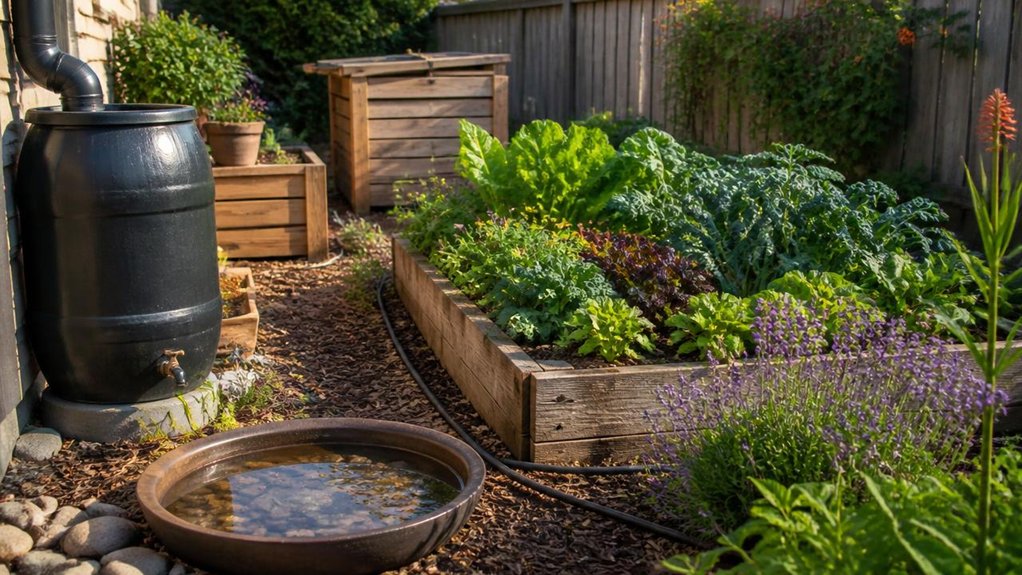
Water-wise garden projects can cut water use, but whether they lower bills depends on your water supplier’s charges, garden size and watering habits. Improving soil, mulching beds and choosing plants suited to your local conditions can help soil hold moisture; a water butt can collect rain for later use.
There is no reliable saving or payback figure without your current water use, unit price and project costs. Check your water bill and local supplier’s charges before spending. A lawn swap may not save money if the replacement needs costly materials or regular watering while it establishes.
Typical cost: £20 to several hundred pounds
Best for: Gardens watered regularly in summer
DIY work: Mulching, planting and water butts
Payback depends: Water charges and use
Good
- Mulch reduces moisture loss from exposed soil.
- A water butt stores rainwater for garden use.
- Climate-suited plants can need less watering once established.
Not so good
- A water butt may not supply enough water in a dry spell.
- New plants may need regular watering while they establish.
- Replacing a lawn can cost more than the water it saves.
- Savings are limited where water is unmetered or garden use is low.
This suits households that water their gardens often and can make low-cost changes, because using less mains water may reduce metered bills. It is less worthwhile for small gardens or households that rarely water, where savings may not repay materials or labour. Mulching, planting and fitting a water butt are usually suitable DIY jobs; no electrical or gas work is involved.
Best for: Metered homes with thirsty gardens
Skip it if: You rarely water or have little garden space
Put your own figures into our payback calculator.
Improve Soil to Hold More Water
Add compost or well-rotted leaves to improve how soil holds water. Spread a layer about 25–50 mm deep over the bed and mix it into the top 100–150 mm of soil before planting. Use finished compost; fresh material can damage roots.
Organic matter helps sandy soil retain moisture and can make compacted soil easier for roots to penetrate. The result depends on soil type, compost quality and how much you add. This is a low-cost garden improvement, but it doesn’t have a reliable household energy saving or simple financial payback.
Organic matter can improve moisture retention and soil structure, though results vary and there’s no simple financial payback.
A competent DIYer can spread and mix compost using hand tools. No electrician, Gas Safe engineer or MCS-certified installer is needed. Avoid digging deeply around established plants, where it could disturb roots.
Good
- Finished compost adds organic matter to the soil.
- A 25–50 mm layer is straightforward to spread.
- Mixing it into the topsoil can help roots reach compacted ground.
Not so good
- Compost doesn’t remove the need to water during dry spells.
- Fresh compost can harm plant roots.
- Results vary with soil type and compost quality.
Best for: Gardeners improving sandy or compacted soil.
Skip it if: You need an immediate fix for dry soil.
Mulch Garden Beds to Reduce Evaporation
Compost helps soil hold moisture, while mulch reduces evaporation from the soil surface. Spread a 50–75 mm layer of organic mulch over garden beds, keeping it clear of plant stems and tree trunks to reduce the risk of rot and pests.
Shredded leaves, bark and straw are common options; top up the layer as it breaks down.
Mulch also suppresses weeds, which compete with plants for water. Check the soil beneath the mulch before watering: if it’s still damp, wait before irrigating.
Choose Climate-Ready, Drought-Tolerant Plants
Choose plants suited to your local rainfall, soil and sun exposure. Native species are often a sensible starting point because they’re adapted to local conditions, but check that each plant suits your garden.
Ask a local nursery or council gardening service for suitable drought-tolerant varieties. Group plants with similar watering needs, and check their mature size, flowering season and wildlife value before buying. Plant labels can help you confirm whether a choice fits your site.
Water Garden Roots With Drip Irrigation
Drip irrigation can help reduce water use, but the savings depend on your garden, water source and local charges. It’s most useful for beds that need regular watering; it’s unlikely to pay for itself in a small garden or where rainfall meets plant needs.
Emitter spacing and flow rate vary by product, so follow the manufacturer’s guidance. Place emitters near the root zone, move them as plants grow, and check that water reaches the roots without pooling. Mulch can slow evaporation; keep it clear of stems to reduce the risk of rot.
A competent DIYer can lay and maintain low-voltage or unpowered irrigation tubing. Mains-powered timers or pumps may need a qualified electrician; electrical work must comply with Part P of the Building Regulations in England and Wales. Check local rules elsewhere in the UK.
Typical cost: Varies by system and garden
Water saving: Depends on watering habits
Best for: Beds needing regular watering
DIY suitability: Tubing and emitters
Payback: Depends on water charges
Good
- Emitters deliver water near plant roots.
- Mulch helps soil retain moisture.
- Timers can avoid watering during hot parts of the day.
Not so good
- Blocked emitters can leave plants dry.
- Leaks waste water and may go unnoticed.
- Drip lines need repositioning as roots spread.
- Rainfall can make scheduled watering unnecessary.
Drip irrigation suits gardeners who regularly water beds and can target emitters at plant roots, potentially reducing metered water use.
It isn’t worth buying solely to cut bills if your garden is small, rainfall usually meets plant needs, or you don’t pay for water by volume.
Costs and savings vary too much to estimate a reliable payback without your system price, water charges and current use.
Best for: Regularly watered beds with metered water
Skip it if: Rainfall usually waters your garden
Put your own figures into our payback calculator.
Collect Rainwater for Garden Use
Typical cost: £30 to £150
Best for: Gardens with a nearby downpipe
Water saving: Depends on rainfall and use
DIY suitability: Most parts are DIY-friendly
Payback: Depends on mains water charges
Good
- A water butt stores roof runoff for watering plants.
- A secure lid keeps out debris and mosquitoes.
- A raised stand makes the base tap easier to reach.
- An overflow hose can direct excess water away from the house.
Not so good
- A water butt won’t collect much if the roof has little runoff.
- Stored water may run out during a long dry spell.
- A full butt needs a sound, level base.
- Poorly directed overflow can leave water beside the house.
A water butt suits gardeners who can use stored rainwater regularly and want to reduce mains water use. A basic butt and stand may cost less than a larger system, but savings depend on rainfall, garden use and the household’s water charges, so payback can be slow. You can fit the butt, stand, diverter and overflow hose yourself if you follow the manufacturer’s instructions and use a stable base. No qualified installer is normally needed.
Best for: Gardens with a downpipe and space for a stable base
Skip it if: You have little roof runoff or rarely water the garden
Replace Thirsty Lawn With Low-Water Plants
Replace the lawn with drought-tolerant plants suited to your soil and local conditions. Group plants with similar water needs, then water them at the base; this makes it easier to direct water where it’s needed.
Add a mulch layer about 50–75 mm deep, keeping it clear of plant stems, to slow moisture loss. Check local water-company guidance before changing your garden, as restrictions may apply.
Choose Drought-Tolerant Plants
Typical cost: £5 to £50 per plant
Best for: Gardens with dry, sunny areas
Water saving: Depends on lawn area
Main upkeep: Watering while plants establish
Check first: Local soil and sunlight
DIY scope: Planting and mulching
Good
- Native plants are adapted to local conditions.
- Ornamental grasses and succulents add texture.
- Checking mature size helps avoid overcrowding.
- Mulch reduces moisture loss from soil.
Not so good
- New plants need regular watering while establishing.
- Some drought-tolerant plants still need irrigation in dry spells.
- Poor plant choices may not suit local soil or shade.
- Replacing thirsty lawn can involve substantial digging.
This suits gardeners replacing lawn or thirsty borders who want lower watering needs over time.
The money saving depends on your water meter, garden size and how much you currently water, so there’s no reliable payback figure without those details.
Don’t bother if you expect an immediate reduction in bills: new plants need watering as they establish, and savings vary.
Best for: Sunny gardens with suitable soil
Skip it if: You need quick bill savings.
Group Plants by Water Needs
Group plants by how quickly their soil dries, not just by their water needs. Put drought-tolerant plants together in sunny, free-draining areas, and keep thirstier plants where the soil stays moist or a hose is easy to reach.
Check each spot for sun, afternoon shade, wind and runoff before planting. These conditions affect how often you need to water, so plants with different needs may still suit the same area if their soil and exposure are similar.
Grouping plants this way can make watering simpler and reduce unnecessary watering, but it doesn’t guarantee lower water bills.
Good
- Drought-tolerant plants suit areas that dry quickly.
- Afternoon shade can slow soil drying.
- Wind can make exposed soil dry faster.
- Runoff can leave some planting areas wetter.
Not so good
- Grouping by water needs alone ignores soil type.
- Full sun can increase watering needs.
- Thirsty plants may need frequent watering in dry weather.
- A hose nearby doesn’t make plants drought-tolerant.
Mulch to Retain Moisture
Mulch slows water loss from the soil, so you may need to water less often. Spread organic mulch around plants that need consistently moist soil, but keep it a few centimetres clear of stems and trunks to reduce the risk of rot and pests.
Check the guidance for your mulch type before applying it. A layer around 50–75 mm deep is often suitable; too little may not shade the soil, while too much can restrict air and water. Top it up as it breaks down.
Frequently Asked Questions
Can Smart Irrigation Controllers Reduce Water Use in Home Gardens?
Smart irrigation controllers can reduce water use by skipping scheduled watering after rain or adjusting run times to local weather. Soil-moisture sensors go further by checking moisture at the sensor’s location, but results depend on sensor placement, soil type and the plants’ needs.
A controller may not be worth buying if you already water by hand or have a small garden. Check whether it works with your existing valves and whether it needs a mains connection; follow the manufacturer’s instructions for electrical work. A competent DIYer can set schedules and install compatible low-voltage sensors. Use a qualified electrician for new mains wiring, in line with Part P of the Building Regulations in England and Wales.
Typical cost: £[check current prices]
Water saving: Depends on garden and weather
Best for: Gardens with automatic irrigation
Payback: Depends on water charges
Good
- Weather-based schedules can skip watering after rainfall.
- Soil-moisture sensors measure conditions near their probes.
- Compatible controllers can adjust existing irrigation schedules.
- Rain sensors can prevent some unnecessary watering.
Not so good
- Poorly placed sensors may not reflect moisture across the garden.
- Plants in different soils may need separate watering zones.
- A controller cannot fix leaking pipes or blocked emitters.
- Savings depend on current watering habits and local water charges.
A smart controller suits gardens with automatic irrigation when weather-based scheduling can reduce paid water use. It is unlikely to pay back for a small garden or someone who already waters only when plants need it. The cost and saving depend on the controller, existing system, garden size, rainfall and water charges; check current prices and tariffs before calculating payback.
Best for: Automatic systems with avoidable watering
Skip it if: You water by hand efficiently
How Can I Check for Leaks in My Outdoor Plumbing?
Turn off all outdoor taps, irrigation controls and appliances that use water. Check that the water meter’s leak indicator has stopped; if it moves while everything is off, water may be leaking.
Inspect hose connectors, outdoor taps, irrigation valves and exposed pipes for drips. Look for damp soil or pooling water around buried pipe routes, especially after the system has been off.
Tightening a loose hose connector or replacing a washer is usually suitable for a competent DIYer. Use a plumber for damaged fixed pipework or a leak you cannot locate; electrical or gas work is not needed for these checks.
Are There Rebates for Water-Saving Garden Upgrades?
Check your water supplier’s current rules before buying a water butt, drip irrigation or plants: rebates vary by area and may require approval before installation. Ask which products qualify, what evidence you need and when to apply; keep receipts and photographs. A rebate is only worth pursuing if its value exceeds the time and any application or installation costs.
How Much Can a Water-Efficient Garden Lower My Utility Bills?
Outdoor water use could fall by 20–50%, depending on your climate, garden and watering habits. The effect on your bill depends on how much water you use and how your supplier charges; compare bills from similar periods before and after changes.
When Is the Best Time of Day to Water Outdoor Plants?
Water outdoor plants in the early morning, when cooler air helps reduce evaporation and leaves have time to dry. Evening watering can work, but avoid wetting foliage overnight because lingering moisture can encourage fungal disease.