
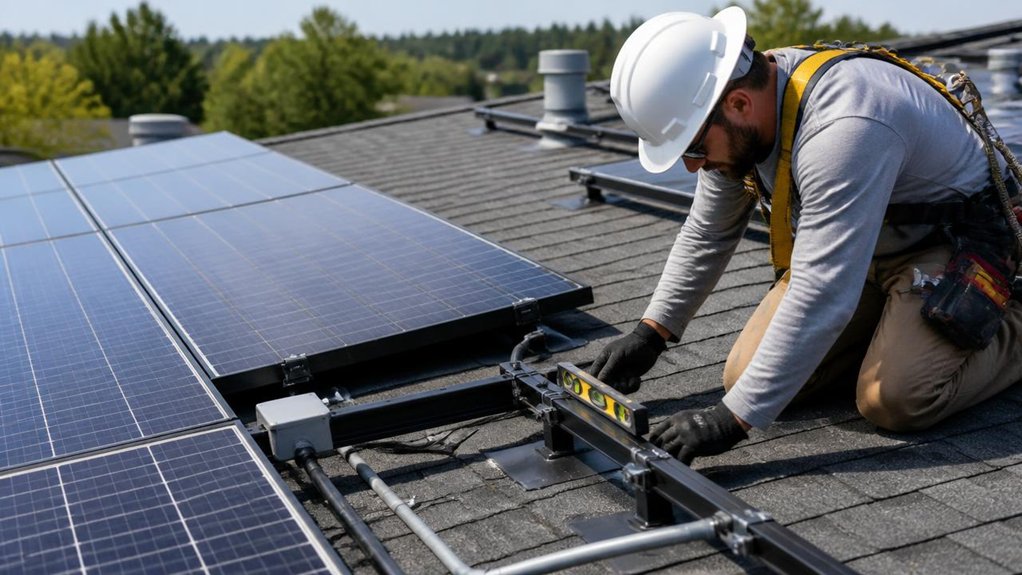
Solar panels can lose output if you size them around peak electricity demand, ignore shade or miss a grid-connection approval. Check your annual electricity use in kWh, roof direction and shading before comparing quotes; a system’s output depends on all three. Ask the installer to explain the proposed system size in kW and expected annual generation in kWh, and confirm who will handle the required approvals.
Size Your Solar System to Match Your Energy Use
Compare a solar system’s estimated yearly output with your household’s annual electricity use in kWh. Use 12 months of bills, or meter readings, and account for seasonal changes; a solar PV system usually generates more in summer than in winter.
Compare estimated annual solar output with 12 months of household electricity use, accounting for seasonal changes.
Ask the installer to show the expected annual output in kWh and the assumptions behind it, including roof direction, shading and panel capacity in kW. Check whether the estimate matches your use and when you use electricity: peak demand in kW is the most power you draw at once, but it doesn’t tell you how much energy you use over a year.
Do not size panels for peak demand alone. A larger system may export more electricity than you can use, and payment depends on your export tariff and supplier.
Compare the quoted system’s cost with estimated savings from using solar electricity and export payments; check current tariffs and any grant terms before relying on them.
A competent DIYer can review bills, check the quote’s assumptions and compare tariffs. Electrical installation and connection work must comply with Part P of the Building Regulations in England and Wales; use an electrician registered with a competent person scheme, or arrange the required building control approval.
For eligibility under the Smart Export Guarantee, check the current Ofgem rules and your supplier’s requirements. For an MCS-certified installation, use an MCS-certified installer.
Check Your Roof Before Installing Solar Panels
A roof in good condition can avoid the cost and disruption of removing solar panels for later repairs. Check its age, covering and structure before accepting an installation quote.
Look for damaged tiles or slates, worn roof coverings, leaks, sagging and signs of damp in the loft. If the roof needs repairs or replacement soon, do that work first; fitting panels over a roof that will soon need attention can mean paying to remove and reinstall them.
Ask a qualified roofer to assess the roof covering and a structural engineer to check whether the rafters can carry the panels, mounting system and local weather loads.
The engineer should consider the specific system’s weight and the roof’s condition, rather than relying on a general rule of thumb. Keep the inspection findings for your installer.
A competent DIYer can check for visible damage from the ground and inside the loft, without walking on the roof. Leave roof access, repairs and structural calculations to suitably qualified professionals.
Ask your solar installer how they’ll confirm the roof is suitable; MCS certification covers solar installation standards, but doesn’t replace a structural assessment where one is needed.
Choose Solar Panel Placement for Sunlight
Morning shade can reduce a solar panel’s output even when the roof looks sunny at midday. Check nearby trees, chimneys and buildings at different times, and consider how their shadows change through the year.
Compare each roof section’s orientation, slope and exposure. Ask an MCS-certified installer to model expected output for shaded layouts before accepting a quote; the best location depends on the roof and the shading pattern.
Get Solar Permits and Utility Approval
Check your local council’s building-control rules and your electricity supplier’s grid-connection requirements before arranging solar installation. The process depends on your system’s size, equipment and location, so ask what applies to your property rather than relying on a general checklist.
Ask the council whether you need planning permission or building-regulations approval. Roof-mounted panels usually fall under permitted development in England, but conditions and rules differ across the UK; listed buildings and conservation areas may need extra checks. Your installer should provide panel layouts and technical details if the council requests them.
Ask your electricity supplier what it requires to connect the inverter and export electricity. For systems up to 3.68 kW per phase, a G98 notification is generally made after installation; larger systems usually need G99 approval before work starts. Confirm the process with your supplier, as requirements can depend on the equipment and connection.
A competent DIYer can gather documents, check planning rules and submit applications if the relevant authority allows it. Electrical connection and commissioning should be handled by an electrician registered with a competent person scheme; using an MCS-certified installer may also be necessary for scheme eligibility or export arrangements.
Check the applicable Building Regulations, including Part P in England and Wales, and confirm who’s responsible for each submission before signing a quote.
Choose Reliable Solar Equipment and Installers
Compare solar panel and battery warranties by checking the cover period and what each warranty includes. Ask for the panel’s output warranty, inverter warranty and battery capacity warranty in writing; terms vary by manufacturer and model.
Check your installer’s MCS certification and ask for a written quote that lists the system size in kW, expected annual generation in kWh and any extra work.
A competent DIYer can compare quotes and check credentials, but grid-connected solar equipment must be installed and commissioned by a qualified installer; use an MCS-certified installer if you want to access schemes that require MCS certification.
For electrical work, check whether the installer uses an electrician registered with a competent person scheme. Put your own figures into our payback calculator.
Compare Equipment Warranties
Compare the written warranties for each solar panel, inverter and battery before accepting an installer’s quote. Check the term and whether it covers manufacturing defects, panel output, parts, labour, removal, replacement and delivery; these are separate costs.
A panel’s product warranty covers faults in the panel, while its performance warranty sets a minimum output over time. Neither automatically covers poor installation. Check who pays for labour if an inverter needs replacing: a replacement unit may be covered while removal and fitting are not.
For batteries, check the guaranteed usable capacity in kWh, any limit on charge cycles or energy throughput, and required operating conditions. Read the exclusions and claim process, including whether you must use an approved installer. Compare the written terms rather than relying on a salesperson’s summary.
Good
- Panel product and performance warranties cover different things.
- Inverter replacement cover may exclude labour and removal.
- Battery guarantees can depend on cycles or energy throughput.
- Warranty claims may require installation by an approved installer.
Not so good
- A long warranty may still exclude labour costs.
- Panel performance cover doesn’t necessarily cover installation errors.
- Battery capacity guarantees may have usage conditions.
- Shipping and removal costs may fall to the owner.
A competent DIYer can compare warranty documents and check that the equipment model matches the quote. Don’t carry out electrical installation work unless you’re competent and the work meets UK wiring rules; a qualified electrician registered with a competent person scheme should handle relevant electrical work. For an MCS-certified installation, check the installer’s certification and the warranty conditions before signing.
Verify Installer Credentials
Check the installer’s credentials before signing a contract. In the UK, ask for the company’s MCS certification if you want to use an eligible scheme such as the Smart Export Guarantee; check current requirements with Ofgem or GOV.UK, as they can change.
Ask who’ll carry out the work and what qualifications they hold. A competent DIYer may be able to handle simple preparation, but a qualified installer should design and fit solar panels and batteries.
Electrical work must meet Part P of the Building Regulations; use an electrician registered with a competent person scheme for notifiable work. Gas work must be done by a Gas Safe registered engineer.
Check the installer’s insurance and ask for references from recent customers. Ask whether the work finished on schedule, how the team handled problems, and what the quote includes.
Don’t choose on price alone: poor roof work or electrical installation can lead to leaks, safety risks and lower system performance.
Plan Your Solar System’s Electrical Setup
Ask your installer for a wiring diagram showing how the solar panels, inverter, battery and household circuits connect. Check that the inverter’s output in kW suits the system and that the battery’s usable capacity in kWh matches when you use electricity; a larger battery may not pay back if you rarely use it.
The design should specify correctly rated breakers, fuses and isolators, plus cable sizes in mm², earthing and protection for the installation. These depend on the system’s current, cable length, installation method and equipment ratings, so don’t choose them from a rule of thumb.
A competent DIYer can compare equipment data sheets, check the proposed design and gather information about household electricity use.
Leave electrical design, connection and testing to a qualified electrician registered with a competent person scheme, or an MCS-certified installer where applicable. The installer should confirm compliance with BS 7671, the IET Wiring Regulations, and arrange any required building-control notification and Distribution Network Operator approval before work starts.
Test and Monitor Your Solar System
Ask your installer to test the solar panels, inverter, battery and monitoring system at handover. Get them to show you how to check output in kW, energy generated in kWh, battery charge and fault alerts.
Record the readings as a baseline, including the date and weather. Check the monitoring app regularly and compare output with the same period in previous months; season and weather affect generation.
Make sure alerts reach your phone or email. Contact your installer if output drops suddenly, the battery behaves unusually or fault alerts keep appearing.
Don’t open the inverter or battery casing: electrical work must meet UK wiring regulations (BS 7671) and should be handled by a qualified electrician registered with a competent person scheme.
Frequently Asked Questions
Can Installing Solar Panels Void My Roof Warranty?
Solar panels can affect your roof warranty if the installation breaches its terms or damages the roof. Check the warranty conditions before work starts, and ask the manufacturer whether the proposed fixings and installer meet its requirements.
Use an installer qualified for the work and keep the written approval, installation details and photographs. A competent DIYer can review the warranty and gather documents, but roof fixings and electrical connections should be handled by appropriately qualified professionals.
Will Solar Panels Increase My Home’s Resale Value?
Resale value: May rise with buyer demand
Main factor: Owned, working systems
Best evidence: Savings, service records, warranties
Value risk: Leased or faulty panels
Buyer appeal: Lower bills and export income
How Should I Clean Solar Panels Safely?
Switch off the solar PV system only if the manufacturer’s instructions say to, and follow its cleaning guidance. Use a soft brush and gentle water from a stable ground-level tool; avoid abrasive cleaners, pressure washers and climbing onto the roof.
Does Homeowners Insurance Cover Solar Panel Damage?
Solar panels attached to your home may be covered by buildings insurance for insured events such as fire or storm damage. Cover depends on your policy wording, exclusions and limits; check whether it includes the panels and their mounting equipment, and tell your insurer about the installation.
What Happens to Solar Panels During a Power Outage?
A grid-tied solar inverter usually shuts down during a power cut, even when the panels are producing sunlight. This anti-islanding protection stops electricity flowing into the grid and protects utility workers. Without a battery and compatible backup system, your home’s solar panels will not power your appliances during the outage.