
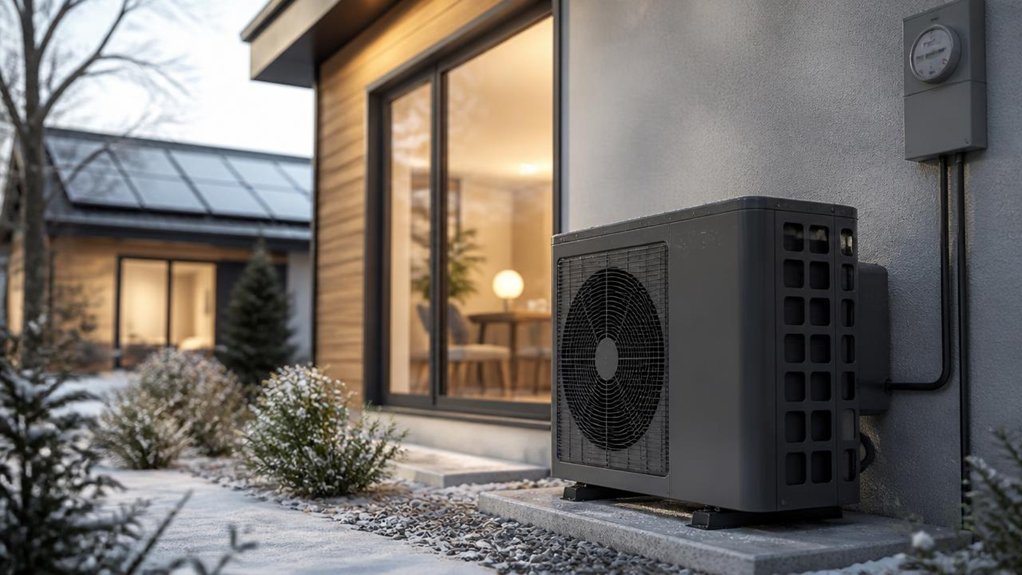
Air source heat pumps can reduce heating costs, but savings depend on your home’s heat loss, the system design and your electricity tariff. Compare the installer’s quote with your current heating costs and the heat pump’s estimated annual electricity use; the figures are only useful when you know the assumptions behind them.
How Do Air Source Heat Pumps Work?
An air source heat pump moves heat between the outdoor air and your home using a refrigerant. In heating mode, the evaporator absorbs heat from outside, even in cold weather.
The compressor raises the refrigerant’s pressure and temperature, then it releases heat through a condenser to warm your home’s air or water.
An expansion valve lowers the refrigerant’s pressure so it can absorb heat again. A reversing valve changes the direction of the refrigerant flow, allowing the heat pump to remove heat from your home in cooling mode.
What Types of Air Source Heat Pumps Are There?
Type: Air-to-air or air-to-water
Delivery: Room air or heated water
Layout: Split or monobloc
Best for: Matching existing heating
Check: Refrigerant and installation needs
How Much Does an Air Source Heat Pump Cost?
Typical cost: Depends on unit size and installation
Typical costs vary depending on the heat pump size and the complexity of installation.
Main factors: Heat pump, labour and materials
Extra work: Radiators, pipework or hot water cylinder
Running cost: Depends on tariff and heat use
Quotes: Compare itemised quotes from qualified installers
What Affects Air Source Heat Pump Performance?
Cold-weather performance: Efficiency falls as outdoor temperature drops.
Defrost cycles: Clear ice from the outdoor coil, briefly interrupting heating.
System sizing: Match output in kW to the home’s heat loss.
Insulation: Less heat loss can mean lower running costs.
Heating controls: Steady settings and lower flow temperatures can improve efficiency.
Maintenance: Keep the outdoor coil clean; have a qualified technician check refrigerant levels.
How Much Could You Save on Energy Bills?
Annual savings depend on the fuel your current heating system uses, how much heat your home needs and the electricity tariff you pay.
An air source heat pump may reduce bills if it replaces expensive heating and the home is well insulated; savings are less likely if you have cheap mains gas or need costly insulation work first.
To estimate savings, compare your current annual heating costs with the heat pump’s electricity use and tariff.
The result depends on the system’s seasonal efficiency, your home’s heat demand and energy prices, so check the installer’s figures against your own bills.
Annual Bill Savings
Annual savings depend on your current heating system, the heat pump’s seasonal efficiency, your home’s heat loss and the electricity and fuel tariffs you pay.
Compare a full year of heating bills with estimated heat pump costs, using the same heating pattern and realistic electricity use in kWh.
For example, if a heat pump uses 4,000 kWh of electricity a year at 25p per kWh, its electricity cost is £1,000.
Compare that with your previous annual heating cost, including standing charges where relevant; check current tariffs because prices change.
Savings may be lower if your home needs high flow temperatures, is poorly insulated or has an expensive electricity tariff.
Keep annual bills and meter readings after installation so you can compare actual costs with your previous heating bills.
Forecasts are estimates, not guarantees.
Factors Affecting Savings
Heat pump savings depend on what you replace, your home’s heat loss and your electricity tariff. Replacing electric resistance heating can save more than replacing a modern gas boiler, but poor insulation or high flow temperatures can reduce savings.
The heat pump’s electricity use is measured in kWh. Compare its estimated annual use with your current fuel use and costs, using your actual unit rates and standing charges.
A larger home, higher thermostat setting or colder local climate can increase electricity use; a well-insulated home and lower flow temperature can reduce it.
A time-of-use tariff may lower running costs if the heat pump can use cheaper periods without compromising comfort. Ask for a heat-loss calculation and an estimate of annual electricity use before comparing quotes.
DIYers can improve draughtproofing, but heat-pump installation and electrical work require appropriate qualified professionals; check current MCS and Building Regulations requirements.
Is an Air Source Heat Pump Right for Your Home?
An air source heat pump is more likely to suit a well-insulated home with space for an outdoor unit and a heating system that can run at lower water temperatures.
Check your insulation, outdoor space and existing radiators before comparing installer quotes. The right choice depends on your home’s heat loss and the heat pump’s output in kW.
Home Suitability
An air source heat pump is more likely to suit a home that holds heat well and has space for an outdoor unit with clear airflow. If your home loses heat quickly, draughtproofing and insulation may need attention first; the right measures depend on the building and shouldn’t block ventilation.
Heat pumps can work with radiators or underfloor heating, but existing radiators may need replacing or upsizing if they can’t heat rooms at the lower flow temperatures a heat pump uses.
Ask an MCS-certified installer to assess your home’s heat loss, radiator sizes, electrical supply and outdoor-unit position before comparing quotes.
Check planning rules with your local council, especially for listed buildings or homes in conservation areas. A competent DIYer can clear access and gather room and radiator details, but shouldn’t install or connect the heat pump; installation and commissioning should be handled by a qualified installer.
Electrical work must comply with Part P of the Building Regulations, and any work on a gas boiler must be done by a Gas Safe registered engineer.
Key Considerations
An air source heat pump is more likely to make financial sense in a well-insulated home with enough outdoor space for the unit. Check the heat loss room by room: poor insulation can mean a larger pump and higher running costs, while radiator or pipework upgrades may add to the installation bill.
Allow for the outdoor unit’s airflow and maintenance clearance, and check its noise rating and distance from bedroom windows and neighbours. Planning rules depend on your location, property type and installation details; check with your local planning authority before work starts.
Ask an MCS-certified installer for a room-by-room heat-loss assessment, an itemised quote and an estimate of annual electricity use. Compare that estimate with your current heating costs, and check whether the quote includes any radiator, pipework or electrical upgrades. Put your own figures into our payback calculator.
Frequently Asked Questions
How Long Does an Air Source Heat Pump Typically Last?
An air source heat pump typically lasts 15 to 20 years. Its lifespan depends on maintenance, how often it runs and local weather; regular servicing can help keep the system working efficiently for longer.
How Often Does an Air Source Heat Pump Need Servicing?
Arrange a professional service once a year, unless your manufacturer specifies a different interval. Ask the engineer to check the heat pump’s operation and performance; clean or replace its filters between visits as the manual directs, because blocked filters restrict airflow.
Are Air Source Heat Pumps Noisy?
Outdoor unit noise: The fan and compressor make noise, especially at startup or during defrost.
Typical sound: Check the manufacturer’s sound-power data in dB(A); it is not the same as sound measured at your boundary.
Quieter operation: Choose a suitable location and keep the unit level, with vibration isolation beneath it.
Noise control: Keep the fan clear of walls and fences, and maintain the unit as the manufacturer recommends.
Planning check: Ask the installer to assess noise at nearby windows and boundaries before choosing a location.
Can an Air Source Heat Pump Provide Hot Water?
An air source heat pump can heat water for taps and showers. It usually heats a hot water cylinder, whose capacity in litres should match your household’s daily demand.
A qualified installer should size and connect the cylinder and heat pump, and check that the system can reach the required water temperature. A competent DIYer can compare cylinder specifications, but should not alter electrical or refrigerant connections; use an electrician registered with a competent person scheme for electrical work.
Are Grants or Incentives Available for Installing an Air Source Heat Pump?
Check current UK grant schemes before accepting an air source heat pump quote. Eligibility depends on the property, the heating system being replaced and the scheme’s rules; funding and deadlines can change, so verify details on GOV.UK or with the scheme administrator. Don’t assume an incentive applies until your installer confirms the requirements for your home.