
Draughtproofing can reduce heat loss without major renovation, but savings depend on which gaps you seal and how much heating you use. Check around doors, windows, floorboards and loft hatches before buying materials. Do not block ventilation openings or seal gaps needed for safe operation of an appliance.
Typical cost: £10 to £300 for DIY materials
Likely saving: Depends on draughts and heating use
Payback period: Depends on cost and annual saving
Best for: Homes with noticeable draughts
Check first: Keep required ventilation clear
Good
- Self-adhesive foam strips can seal small gaps around opening windows.
- Brush strips can reduce draughts beneath external doors.
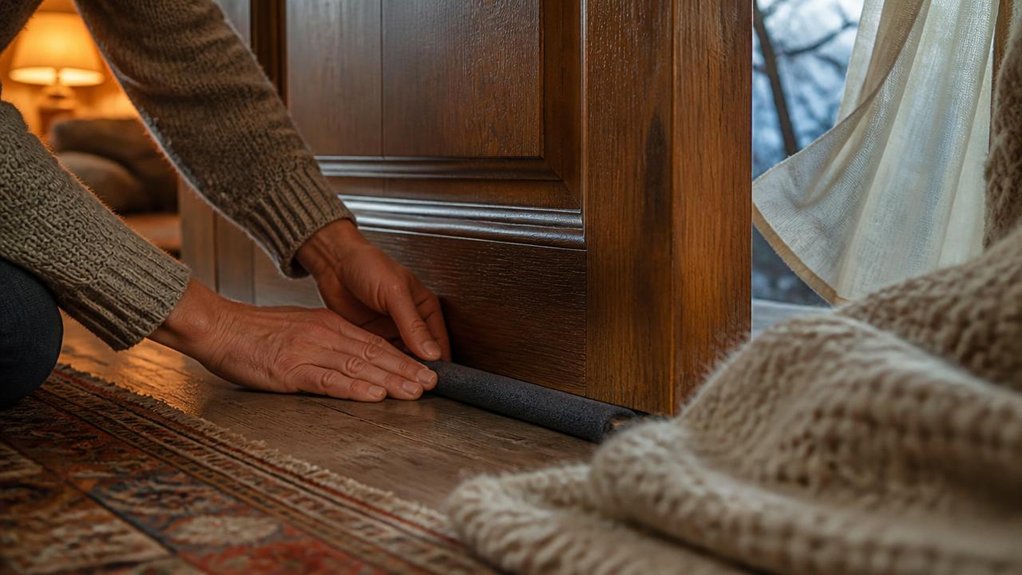
- A draught excluder can cover a gap beneath an internal door.
- A competent DIYer can fit many draughtproofing products without specialist tools.
Not so good
- Foam strips may not suit large or uneven gaps.
- Sealing ventilation openings can create a safety risk.
- Draughtproofing will not fix heat loss through uninsulated walls.
- Poorly fitted strips can stop doors or windows closing properly.
A competent DIYer can fit door seals, window strips and draught excluders, provided they do not block required ventilation. Use a qualified installer if the work affects a gas appliance or its flue; a Gas Safe registered engineer must handle gas work. Electrical work is not usually needed for draughtproofing, but any electrical work must meet Part P of the Building Regulations and be done or certified by an electrician registered with a competent person scheme.
Draughtproofing suits households with clear, sealable gaps because materials can cost less than larger insulation upgrades. It is not worth sealing gaps blindly: blocked ventilation can cause damp or make fuel-burning appliances unsafe. Savings and payback depend on the home, heating use and energy tariff, so check current prices and calculate your own figures.
Best for: Homes with draughts around doors or windows
Skip it if: Sealing would block ventilation or appliance air supply
Put your own figures into our payback calculator.
Find the Draughts That Let Heat Escape
Draughts that let heat escape
Check for unwanted gaps before buying draughtproofing materials. On a windy day, move your hand around window frames, exterior doors, skirting boards, pipe openings and loft hatches. A strip of tissue can help reveal airflow: watch for it to flutter near a gap.
Check fireplace openings for draughts when the fire isn’t in use. Don’t block a chimney that serves an appliance or is needed for ventilation; ask a qualified professional if you’re unsure. Keep air vents clear, as they help control moisture and maintain indoor air quality.
Note each gap and its location before choosing a fix. A competent DIYer can fit suitable draught strips and seal small gaps, provided the work doesn’t block required ventilation or affect an appliance.
Electrical work must follow Part P of the Building Regulations; use an electrician registered with a competent person scheme where required. Gas appliances and flues should be checked by a Gas Safe registered engineer. MCS certification applies to eligible renewable-energy installations, not ordinary draughtproofing.
Good
- Tissue fluttering can help locate airflow around frames and gaps.
- A hand check can identify draughts around doors and loft hatches.
- Recording each gap helps you choose a targeted repair.
- Keeping vents clear supports moisture control and indoor air quality.
Not so good
- Blocking a chimney can affect an appliance or ventilation.
- Sealing air vents can increase moisture problems.
- Draughtproofing won’t fix heat loss through uninsulated walls.
- A tissue test may miss gaps on a still day.
Verdict
This suits homeowners and renters who can seal small, unwanted gaps themselves, because targeted draughtproofing may cost less than replacing windows or doors. Don’t bother sealing vents or chimney openings without checking their purpose; blocking required airflow can create moisture or appliance-safety problems.
A competent DIYer can fit draught strips and seal suitable small gaps. Use qualified help for work affecting gas appliances, flues or regulated electrical installations.
Best for: Small gaps around doors and windows
Skip it if: The airflow is from a required vent
See How Draughtproofing Cuts Heating Bills
Sealing gaps around doors, windows and floorboards can reduce heat loss, but the saving depends on how much air was escaping.
Draughtproofing is usually most worthwhile where you can feel a draught; sealing already tight windows is unlikely to save much.
A competent DIYer can fit suitable draught strips, door seals and brush strips, following the product instructions.
Don’t block vents needed for combustion appliances or ventilation. Work on gas appliances must be done by a Gas Safe registered engineer; electrical work requiring certification should be handled by an electrician registered with a competent person scheme.
Keep required ventilation clear, and use qualified professionals for gas appliance work or electrical work requiring certification.
MCS certification applies to eligible renewable-energy installations, not ordinary draughtproofing.
Typical cost: Varies by materials and labour
Likely saving: Depends on draughts and heating use
Payback: Faster with large, fixable gaps
Best for: Draughty doors and windows
Check first: Required ventilation and appliance vents
Good
- Door seals can block gaps around the frame.
- Brush strips can reduce draughts under external doors.
- Window draught strips suit gaps that open and close.
- Sealing gaps can make nearby rooms feel less chilly.
Not so good
- Sealing small gaps in already draught-free rooms may save little.
- Blocking ventilation can cause damp or affect combustion appliances.
- Poorly fitted strips can stop doors and windows closing properly.
- Savings vary with the gaps, heating habits and energy tariff.
Choose Draughtproofing Materials for Each Gap
Compressible strips suit opening windows and doors; brush strips fit beneath doors. Use flexible sealant for fixed cracks in skirting boards or floorboards.
Measure each gap in millimetres before buying. Check the product’s stated gap range and surface compatibility: an oversized strip can stop a window or door closing, while an undersized one may leave airflow.
For wider, uneven gaps, use a suitable foam filler or purpose-made draught excluder. Choose products rated for the movement, moisture and temperature changes they’ll face.
A competent DIYer can fit most draughtproofing materials; no qualified installer is normally needed.
Seal Draughts Around Doors and Windows
Clean and dry the door or window frame before fitting weatherstripping. Measure the gap and choose a seal that matches its width; press it into place without stretching it.
Close the door or window to check the fit. It should shut easily with no visible gaps. For a door sweep, check that it suits the door type and threshold height, then fit it securely so it blocks draughts without dragging.
Check that doors and windows close easily without gaps, and fit door sweeps securely without dragging.
A competent DIYer can fit weatherstripping and a door sweep; these jobs don’t normally require a qualified installer.
Check the product instructions, inspect seals seasonally, replace cracked or loose sections, and keep window tracks clear so the sash closes tightly.
Stop Draughts Through Floors and Skirting
Seal narrow gaps between floorboards with flexible draught-seal strips or suitable filler; avoid blocking ventilation openings. A competent DIYer can fit these materials, but check that the floorboards are sound and the gaps aren’t needed for ventilation.
Insulating beneath a suspended timber floor can reduce heat loss, but access, damp and ventilation affect the job.
For insulation near electrical wiring, ask a qualified electrician if you’re unsure; work on fixed wiring must comply with Part P of the Building Regulations in England and Wales.
Check skirting boards and seal draughts where they meet the floor or wall.
Seal Floorboard Gaps
Flexible floorboard filler suits narrow gaps, while draught strips or fitted wood slivers can cover wider ones. Check for loose boards, damp and woodworm first; sealing won’t fix these problems. Keep any ventilation the room needs.
Good
- Flexible filler can seal narrow gaps between floorboards.
- Purpose-made draught strips suit wider gaps.
- Fitted wood slivers can fill wider spaces.
- Checking boards first can reveal damp or woodworm.
Not so good
- Filler may not suit floors that move.
- Sealing doesn’t repair loose boards.
- Draught strips need careful fitting to avoid board damage.
- Blocking ventilation can cause problems.
Verdict: This suits homeowners with draughty floorboard gaps who can seal them with low-cost materials rather than pay for major renovation. Anyone with loose, damp or woodworm-damaged boards should deal with those problems first, because filler or strips won’t fix them. Costs and savings depend on gap size, materials and the home, so a reliable payback can’t be given without those figures.
Best for: Narrow gaps and sound floorboards
Skip it if: Boards are damp, loose or damaged
Insulate Under Floors
A competent DIYer can fit insulation between timber floor joists if they can work safely, keep the material supported and preserve ventilation beneath the floor.
Check for damp, rot or damaged joists first; fix these problems before insulating. Choose insulation suited to the floor’s construction and follow the manufacturer’s instructions.
A qualified installer can assess floors with restricted access or signs of damp or timber decay.
Underfloor insulation doesn’t normally require an electrician, Gas Safe engineer or MCS-certified installer, but any electrical, gas or heating work must be done by the appropriately qualified professional.
Check Building Regulations requirements with your local authority before altering the floor.
Close Skirting Gaps
Close skirting gaps with flexible decorator’s caulk where the gap is narrow. For wider gaps, use a suitable filler or draught-excluding strip; check the product instructions and choose a flexible sealant if the floor moves seasonally.
A competent DIYer can seal and finish these gaps. No qualified installer or electrical, gas or MCS certification is normally needed. Paint over the filler only if the product is compatible.
Typical cost: Low for DIY materials
Best for: Noticeable draughts at skirting
DIY suitability: Suitable for competent DIYers
Payback: Depends on gap and heat use
Good
- Caulk seals narrow gaps between skirting and floor.
- Flexible sealant is less likely to crack when flooring moves.
- Draught-excluding strips can suit wider gaps.
- Compatible filler can be painted to match the skirting.
Not so good
- Sealing gaps won’t fix draughts from other sources.
- Rigid filler may crack if the floor moves seasonally.
- Poor application can leave an uneven finish.
- Savings are hard to estimate without knowing the draught and heating use.
This suits homeowners and renters who can feel draughts at the skirting, because DIY sealing needs only basic materials.
It’s unlikely to be worth buying specialist tools or paying for an installer for a few small gaps. A competent DIYer can apply caulk, filler or a draught strip; electrical, Gas Safe or MCS certification isn’t relevant to this work.
Best for: Narrow, draughty gaps you can seal yourself
Skip it if: There’s no draught or the gap has another cause
Avoid Common Draughtproofing Mistakes
Draughtproofing can suit households with draughty doors or windows, but the cost depends on the materials and how many gaps need sealing. A competent DIYer can fit brush strips, foam tape and letterbox covers; follow the product instructions and make sure doors and windows still open and close properly.
Use a qualified installer where work involves a fuel-burning appliance or its flue. Never block ventilation required by the appliance or cover air vents.
Check the appliance instructions and Building Regulations Approved Document J for ventilation requirements. Gas work must be done by a Gas Safe registered engineer. Electrical work requiring certification must be done by an electrician registered with a competent person scheme; MCS certification isn’t normally relevant to draughtproofing.
Good
- Brush strips can seal gaps beneath external doors.
- Foam tape suits small, even gaps around window frames.
- A letterbox brush can reduce draughts through the flap.
- Seals need checking for wear and loose sections.
Not so good
- Sealing every gap can reduce necessary ventilation.
- Covering an appliance air vent can create a safety risk.
- Oversized strips can stop doors or windows closing properly.
- Unsuitable sealant can fail or damage surfaces.
Verdict
Draughtproofing suits homes with obvious gaps, especially where a competent DIYer can fit suitable seals without blocking required ventilation.
It may not be worth paying for professional work if the gaps are small or the materials cost more than the likely energy saving.
Best for: Draughty doors and windows
Skip it if: Sealing would block appliance ventilation
Costs and savings vary with the number and size of gaps, materials, home size and heating use. Without those details, a reliable typical cost, yearly saving or payback range can’t be given.
Check current prices and any applicable grants before buying; figures can change. Put your own figures into our payback calculator.
Call a Professional When Draughts Persist
A draughtproofing professional can use smoke or thermal imaging to trace air leaks that are difficult to find yourself.
Ask for a diagnosis before paying for work, and check whether the quote identifies the leak and the proposed repair.
A competent DIYer can seal accessible gaps around doors, windows and floorboards with suitable draughtproofing products.
Work involving a gas appliance or its flue must be handled by a Gas Safe registered engineer; electrical work may need a qualified electrician registered with a competent person scheme.
Put your own figures into our payback calculator.
Persistent Cold Spots
Persistent cold spots may point to a problem that sealing visible gaps won’t fix. A competent DIYer can check for obvious draughts and make simple repairs, but avoid adding sealant or draught strips at random.
If a room stays cold, a qualified heating professional can check radiator balance and how heat moves through the room. Thermal imaging may help locate temperature differences, but it doesn’t identify the cause on its own.
Ask what checks they’ll carry out and what work they recommend before agreeing to a quote.
Use a Gas Safe registered engineer for work on gas appliances or pipework. Electrical work must meet Part P of the Building Regulations; use an electrician registered with a competent person scheme where required.
Arrange an assessment if cold patches persist across several rooms or return soon after repairs.
Hidden Air Leaks
Good
- Loft hatches can leak air around an unsealed frame.
- Gaps around pipes can let draughts into rooms.
- Loose floorboards may allow air through the floor.
- An unused fireplace can draught without an effective closure.
Not so good
- Hidden leaks can be difficult to locate.
- Sealing a vent can restrict essential ventilation.
- Draughts may persist after obvious gaps are sealed.
- Difficult-to-reach leaks may need a qualified professional.
A competent DIYer can check for moving air around accessible pipes, floorboards and loft hatches on a windy day, then seal suitable gaps.
Don’t block vents designed for essential ventilation. Ask a qualified professional to investigate if the leak’s route is unclear or access is difficult.
Best for: Homes with draughts from accessible gaps
Skip it if: You can’t locate the leak safely
Professional Assessment
A qualified survey can help if draughts remain after you have sealed obvious gaps. Ask the assessor to check loft hatches, floorboards, pipe and cable openings, and window frames, and to explain which findings point to draughts rather than poor insulation.
Thermal imaging can show cold areas, but it doesn’t prove that air is leaking; airflow tests can help locate leaks.
Before paying for repairs, ask for the inspection scope, any test method, and a written list of recommended work. A competent DIYer can seal accessible gaps around suitable window frames or pipe openings, provided the work doesn’t block ventilation or cover electrical fittings.
Don’t seal air vents or gaps around a flue. Work on gas appliances or flues needs a Gas Safe registered engineer; electrical work may need an electrician registered with a competent person scheme, depending on the work and applicable Building Regulations. Check the relevant requirements before starting.
Typical cost: Check local survey quotes
Best for: Persistent draughts with unclear sources
DIY scope: Accessible gaps only
Professional checks: Airflow tests and thermal imaging
Main risk: Blocking required ventilation
Good
- A loft-hatch inspection can identify gaps around its frame.
- Airflow testing can help locate leaks that visual checks miss.
- Thermal imaging can show cold spots, but not confirm air leakage.
- A written assessment can separate draught repairs from insulation work.
Not so good
- A survey doesn’t guarantee that recommended repairs will save money.
- Thermal imaging alone can’t prove a draught’s source.
- Sealing vents can reduce necessary ventilation and harm indoor air quality.
- Complex repairs near flues or wiring aren’t suitable DIY jobs.
This suits homeowners who can’t locate persistent draughts and want to avoid paying for the wrong repair. It may not be worth paying for a survey if you can find and safely seal accessible gaps yourself.
Survey costs and savings vary, so a reliable payback can’t be stated without a quote and an estimate of heat loss.
Best for: Unclear leaks in several areas
Skip it if: The draught source is obvious
Frequently Asked Questions
Can Draughtproofing Improve Comfort During Summer?
Draughtproofing can make rooms more comfortable in summer by reducing hot air entering through gaps around doors and windows. The benefit depends on the source of the heat: it will not stop sunlight through windows or heat passing through poorly insulated walls and roofs. Avoid blocking purpose-made ventilation or air vents.
Is Draughtproofing Suitable for Rented Homes?
Permission needed: Check your tenancy agreement before fitting anything
Best option: Removable door and window seals
Damage risk: Choose products that leave no marks
Landlord approval: Get written consent before fitting
DIY suitability: Fit removable seals without altering frames
Are There Grants Available for Draughtproofing?
Grants for draughtproofing may be available through your local council or an energy-efficiency scheme. Eligibility can depend on your income, benefits, location and property type, so check current rules with your council or GOV.UK. Availability and terms can change; verify them before making plans.
How Long Does Draughtproofing Typically Last?
Draughtproofing typically lasts around 5–10 years, depending on the seal material, how often doors and windows are used, and exposure to weather. Check seals regularly and replace strips that are loose, cracked or no longer close gaps.
Can Draughtproofing Reduce Outside Noise?
Draughtproofing can reduce outside noise by sealing gaps around windows and doors, especially where sound enters through loose seals. It may soften traffic noise, but it will not soundproof a room or block noise coming through glass, walls or vents. For a noticeable reduction, consider secondary glazing or replacement windows with suitable acoustic ratings.