
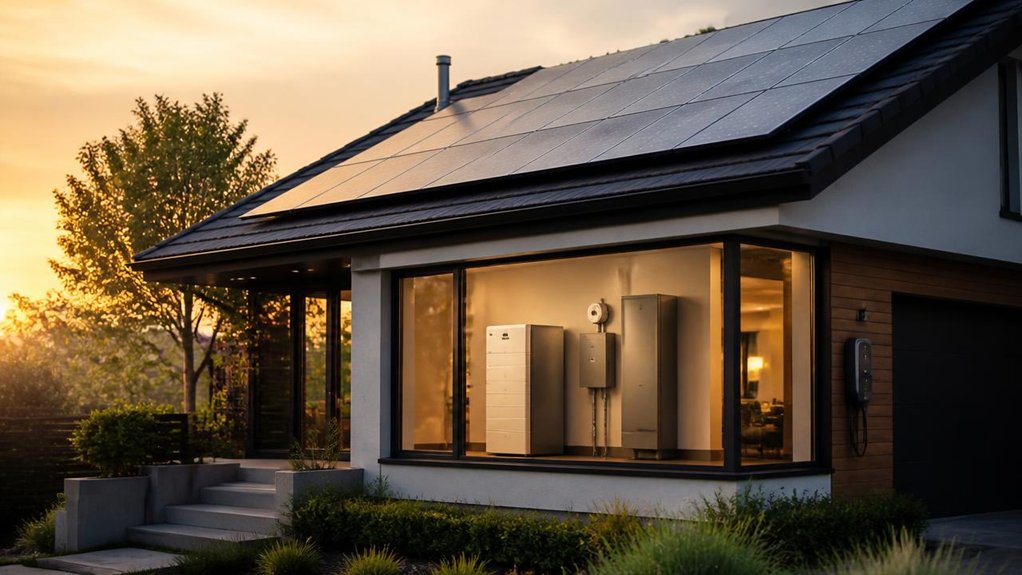
Solar panels can reduce the electricity you buy from the grid; a battery stores surplus generation for use later. The financial case depends on your annual electricity use, when you use it, your tariff, export payments and the system’s installed cost.
For a worked estimate, use your own figures: annual solar electricity used in the home (kWh) × the electricity unit rate (£/kWh) gives the value of avoided imports. Add any export payments, then subtract battery losses and any export income you give up by storing that electricity. Compare the resulting annual saving with the installed cost to estimate simple payback: cost ÷ yearly saving. Without figures for your home and quote, a cost range, yearly saving or payback would be guesswork.
A battery is more likely to help if you regularly use electricity after the panels stop generating and your tariff makes stored electricity cheaper than buying it later. It may not be worth the extra cost if you can use solar power during the day, receive worthwhile export payments, or cannot charge the battery cheaply. Check current tariffs, grants and export terms; rates and support can change and should be verified at the time of writing.
A competent DIYer can compare quotes, check bills and monitor energy use. Solar panels, battery connections and alterations to fixed household wiring should be designed and installed by an appropriately qualified professional. Use an electrician registered with a competent person scheme for relevant electrical work, an MCS-certified installer where required for certification or scheme eligibility, and a Gas Safe engineer for work on gas appliances. Check the applicable Building Regulations and current scheme rules before proceeding.
How Much Can Solar and Batteries Save?
Solar panels can cut electricity bills, but savings depend on how much power you use while the panels are generating. A battery stores surplus solar electricity for later, but its cost may outweigh the value of the extra power you use.
Typical cost: Check current installed quotes
Yearly saving: Depends on use and tariff
Simple payback: Compare costs with savings
Best for: Homes using power after dark
Check first: Bills, roof and export tariff
Good
- Solar panels can supply electricity directly to your home.
- A battery can store surplus daytime generation for evening use.
- Savings can rise when you use stored power instead of buying electricity.
- Panel orientation, system size and weather affect generation.
Not so good
- A battery adds equipment and installation costs.
- Savings fall if you use little electricity after sunset.
- Export tariffs affect the value of surplus electricity.
- Shading or a poorly oriented roof can reduce panel output.
Use your recent bills to estimate annual electricity use, then compare installer quotes and tariffs.
For example, annual saving = solar electricity used at home in kWh × the unit price you avoid, plus battery-shifted electricity × the difference between import and export rates.
Payback = installed cost ÷ annual saving; use ranges, and check current prices and tariffs because they change.
Higher daytime use can improve solar payback; a suitable export tariff can make a battery less worthwhile.
A competent DIYer can review bills, compare tariffs and check for roof shading. A qualified electrician registered with a competent person scheme should handle electrical work; use an MCS-certified installer if you need MCS certification for the installation.
Check applicable Building Regulations and current certification requirements before work starts.
Put your own figures into our payback calculator.
What Drives Your Solar Savings?
Your solar savings depend on when you use electricity, your import and export rates, and whether a battery stores surplus generation for later.
Solar savings vary with your usage patterns, electricity rates and whether a battery stores surplus power for later.
The system’s output depends on your location, roof orientation, shading and panel capacity in kW; seasonal weather also changes generation.
Higher-efficiency panels can produce more electricity from limited roof space, but may not justify their extra cost if your roof has room for standard panels.
Household use and your supplier’s tariff affect the bill reduction.
How Does a Home Battery Change Savings?
A home battery shifts solar electricity from the time your panels generate it to the time you use it. The saving comes from buying less electricity from the grid; it isn’t the full value of every kWh stored, because charging and discharging use some energy.
Typical cost: Check current installed quotes
Likely saving: Depends on use and tariff
Simple payback: Calculate from your figures
Best for: Homes with unused solar
Payback improves: High evening electricity use
To estimate the saving, use your battery’s usable capacity in kWh, not its advertised total capacity. Estimate how many kWh you can charge from surplus solar and use later each year, then multiply by the difference between your import price and export payment, allowing for battery losses.
Example working: usable solar shifted each year × (import price per kWh − export payment per kWh) = estimated annual saving. Divide the installed cost by that annual saving to estimate simple payback in years.
Use your own usage, tariff and quote; costs and tariffs change, so check current figures. Payback is faster if you use more stored power in the evening and slower if you export most surplus at a good rate or rarely cycle the battery.
Good
- A battery can supply stored solar electricity after the panels stop generating.
- Usable capacity, measured in kWh, limits how much energy it can store.
- The inverter’s power rating, measured in kW, limits how quickly it can charge or discharge.
- Some systems can provide backup during an outage if configured for it.
Not so good
- Battery losses mean delivered electricity is lower than the amount used to charge it.
- A battery doesn’t automatically provide backup power during a power cut.
- Low evening use can leave stored capacity unused.
- A short battery warranty or limited cycle life can weaken the payback.
A battery suits households that regularly export surplus solar and then buy electricity in the evening, because shifting that energy can reduce grid purchases.
It’s less likely to pay back quickly if your export payment is attractive, your evening use is low or the installed quote is high. A competent DIYer can compare tariffs and estimate usage, but shouldn’t install or connect a battery.
Use a qualified electrician registered with a competent person scheme; check applicable Building Regulations and MCS requirements.
Best for: Solar homes with regular evening use
Skip it if: You use little power after sunset
Put your own figures into our payback calculator.
How Do Electricity Rates Affect Your Savings?
Time-of-use rates can make a home battery more useful if you can charge it cheaply and use stored electricity when your unit rate is higher.
Your savings depend on the tariff, battery efficiency and how much electricity you can shift; check your current rates and export payment before estimating the benefit.
Time-Of-Use Pricing
Time-of-use pricing charges different rates at different times of day. Your supplier sets the rate periods, which can change by plan and season, so check your tariff and bill before shifting electricity use.
You may save by moving flexible use, such as running a dishwasher or charging an EV, to cheaper periods. The saving depends on the difference between rates and how many kWh you can shift; compare the tariff’s unit rates and standing charge with your current plan.
A low off-peak rate may not make a tariff cheaper overall if its peak rate or standing charge is higher.
Solar panels can reduce grid use while generating. A home battery can store electricity for later, but whether it pays depends on its installed cost, usable capacity in kWh, charge and discharge losses, tariff rates and how often you cycle it.
Check the figures against your own usage before changing tariff or buying equipment.
Peak Rate Savings
Peak-rate savings depend on when your home uses electricity and how your tariff charges for it. Solar panels can reduce grid imports while they generate; a battery can store surplus solar electricity in kWh for use later, when your tariff’s unit rate is higher.
Estimate the saving using your own figures: electricity shifted from peak to off-peak in kWh × the difference between the two rates. For example, shifting 1 kWh saves the difference between those rates, before battery losses and any extra charging costs.
Check your tariff and half-hourly usage data; savings will be lower if you use little electricity at peak times or the rate gap is small.
A battery doesn’t automatically save money: its installed cost, usable capacity in kWh, round-trip efficiency and charging schedule all affect payback. If your bill includes a demand charge based on maximum kW, reducing the highest simultaneous load may help, but check how your supplier calculates that charge.
Put your own figures into our payback calculator.
Export Credit Rates
Export rates vary by supplier and tariff, so check your current electricity plan before estimating savings. A credit is usually based on each kWh you export; compare that rate with the price you pay to import electricity.
If the export rate is lower, using surplus power at home or storing it in a battery may be worth more than exporting it, depending on the battery’s cost and efficiency.
Check whether your tariff has standing charges, export limits, fees or credit expiry rules. In Great Britain, the Smart Export Guarantee (SEG) requires some suppliers to offer payment for eligible exports, but rates and terms vary.
Net metering isn’t a standard UK billing arrangement. Put your own figures into our payback calculator.
How Can You Estimate Your System’s Payback?
Typical cost: Include installation and battery costs
Net cost: Subtract eligible grants or rebates
Annual saving: Add bill savings and export payments
Simple payback: Net cost divided by annual benefit
Check figures: Verify current tariffs and grants
Is Solar and Battery Storage Worth It for Your Home?
Typical cost: Depends on system size and equipment
Yearly saving: Depends on use and tariff
Payback time: Compare costs with annual savings
Best for: Homes with suitable roof space
Check first: Quote, usage and export rate
Upfront Costs
Solar panels and home batteries can reduce electricity bills, but compare their cost with the savings before choosing a system. The price depends on the panel capacity in kW, battery storage in kWh, equipment, roof condition and local labour rates.
A battery usually adds to the upfront cost; electrical work, scaffolding and permits may add more.
Get itemised quotes from several MCS-certified installers. Check that each quote lists the system size, battery capacity, equipment, warranties and all included work.
Compare the estimated annual savings using the same assumptions about electricity use, export payments and unit rates.
Ask whether a quote includes electrical upgrades and any required building-control approval. A qualified electrician registered with a competent person scheme should handle electrical work; check which certification and approvals apply to your installation.
Compare loans, leases and payment plans carefully: ownership arrangements can affect your rights and eligibility for incentives. Verify current costs, tariffs and grant terms before relying on them.
Long-Term Savings
Solar savings depend on how much electricity your home uses while the panels are generating, your import tariff and the system’s installed cost. Export payments can improve the return, but check current rates and eligibility because tariffs and grants change.
Estimate annual savings by adding the value of solar electricity used at home to export payments, then subtract any extra costs. For example, 1,800 kWh used at home × 25p per kWh = about £450; add export income separately.
These figures assume the stated usage and unit price, which should be checked against your bills and current tariff.
Divide the installed cost by estimated annual savings to find simple payback in years. Higher daytime use and rising import rates can shorten it; a battery may increase self-use but adds cost and can lengthen payback.
Compare panel and battery lifespans, warranties and likely replacement costs. Put your own figures into our payback calculator.
Home Energy Needs
Solar panels can cut electricity bills, but savings depend on how much power you use while the panels are generating. Check your bills for annual use in kWh and compare that with the roof’s orientation, shading and usable area; an MCS-certified installer can estimate likely generation.
A battery stores surplus solar electricity for later, but it adds cost and may not pay back if your evening use is low. Compare quotes for panels alone and panels with a battery, using the same assumptions for electricity use, export payments and unit rates.
Check current rates and export terms with your supplier; they can change.
Improve insulation and draughtproofing first if your home loses heat quickly. A competent DIYer can review bills, check for shading and seal simple draughts.
Electrical work and the solar installation should be handled by appropriately qualified professionals, including an MCS-certified installer and an electrician registered with a competent person scheme. Check that the work meets the applicable Building Regulations and electrical safety requirements.
Put your own figures into our payback calculator.
Frequently Asked Questions
Do Solar Panels Work During a Power Outage?
Grid-tied solar panels usually switch off during a power cut because the inverter must protect utility workers. To use solar during an outage, you need an inverter with backup capability and suitable changeover equipment; a battery may also be needed to store power for when the panels produce less.
A qualified electrician registered with a competent person scheme should install or alter the backup wiring and changeover equipment. Check that the system meets the applicable wiring regulations and that your installer explains which circuits it can supply and the backup power limit in kW.
How Long Do Solar Panels Typically Last?
Solar panels typically last 25–30 years. Their electricity output gradually falls as the panels degrade, but they can continue generating power beyond that period.
Check the manufacturer’s warranty for its product and performance terms. The warranty end date does not mean the panels stop working.
What Maintenance Do Solar Panels Require?
Routine checks are usually enough: look for leaves, bird droppings, visible damage or loose cables, but do not climb onto the roof. Clean panels only when dirt is clearly reducing output; rain often removes ordinary dust, so paid cleaning may not be worthwhile.
Check the inverter display or monitoring app for faults and changes in generation. A competent DIYer can view readings and inspect panels from the ground, but should not open the inverter or touch wiring. Ask a qualified solar electrician to investigate faults or damaged cables; use an MCS-certified installer for installation work where required. Follow the manufacturer’s maintenance instructions.
Can I Add a Home Battery to an Existing Solar System?
A battery can be added to many existing solar systems, but compatibility depends on your inverter and the battery type. Check the inverter’s data sheet: some systems need an AC-coupled battery, while others can use a DC-coupled battery with a compatible hybrid inverter.
A competent DIYer can compare data sheets and check household electricity use. A qualified electrician registered with a competent person scheme should assess and connect the battery, following BS 7671 wiring regulations; use an MCS-certified installer if you want the installation covered by MCS standards. Check whether your inverter warranty or export tariff has conditions that affect the work.
- Typical cost: Check current installer quotes
- Best for: Homes using solar power after dark
- Main check: Inverter and battery compatibility
- Payback: Depends on use and tariff
Good
- An AC-coupled battery can work with many existing inverters.
- A compatible hybrid inverter can charge a DC-coupled battery.
- Using stored solar electricity can reduce grid imports.
- A battery may provide backup if the system supports islanding.
Not so good
- Some inverters cannot control a battery without replacement.
- Backup power may need extra equipment and wiring.
- A battery adds cost and may not pay back quickly.
- Export payments may be affected by your tariff’s terms.
A battery suits households that regularly use solar electricity after sunset, because storing surplus can reduce later grid imports. It may not suit homes that use most solar power during the day or have a low-cost import tariff, as savings may not cover the battery and installation cost. Check compatibility, warranty terms and backup capability before accepting a quote.
Best for: Homes with regular evening electricity use
Skip it if: Your daytime use already absorbs most solar generation
Are Solar Panels Recyclable at the End of Their Lifespan?
Solar panels can be recycled at the end of their working life. Specialist facilities can recover glass, aluminium and some metals, but the process and the materials recovered vary by panel type and recycler. Ask your installer or local council which recycling or take-back options are available in your area.