
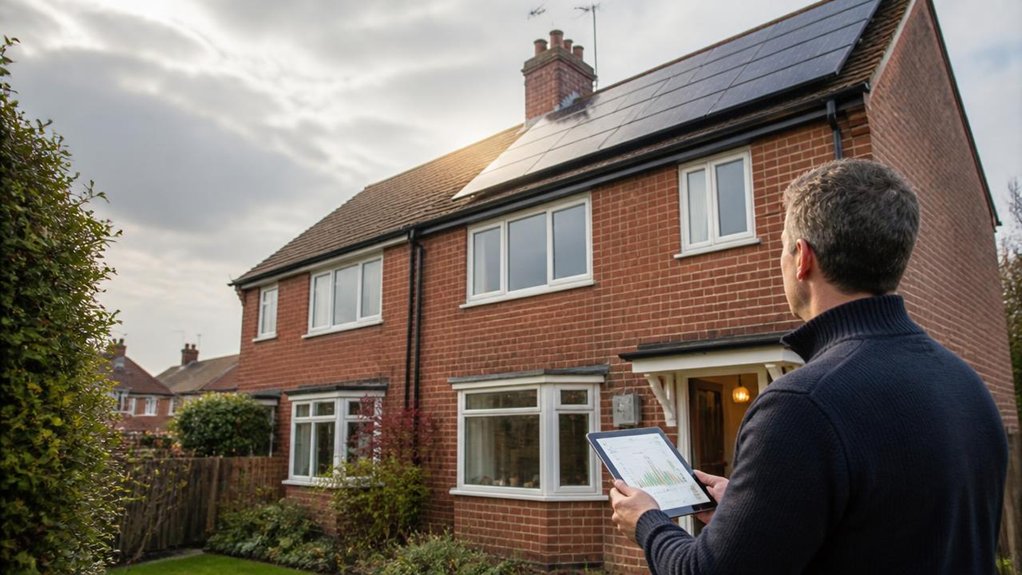
Solar panels can cut electricity bills, but whether they pay back depends on your roof, electricity use and installation quote. Compare the system cost with savings from using your own solar power and payments for electricity exported to the grid.
The estimates below are ranges, not guaranteed prices or savings. They assume a typical UK home with a suitable, unshaded roof; check current costs, tariffs and export rates before deciding, as they can change.
Typical cost: £6,000 to £10,000
Yearly saving: £400 to £800
Simple payback: 8 to 25 years
Best for: Unshaded roofs and daytime use
Main drawback: Shading reduces generation
How to estimate the payback****
- Check the quote and system size. Compare the installed price and panel capacity in kW. Ask whether the quote includes scaffolding, an inverter, electrical work and any battery.
- Estimate the electricity you will use. Solar generation is measured in kWh. Using more power while the panels are generating can increase bill savings; unused electricity may earn an export payment instead.
- Calculate annual savings. For example, if a system supplies 1,600 kWh a year to your home and your unit rate is 25p per kWh, the avoided electricity cost is about £400. This assumes you would otherwise buy all those units from your supplier; check your current tariff.
- Add export payments. Multiply exported kWh by your export tariff. Rates and eligibility vary, so check your supplier’s current terms and the Smart Export Guarantee rules.
- Divide the installed cost by annual savings. A £7,000 system saving £500 a year has a simple payback of 14 years. This excludes maintenance, finance costs, future electricity-price changes and any battery replacement.
The figures are illustrative, not a quote or forecast. Roof direction and pitch, shading, panel capacity, inverter choice, household use and export rates can all change the result. A battery may increase the amount of solar power you use after sunset, but its extra cost can lengthen payback; compare the battery quote with the additional savings it is expected to deliver.
Good
- South-facing, unshaded roofs generally receive more sunlight than shaded roofs.
- Daytime appliance use can increase the share of solar electricity used at home.
- Export payments can provide income for electricity sent to the grid.
- A sound roof may avoid the cost of repairs before installation.
Not so good
- Chimneys, trees and nearby buildings can shade panels and reduce generation.
- A roof needing repair may add work and cost before panels can go on.
- Evening-heavy electricity use can mean more generation is exported.
- A battery adds upfront cost and may not shorten payback.
A solar system is most likely to suit homeowners with a sound, unshaded roof and enough daytime use to reduce bought electricity. It may not suit homes with substantial shading, a roof due for repair or a quote that leaves little time to recover the cost. A competent DIYer can compare quotes, check roof details and monitor generation; electrical connection and commissioning should be done by a qualified installer. Check MCS certification and the installer’s electrical competent person scheme registration, and ask how the work meets Building Regulations Part P.
Best for: Homes with an unshaded roof and daytime electricity use
Skip it if: Shading, roof repairs or a high quote undermine payback
Put your own figures into our payback calculator.
Are Solar Panels Worth It in the UK?
A solar PV system may suit a home with an unshaded roof and daytime electricity use, because using your own generation can reduce grid purchases.
It’s less attractive if your roof is shaded, you use little electricity during daylight, or the quoted cost makes payback too long.
Typical cost: £5,000 to £10,000
Yearly saving: £300 to £700
Simple payback: 7 to 33 years
Best for: Unshaded roofs, daytime use
Check first: Quote, tariff, export rate
These are broad UK estimates, not guaranteed figures. Costs and savings vary with system size, roof direction and shading, household use, electricity unit price, export payments and installation work.
Check current prices and tariffs at the time of writing; they aren’t fixed.
For an illustrative 3 kWp system, assume a suitable roof, annual generation of 2,400 to 3,000 kWh, daytime use of 30% to 50% of generation, and a 25p to 35p per kWh import price.
The remaining generation may earn an export payment, which depends on your supplier and tariff.
Self-used electricity: 720 to 1,500 kWh a year × 25p to 35p per kWh = about £180 to £525.
Add export income for surplus power; total yearly benefit could be around £300 to £700.
At a £5,000 to £10,000 installation cost, simple payback is roughly 7 to 33 years.
This calculation excludes maintenance, financing and future changes to energy prices or export rates.
Payback is faster when installation costs are lower, you use more solar power as it’s generated, or grid electricity costs more. It’s slower with shading, low daytime use, a costly quote or a low export rate.
A battery can increase self-use, but its extra cost may lengthen payback.
Good
- Panels generate more electricity on an unshaded roof.
- Using power during daylight avoids buying some electricity from the grid.
- Export payments may provide income for surplus generation.
- Solar PV can reduce household carbon emissions alongside electricity bills.
Not so good
- Shade from trees or chimneys reduces panel output.
- Evening-heavy electricity use means more generation is exported.
- A battery adds cost and may extend payback.
- Roof repairs after installation can require panel removal and refitting.
A competent DIYer can check roof orientation, shading, electricity use and installer quotes, but shouldn’t connect or commission the system.
A qualified electrician registered with a competent person scheme must handle electrical work and certification under the Building Regulations; use an MCS-certified installer if required by your chosen export tariff or scheme.
Solar panels don’t require a Gas Safe engineer.
Best for: Households with an unshaded roof, daytime electricity use and a quote that supports an acceptable payback.
Skip it if: Your roof is heavily shaded, you use little power during daylight and the figures don’t justify the upfront cost.
Put your own figures into our payback calculator.
Is Your Roof Suitable for Solar Panels?
Roof fit: South, east or west-facing
Shade: Avoid trees and buildings
Roof condition: Sound and weatherproof
Structure: Able to support panel weight
Next step: Ask an installer to inspect
Good
- South-facing roofs usually receive more sunlight than north-facing roofs in the UK.
- East- and west-facing roofs can still generate electricity.
- A roof inspection can identify repairs needed before installation.
Not so good
- Trees, chimneys and nearby buildings can shade panels during daylight.
- Damaged or ageing roof coverings may need repair before panels go on.
- Limited roof space can restrict the number of panels.
A south-, east- or west-facing roof in sound condition may suit solar panels, but shade and roof space affect the likely savings. A shaded roof may generate less electricity, while repairs add to the upfront cost and can delay payback.
A sound, unshaded roof can suit solar panels, but shade, limited space and repairs may reduce savings or delay payback.
Ask an installer to check the roof structure, covering and shading before accepting a quote. A competent DIYer can check for obvious shade and damage from the ground; a qualified installer should assess the roof and fit the system.
Best for: Homes with a sound, unshaded roof
Skip it if: The roof needs major repairs first
How Much Do Solar Panels Cost?
Typical cost: £5,000 to £8,000
Battery cost: Get a separate quote
Best for: Roofs with suitable orientation
Compare quotes: Use MCS-certified installers
Extra costs: Scaffolding and electrical work
Good
- An MCS-certified installer can assess roof suitability and provide a system quote.
- Separate battery quotes show how storage changes the upfront cost.
- Check whether scaffolding, electrical work and warranties are included.
- Some households may qualify for specific support.
Not so good
- A battery raises the upfront cost and may lengthen payback.
- Grants aren’t available to every household.
- Inverter replacement can add to long-term costs.
- Roof suitability and installation complexity affect the price.
How Much Could You Save on Bills?
Solar savings depend on how much electricity you use while your panels generate, your system’s size and your tariff. Using more solar power at home reduces the electricity you buy; running a washing machine or dishwasher during daylight can help.
You may earn money for surplus electricity through an export tariff, but rates and terms vary by supplier. Compare your expected imports and exports using recent bills, and check the supplier’s current terms. Actual savings vary with household use, weather and electricity prices.
How Long Is the Solar Payback Period?
Solar payback depends on the installed cost, how much electricity your home uses while the panels are generating, and what you earn for exported electricity. Compare the total cost after any eligible grant with annual bill savings and export payments; the result is a simple payback estimate, not a guarantee.
For example, using 3,000 kWh of self-generated electricity a year at 25p per kWh would save about £750 on imported electricity. Add export payments only if you know your export rate and estimated exported kWh; divide the total annual benefit into the system cost to estimate payback.
Payback is usually faster when installation costs are lower and you use more solar electricity at home. It’s slower if you export a large share, your electricity rate is lower, or the system needs costly repairs.
Check current costs, tariffs and grant eligibility before relying on an estimate. Put your own figures into our payback calculator.
What Affects Payback
Solar panels usually take around 10 to 15 years to pay back, but the result depends on your system cost, electricity use and how much solar power you use at home.
A larger system or battery raises the upfront cost. Using appliances while the panels generate can cut the electricity you buy; exporting surplus power earns money only at your export tariff.
A south-facing, unshaded roof generally produces more electricity than a shaded or poorly oriented one. Energy prices, export tariffs and incentives can also change, so check current figures before deciding.
Estimate Your Payback Period
Solar payback depends on the system cost, how much electricity you use at home and what you earn for exported power. Divide the upfront cost by the yearly saving and export income, then allow for maintenance and possible inverter replacement.
For example, an £8,000 system earning £800 to £1,000 a year would have a simple payback of about 8 to 10 years. This is an illustration, not a current price or forecast: check installer quotes, electricity rates and export tariffs at the time of writing.
Your result will change with system size, household use, generation and tariff rates.
An Export tariff comparison can help you check rates for surplus electricity. Ask installers for estimates based on your home, then compare the sums using your own figures.
Put your own figures into our payback calculator.
What Affects Solar Savings in the UK?
Daytime use: Higher self-use can reduce grid imports
Import tariff: A higher unit rate increases the value of solar electricity you use
Export rate: The Smart Export Guarantee pays for eligible surplus electricity
Battery storage: Stores surplus for use after sunset
Roof conditions: Orientation, shading and panel efficiency affect generation
Seasonal output: Generation changes through the year
Should You Get Solar Panels for Your Home?
At a glance
Typical cost: £6,000 to £9,000
Likely saving: £400 to £700 yearly
Simple payback: 9 to 23 years
Best for: Sunny roofs with daytime use
Check first: Roof condition and shading
Good
- South-, east- or west-facing roofs can generate useful electricity.
- Using power while panels generate can reduce electricity bought from the grid.
- A battery can store surplus daytime electricity for later use.
- Solar panels can reduce grid reliance and household carbon emissions.
Not so good
- Shade from trees or chimneys can reduce panel output.
- Roof repairs after installation can mean removing and refitting panels.
- Low daytime electricity use can make payback slower.
- A battery adds cost and may not pay back within its useful life.
Verdict
Solar panels suit households with a sound, unshaded roof and enough daytime use to save roughly £400 to £700 a year.
A typical £6,000 to £9,000 system could take about 9 to 23 years to pay back, using those savings; actual results depend on system size, electricity use and tariff.
These are illustrative UK ranges, not fixed prices or guarantees, and should be checked at the time of writing.
A competent DIYer can assess shade and compare quotes, but an MCS-certified installer should design and install the system. A qualified electrician registered with a competent person scheme must handle electrical work and certification under Building Regulations Part P.
Don’t bother if the roof needs major repairs or is heavily shaded.
Best for: Sound roofs with daytime electricity use
Skip it if: Major roof repairs or heavy shade
Put your own figures into our payback calculator.
Frequently Asked Questions
Do Solar Panels Work During Cloudy Weather?
Solar panels still generate electricity on cloudy days, but reduced sunlight lowers their output. How much they produce depends on the cloud cover, season, panel orientation and shading. They can generate power year-round, though winter output is usually lower.
Do Solar Panels Need Regular Cleaning or Maintenance?
Clean panels only when bird droppings, leaves or other debris are reducing their output; UK rain usually removes ordinary dirt. Don’t pay for routine cleaning if the panels are producing normally, as the cost may outweigh any extra electricity generated.
A competent DIYer can check panels from the ground and clear loose debris from a safely accessible area. Don’t climb onto the roof or touch wiring. Electrical checks and repairs should be handled by a qualified electrician registered with a competent person scheme; ask your installer to inspect damage or faults. Have the inverter and wiring checked if you see warning lights, damaged cables or a drop in output.
Can I Add a Battery to My Solar Panel System Later?
A battery can usually be added later, but compatibility depends on your inverter, wiring and battery type. Ask an MCS-certified installer to check whether your existing inverter can connect to a battery or needs replacing; the installer should also confirm the battery’s usable capacity in kWh and power output in kW.
A competent DIYer can compare specifications and prepare questions, but should not connect or commission the battery. Electrical work must be done by a qualified electrician registered with a competent person scheme, in line with Part P of the Building Regulations; ask the installer whether the work needs building control notification. Check any changes to your MCS certification and export tariff with your installer and electricity supplier.
Good
- An AC-coupled battery can work with many existing solar inverters.
- A compatible hybrid inverter may avoid replacing the existing inverter.
- A battery can store surplus solar electricity for later use.
Not so good
- An incompatible inverter may need replacing, adding to the installation cost.
- A battery may save little if your household uses most solar power during daylight.
- Battery savings depend on your electricity tariff, usage and usable capacity.
- Installation requires electrical work that is not a DIY job.
Verdict: A retrofit suits households that regularly export surplus solar electricity and can use stored power later, because that can reduce imported electricity. Do not bother if your system exports little surplus or the cost of replacing an inverter makes the likely savings poor. Payback depends on the quote, battery capacity, tariff and how much stored electricity you use; check current prices and any tariff terms before deciding.
Best for: Homes with regular surplus solar power
Skip it if: Your system has little surplus electricity
What Happens to Excess Electricity My Panels Generate?
Export payments: Your supplier pays for eligible electricity sent to the grid under the Smart Export Guarantee.
Battery option: Store surplus electricity for use later.
Payment rate: Check your supplier’s current tariff; rates can change.
Do I Need Planning Permission to Install Solar Panels?
Rooftop solar panels usually count as permitted development in England, so you may not need planning permission. The rules can differ elsewhere in the UK.
You may need consent if your home is listed, is in a conservation area or has other planning restrictions. Check with your local planning authority before ordering panels; permitted-development rules depend on the property and installation.