
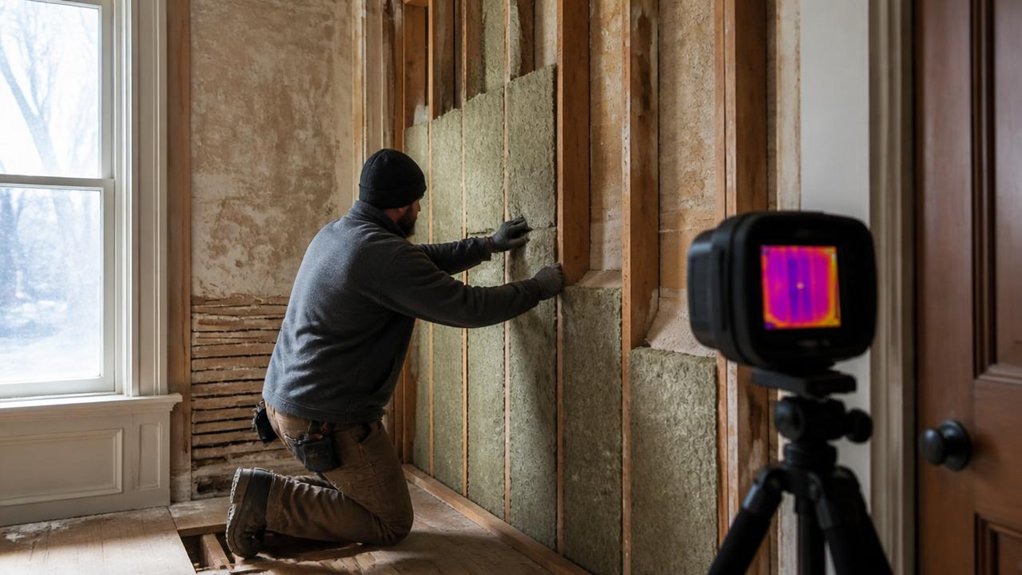
Older homes can lose heat through gaps around doors, windows, pipes and wiring, as well as through the loft and accessible floors. Check for draughts and inspect existing insulation before paying for upgrades; the best option depends on the building’s condition, ventilation and your budget.
A competent DIYer can fit draught excluders and seal small gaps with suitable materials, but should not block ventilation or cover electrical equipment. Loft insulation may be a DIY job if access is safe and wiring, water tanks and eaves are handled correctly. Electrical work must meet Part P of the Building Regulations; use an electrician registered with a competent person scheme where the work requires certification. Gas appliances and flues must be handled by a Gas Safe registered engineer. For heat pumps or other work requiring MCS certification, use an MCS-certified installer.
Good
- Sealing gaps around doors and windows can reduce draughts.
- Loft insulation can help where existing insulation is thin or missing.
- Draughtproofing is often simpler than replacing windows.
- Checking ventilation helps avoid trapping moisture.
Not so good
- Sealing air vents can create condensation and indoor air quality problems.
- Insulating a damp loft without fixing the leak leaves the cause unresolved.
- Floor insulation can be disruptive where access is limited.
- Replacing sound windows solely for insulation may not justify the cost.
Verdict
Draughtproofing and topping up loft insulation suit owners who can identify heat loss and compare quotes before committing. They should not be treated as automatic savings: damp, poor ventilation or already adequate insulation can make further work poor value. Costs and savings depend on the property, energy use and installation, so calculate payback using current quotes and your tariff.
Best for: Homes with obvious draughts or thin loft insulation
Skip it if: The home is damp or already well insulated
Seal Drafts Around Doors, Windows, and Pipes
Typical cost: £10 to £100 for materials
Likely saving: Depends on gaps and heating use
Payback: Often under two heating seasons
Best for: Draughty doors and windows
DIY scope: Seals and caulk; foam with care
Good
- Fit door weatherstripping so the door still closes properly.
- Use caulk on fixed window joints, not moving sashes.
- Replace worn seals around opening window sashes.
- Apply expanding foam sparingly around pipe openings.
Not so good
- Foam can distort nearby materials if you use too much.
- Weatherstripping that’s too thick can stop a door closing.
- Sealing sound, tight joints is unlikely to save much.
- Draft checks with a tissue can miss small leaks.
A competent DIYer can fit weatherstripping, caulk fixed joints and seal small pipe gaps; follow product instructions and avoid blocking ventilation.
Electrical or gas work isn’t needed for these repairs, so an electrician, Gas Safe engineer or MCS-certified installer isn’t normally required. There’s no specific certification requirement for basic draughtproofing; follow UK building regulations where work affects ventilation or fire safety.
Costs and savings vary with the number and size of gaps, materials, heating use and energy tariff. Without those details, a reliable yearly saving or payback can’t be calculated.
Put your own figures into our payback calculator.
Reduce Heat Loss Through the Attic
Typical cost: Varies by insulation type and area
Best for: Attics with thin or damaged insulation
Check first: Insulation depth and condition
Air sealing: Seal gaps before insulating
Keep clear: Soffit ventilation and roof vents
DIY scope: Insulation and hatch draughtproofing
Good
- Check for thin, uneven, damp or damaged insulation before adding more.
- Seal gaps around pipes, wiring and ceiling fixtures with suitable materials.
- Insulate the attic hatch and fit weatherstripping so it closes snugly.
- Keep soffit vents clear to maintain roof-space ventilation.
Not so good
- Adding insulation over damp material can hide a moisture problem.
- Blocking soffit vents can restrict roof-space ventilation.
- Insulation alone won’t stop warm air escaping through unsealed gaps.
- The right insulation depth depends on the existing layer and product.
This suits homeowners with thin or damaged attic insulation because adding insulation can reduce heat loss and heating use. It may not be worth doing if the attic is already well insulated, or if damp or roof problems need fixing first. A competent DIYer can seal accessible gaps and fit insulation, following product instructions and keeping clear of hot fittings and ventilation. Get a qualified electrician for work on wiring; building work must meet relevant Building Regulations.
Adding attic insulation can reduce heat loss, but fix damp problems and seal gaps before installing more.
Best for: Attics with inadequate insulation and no damp problems
Skip it if: Insulation is already adequate or the roof is damp
Insulate Accessible Floors and Crawl Spaces
Floor insulation suits homeowners with an accessible, dry crawl space because it can reduce heat loss without changing the heating system. It may not pay back quickly if the floor is already insulated or the crawl space is damp, so check the condition before buying materials.
Seal gaps around pipes and wiring, then fit insulation between the floor joists without compressing it. Secure the insulation and keep it clear of damp surfaces; deal with moisture and consider a ground vapour barrier where needed.
A competent DIYer can seal small gaps and fit insulation if access is safe. Use protective gear and don’t block required ventilation. Ask a qualified installer to assess persistent damp, structural problems or unsafe access. Electrical work must comply with Part P of the Building Regulations and be done by an electrician registered with a competent person scheme where required.
Typical cost: Check local quotes and material prices
Yearly saving: Depends on floor and heating
Payback period: Calculate from your own figures
Best for: Dry, accessible suspended floors
DIY suitability: Safe access and sound joists
Good
- Fit insulation snugly between joists without compressing it.
- Seal draughts around pipes and wiring before insulating.
- Secure batts so they can’t fall out.
- Check for damp before adding insulation.
Not so good
- Damp crawl spaces can damage insulation and timber.
- Tight access can make DIY work unsafe.
- Insulation may not pay back quickly if the floor is already insulated.
- Blocking ventilation can worsen moisture problems.
Best for: Homeowners with a cold, uninsulated suspended floor and safe crawl-space access, where reducing heat loss is worth the material and labour cost.
Savings depend on the floor area, existing insulation, heating system and energy use, so compare quotes with a realistic estimate before proceeding. Skip it if the crawl space is damp, unsafe to enter or already well insulated; fix moisture problems first, and avoid work that blocks required ventilation. Put your own figures into our payback calculator.
Improve Wall Insulation Without Major Renovations
Typical cost: Get quotes for your wall type
Likely saving: Depends on heat loss
Best for: Older homes with empty cavities
Main risk: Hidden damp or wiring
Check first: Existing insulation and wall condition
DIY option: Seal accessible gaps
Good
- Blown insulation can fill suitable empty wall cavities through small drilled holes.
- A contractor patches the holes after filling the cavity.
- Caulk can seal small gaps around window and door frames.
- Gaskets can reduce draughts around suitable electrical outlets.
Not so good
- Cavity insulation is unsuitable if walls have damp problems.
- Existing insulation can affect whether more material can be added.
- Damaged wiring must be checked before insulation work starts.
- Dense-pack insulation can be unsuitable for some wall constructions.
This suits owners of older homes with empty, dry cavities, where insulation could reduce heat loss without replacing interior finishes.
It may not pay back if the cavity is already insulated, the walls are damp or the installation cost is high.
A competent DIYer can seal accessible gaps with suitable caulk or gaskets, but shouldn’t work on wiring.
Use an installer experienced in the wall type, and check building regulations and any required permissions before work.
Best for: Dry, uninsulated cavities
Skip it if: Walls are damp or already insulated
Get a written quote before deciding: costs and savings depend on wall area, construction, existing insulation, heat use and energy tariff.
Without those figures, a reliable yearly saving or payback can’t be calculated.
Put your own figures into our payback calculator.
Compare Insulation Costs, Savings, and Rebates
Cost, savings and rebates
Compare insulation quotes by material, thickness in mm, area covered and labour. Ask for itemised costs and check whether the work includes removing old insulation, draughtproofing, access equipment and making good.
The answer changes with the home’s size, existing insulation, roof access and heating use.
> Insulation costs and savings depend on your home’s size, existing insulation, roof access and heating use.
For each quote, use the same assumptions: annual energy use, your tariff in pence per kWh, and the expected reduction in kWh. A loft-insulation saving, for example, depends on the loft’s current insulation depth and the new depth; it will be lower if the loft is already well insulated.
Example working: annual saving in kWh × your unit rate in pence per kWh ÷ 100 = yearly saving in pounds.
Simple payback: net cost after eligible grants ÷ yearly saving = payback in years.
Use the installer’s estimate for the expected kWh saving, and ask how it was calculated.
Payback is faster when the home has little existing insulation, high heat use or a higher unit rate; it’s slower when insulation is already good or the work costs more.
Check current grants through GOV.UK, your local authority or energy supplier, and confirm eligibility before work starts. Grant rules and amounts can change, so check the details at the time of writing.
A competent DIYer may be able to fit some loft insulation, provided they can work safely and don’t block ventilation or cover electrical equipment. Insulation around wiring, recessed lights or a water tank needs care; get an electrician to check any electrical risks.
For work involving building regulations, check the applicable requirements with your local authority or installer. If the job includes electrical work, use an electrician registered with a competent person scheme; gas work must be done by a Gas Safe registered engineer. If insulation is part of a heat-pump installation, check whether the installer needs MCS certification for the relevant grant or scheme.
Put your own figures into our payback calculator.
Frequently Asked Questions
How Do I Know Whether My Home Contains Asbestos Insulation?
You cannot identify asbestos insulation by appearance; a laboratory test is needed. If insulation looks suspect, do not disturb it or take a sample yourself. Keep people away and contact a licensed asbestos professional to assess it and arrange safe sampling.
Can Insulation Improvements Help Reduce Noise Between Rooms?
Adding mineral wool or fibreglass between room studs can reduce sound passing through a partition, but it will not stop noise on its own. Results depend on the wall’s construction, gaps around sockets and doors, and sound travelling through floors or ceilings.
A competent DIYer can fit insulation and seal small gaps, provided the work does not disturb wiring or services. Use a qualified electrician registered with a competent person scheme for electrical work; this soundproofing work does not normally require a Gas Safe engineer or an MCS-certified installer.
Adding a second layer of plasterboard or resilient channels may help, but it costs more and reduces room space. Check for ventilation, fire-safety and building-control requirements before altering a partition. There is no reliable cost, yearly energy saving or payback figure for this work: its purpose is noise reduction, not lower energy bills.
How Can I Choose Insulation Materials With Lower Environmental Impact?
Use insulation with recycled content, low embodied carbon and a published environmental product declaration (EPD). Recycled cellulose is often made largely from recovered paper, but check the product’s data sheet for its actual recycled-content figure and thermal conductivity (λ-value).
Compare EPDs on the same basis, such as carbon emissions per square metre at the same thickness and over the same service life. Check that the insulation suits the wall, roof or floor, and compare durability, local availability and the extra cost against expected energy-bill savings. A lower-carbon product may not be worth paying more for if it performs poorly in your home or takes too long to pay back.
Do Insulation Upgrades Affect Indoor Air Quality?
Yes, adding insulation can reduce draughts, but it can also reduce the air that escapes through gaps. That may leave more moisture indoors and increase condensation or mould risk, especially if ventilation is poor.
Check extractor fans and background ventilation before sealing gaps. Choose low-emission insulation materials, and follow the manufacturer’s guidance on fitting and moisture control. Insulation alone does not guarantee better indoor air quality.
Should I Hire an Energy Auditor Before Planning Insulation Work?
An energy audit is worth paying for if you are unsure where your home loses heat or which insulation job to do first. Ask for the survey fee, what it covers and whether the report measures heat loss, ventilation and moisture risks; check whether the fee is credited against any later work.
For a straightforward job, such as topping up accessible loft insulation, an audit may not pay for itself. Compare the fee with the likely bill saving from the proposed work, using your home’s size, current insulation, energy use and unit rate. Payback is slower if the survey fee is high or the recommended work saves little; it is faster when the audit prevents unsuitable work or identifies several worthwhile improvements. Check any quoted prices and grant eligibility at the time of writing.
Put your own figures into our payback calculator.