
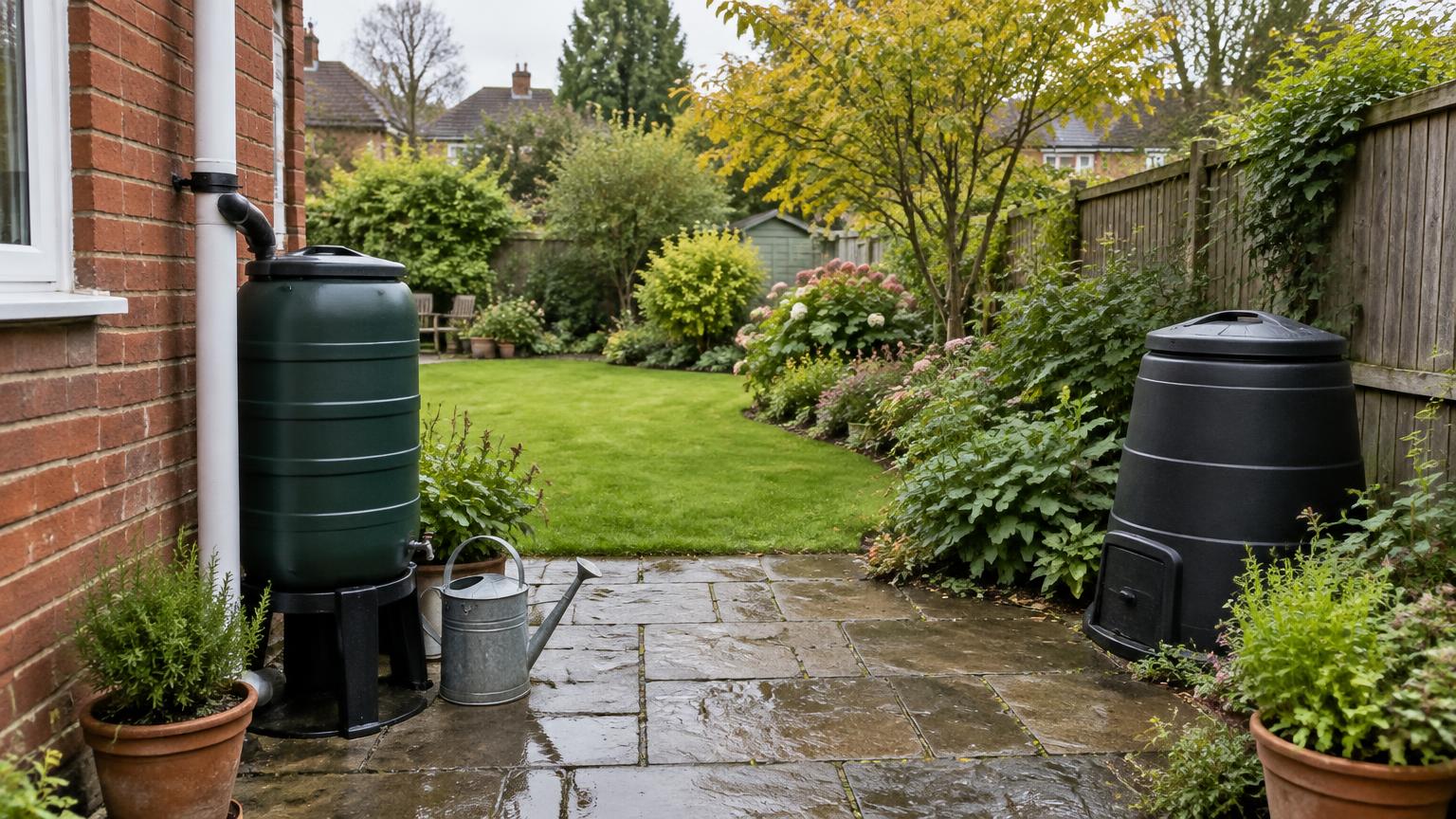
Choosing a water butt means matching storage to your roof, rainfall, garden and available space. A compact 100-litre model may suit a small plot, while larger gardens may need 200–300 litres or linked butts. You’ll also need a stable base, a compatible downpipe diverter and a safe overflow route. Compare capacity with practical details such as tap access and winter care, because the biggest model isn’t always the best buy.
How to Choose a Water Butt Size
Choosing a water butt size depends on your roof area, local rainfall and how much water you use. Estimate how much rain your roof can collect, then consider when and how often you’ll use the stored water.
If you mainly need water for garden watering, think about the number of plants and how frequently they need attention. For broader household demand, include tasks such as washing tools or cleaning outdoor spaces.
Check whether you can connect more than one butt if your needs change. Your available space, access to a downpipe and willingness to empty the container also affect which capacity will work best for you.
Water Butt Sizes for Every Garden
From compact courtyards to large lawns, there’s a water butt size to suit most gardens. If you’ve got a balcony or tiny patio, choose a slimline model that fits beside a wall or under a downpipe.
For a typical garden, a medium-sized butt can support pots, borders and routine garden irrigation without taking over your space. If you’ve got a large plot, several beds or thirsty plants, consider a larger capacity or linked butts, provided you have room and a suitable base.
Match your choice to your layout and watering needs, so you can improve drought resilience while keeping access practical.
How Much Rainwater Can a Water Butt Collect?
Your water butt’s capacity sets the maximum it can store, but your roof size and local rainfall affect how quickly it fills.
A larger roof can channel more rain into your butt, while drier weather limits collection. Consider all three factors when estimating how much water you’ll have for your garden.
Collection Capacity
How much rainwater can a water butt collect? Its capacity depends on its size: a compact 100-litre model suits modest garden use, while larger 200- or 300-litre butts hold more between waterings.
You’ll only collect water while space remains, so choose a capacity that matches how quickly you use it and how often you can empty it. For seasonal storage, consider linking several butts or choosing a larger tank, provided you have room and a suitable base.
Overflow management matters too: fit an overflow diverter or hose to direct excess water safely away from walls and foundations when your butt fills.
Roof Size And Rainfall
Roof area and rainfall determine how quickly your water butt fills: each millimetre of rain on one square metre of roof yields about one litre of water before losses from splashing or evaporation.
To estimate your potential supply, multiply your roof’s horizontal footprint by local rainfall, then allow for collection losses and gutter efficiency. A steep roof pitch won’t usually increase the measured catchment area, but it can send water to gutters faster.
Rainfall intensity matters too: heavy showers may overwhelm narrow gutters or diverters, reducing what reaches your butt. Check your local rainfall figures and choose storage capacity that matches your roof and typical wet-season conditions.
Where to Place Your Water Butt
Choosing the right spot makes your water butt easier to use and helps it collect more rainwater. Choose a level, stable surface that can support the full weight of a filled container.
A level, stable spot makes your water butt easier to use and helps it collect rainwater safely.
A firm paving slab or concrete base helps prevent sinking and keeps the butt upright.
Choosing a shady location can slow algae growth and keep stored water cooler. Positioning away from foundations helps reduce the risk of damp if the container leaks or overflows.
Leave enough room around your butt to reach its tap and remove the lid when needed. Consider how you’ll carry water to your garden, too; a nearby path makes filling watering cans simpler.
How to Fit a Water Butt to a Downpipe
Once you’ve chosen a stable, accessible spot, connect your water butt to a nearby downpipe with a rainwater diverter. Choosing a downpipe diverter starts with matching its size and type to your pipe and butt. Check the manufacturer’s instructions, then mark the required height so the diverter sits level with the inlet.
Cut the downpipe carefully, fit the diverter, and attach the connecting hose. Keep the hose short and sloped towards the butt to help water flow. For preventing leaks at the connection, secure each joint firmly and use the supplied seals. Run water through the system and tighten any dripping connections.
Which Water Butt Features Matter Most?
Choose a capacity and shape that fit your garden and the space available. Check that the tap and outlet make filling and draining easy.
Look for filters and covers that keep out debris and mosquitoes.
Capacity And Shape
How much water you can store—and where the butt will fit—depends on its capacity and shape.
Choose a capacity that matches your roof size, rainfall and garden needs. A larger butt can collect more rain between dry spells, but it’ll take up more space and may stay partly empty if your roof catches little water.
Check the product’s dimensions before buying, then measure your available spot, including clearance for fitting and maintenance.
Round water butts suit open corners, while slimline shapes fit narrow gaps beside walls or sheds. You’ll also find square and modular designs that make better use of compact spaces.
Pick a stable, accessible position close to your downpipe.
Tap And Outlet
A well-placed tap makes filling watering cans easy, while a hose outlet lets you water further afield. Check the tap’s height against your can, so you won’t need to lift a full container awkwardly.
Tap flow rate affects how quickly you can fill cans or run a hose; choose a fitting that suits your needs. Look for sturdy, easy-to-turn handles, especially if you’ll use the butt often.
Check outlet compatibility before buying: your hose connector must fit the outlet, or you may need an adapter. Make sure both fittings sit low enough to drain most stored water without leaving you struggling to reach them.
Filters And Covers
Filters keep leaves, insects and roof debris out of stored water, while a close-fitting cover helps block light and discourage mosquitoes.
Choose a filter that fits your downpipe and water butt inlet, and check how easily you can remove it for cleaning. Fine mesh catches small debris, but it may clog faster, so inspect it regularly.
If you want to keep pests out, look for built-in mosquito screens that seal gaps around the opening. A durable lid also protects stored water from contamination and reduces algae growth by limiting sunlight.
For outdoor use, UV resistant covers withstand sun exposure and help your water butt last longer.
Best Water Butts for Small and Large Gardens
Choosing the best water butt depends on how much space you have and how much rainwater you use. For a small garden, choose a slim, compact model that fits beside a shed or under a downpipe.
Budget friendly water butts suit practical needs, while decorative water butts can complement your outdoor space. Check the capacity before buying so you don’t sacrifice too much storage for appearance.
In a large garden, a bigger tank can supply more water for beds, borders, and containers. You could also connect several butts to increase capacity.
Measure your available space, consider your watering habits, and choose a design that fits your budget and garden.
How to Keep a Water Butt Clean and Frost-Safe
To keep your water butt clean and frost-safe, remove leaves and debris regularly, and empty or protect it before freezing weather.
Fit a fine mesh over the inlet to keep out insects and organic matter, and rinse the lid and filter when they collect dirt.
For Preventing algae, keep your butt shaded, use an opaque model, and seal the lid to block sunlight.
Clean the interior once a year with a brush and mild soap, then rinse thoroughly; avoid harsh chemicals if you use the water on plants.
For avoiding freeze damage, disconnect the tap and drain the butt, or move it somewhere sheltered.
If you can’t empty it, leave room for ice to expand.
Frequently Asked Questions
Can Water From a Water Butt Be Used for Drinking?
Can you drink water from a water butt? Not safely without rainwater filtration and potable treatment. You should treat it as non-drinking water, since roof runoff may contain harmful microbes, chemicals, and debris.
Is Rainwater From a Water Butt Safe for Pets?
Rainwater from a water butt isn’t reliably safe for pets. For pet hydration, offer clean tap water instead; contaminant risks include bacteria, algae, chemicals, and animal waste. Keep your pet away from stored rainwater.
Do I Need Planning Permission to Install a Water Butt?
You usually don’t need planning permission to install a water butt, but check local rules for permitted locations. If you live in a listed building or conservation area, contact your council before installation.
Can I Connect Multiple Water Butts Together?
Yes—you can connect multiple water butts, making your storage capacity grow like a reservoir. Linking multiple butts works best with compatible connectors; Connecting overflow pipes helps prevent spills, so position each butt securely on level ground.
Will Using a Water Butt Reduce My Water Bill?
Yes, a water butt can reduce your water bill by supplying rainwater for garden watering and other suitable uses. Your savings depend on mains water displacement, rainfall, usage, and whether you’re charged by meter.