
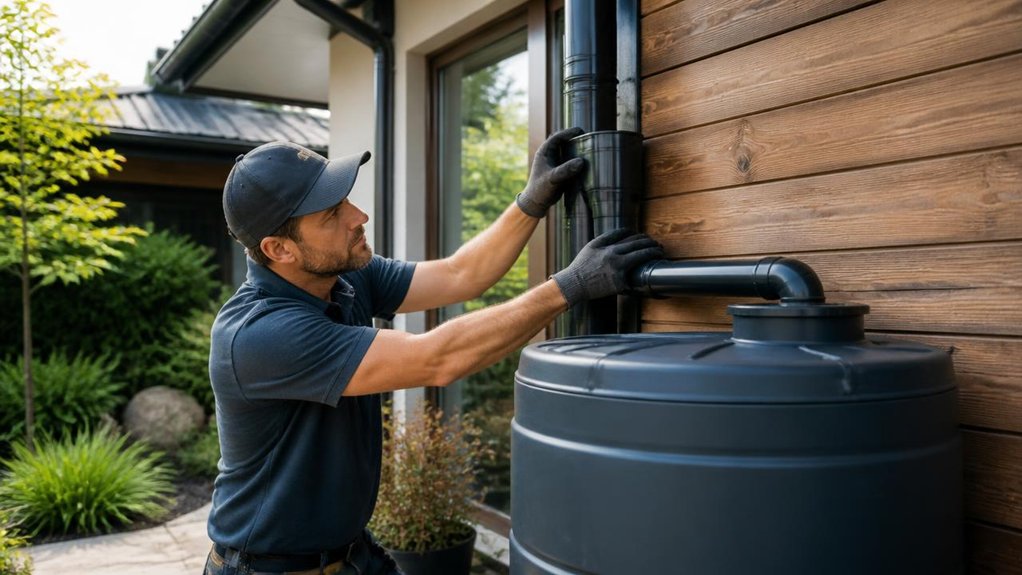
Typical cost: £100 to £500 for a rain barrel
Best for: Gardens with regular summer watering
Main saving: Avoided mains water charges
Payback: Depends on water use and charges
Key factors: Roof area, rainfall and tank size
Good
- A rain barrel can supply water for garden use.
- A larger tank can collect more roof runoff.
- Rainwater can reduce mains water use when demand is regular.
- A simple barrel may need little installation work.
Not so good
- A small barrel will not meet high summer demand.
- Savings fall if you rarely use collected water.
- Tank and installation costs can outweigh avoided water charges.
- A roof with little catchment area collects less water.
A rain barrel suits households that water their gardens regularly and can use collected water instead of mains water. A larger system may suit homes with ample roof area, but the tank and installation costs can take years to recover. Homeowners who use little water outdoors should not bother if the equipment costs more than the water charges they avoid. Compare a written quote with your actual water use and charges; check current prices before deciding.
Best for: Regular garden watering and suitable roof area
Skip it if: Low outdoor use makes savings small
A competent DIYer can fit a basic rain barrel if the base is stable and the downpipe connection follows the manufacturer’s instructions. A larger system involving pumps or electrical connections needs a qualified electrician registered with a competent person scheme; applicable electrical work must meet Part P of the Building Regulations. A Gas Safe engineer or MCS-certified installer is not normally needed for rainwater harvesting.
How Does a Rainwater Harvesting System Work?
A rainwater harvesting system collects roof runoff through gutters, removes debris and stores the water in a covered tank or cistern. A screen at the downpipe catches leaves and twigs; filters remove finer particles before the water enters storage.
A first-flush diverter sends the dirtiest initial runoff away from the tank. A tap or pump then supplies stored water for uses such as garden watering or toilet flushing.
A first-flush diverter keeps the dirtiest runoff out of storage, while a tap or pump delivers water for everyday non-drinking uses.
Don’t assume stored rainwater is safe to drink: drinking-water use needs appropriate treatment and testing.
A competent DIYer can fit and maintain a basic garden-water system, provided the tank is stable and overflow drains safely.
Toilet connections and any link to the mains supply need suitable plumbing and protection against cross-contamination under the Water Supply (Water Fittings) Regulations 1999. Use a qualified plumber if you’re unsure; electrical work on a pump may need a qualified electrician. Check local requirements before work.
Good
- A leaf screen stops larger debris entering the tank.
- A first-flush diverter diverts dirty initial runoff.
- A covered tank limits access by insects and debris.
- A pump can supply water to a garden tap.
Not so good
- Filters and screens need regular cleaning to prevent blockages.
- A pump needs electricity to move water under pressure.
- Stored water needs treatment before drinking.
- A tank needs a safe overflow route for heavy rainfall.
Verdict
A basic system suits households that can use collected water regularly for garden watering, reducing reliance on mains water.
A large tank or pump may not pay back if roof collection is low or water use is occasional.
Best for: Homes with garden use and space for a tank
Skip it if: You have little roof runoff or no regular use
What Does a Rainwater Harvesting System Cost?
Typical cost: £100s to £1,000s
Main costs: Tank, filters, pump, installation
Extra costs: Delivery, plumbing, permits
Ongoing costs: Gutter, filter, pump maintenance
Savings: Depends on mains water use
Good
- A rain barrel can cost less than a whole-house system.
- A larger tank stores more water for dry periods.
- Collected rainwater can reduce mains water use for gardens.
- Itemised quotes help compare equipment, labour and warranties.
Not so good
- Pumps and filters add to the purchase and maintenance costs.
- Permits may be required, depending on local rules.
- A system used mainly for garden watering may save little on water bills.
- Payback depends on rainfall, water use and the cost of mains water.
What Drives System Size and Installation Costs?
Roof area, local rainfall and roof material determine how much rainwater a system can collect. Check the roof’s catchment area in square metres (m²) and use local rainfall data; a larger roof or wetter location can increase the available supply.
Size the tank around your intended uses, such as garden watering or toilet flushing. A larger tank costs more and may need a stronger base, so extra capacity may not be worth paying for if you can’t use the stored water.
Site access, ground conditions and the distance from gutters to the tank affect installation labour and pipework. Pumps, filters, buried tanks and complex connections add cost compared with a basic above-ground tank.
DIYers can usually assemble a simple rainwater butt, but buried tanks and plumbing connected to household toilets need suitable professional installation; plumbing work must comply with Part G of the Building Regulations in England and Wales.
How Much Can a Rainwater System Save?
Rainwater savings come from the mains water you no longer use, so check your water and sewerage charges and how much rainwater your household can use.
A larger roof or tank doesn’t guarantee a shorter payback if rainfall is low or demand is limited.
Using collected rain for toilet flushing, laundry or garden watering can replace more mains water than using it only occasionally.
Savings vary with rainfall, roof area, tank capacity and household demand; mains water may still be needed during dry spells.
Track how much rainwater you use to see how savings change through the year.
Will the System Pay Off for Your Home?
Rainwater harvesting rarely pays back through lower water bills alone. The result depends on your water use, local water charges, roof area, rainfall and tank size; check your water company’s current charges before estimating savings.
For a simple estimate, use the mains water you expect to replace each year and multiply it by your metered charge per cubic metre. Then divide the system’s installed cost by that annual saving.
Include pump electricity, filter changes and repairs; without a quoted system cost and your own usage figures, a reliable payback range can’t be given.
Payback is faster when a large roof and tank supply toilets, laundry or regular garden watering. It’s slower when you use little water, have limited storage or only water the garden occasionally.
A system is unlikely to be worth installing purely for bill savings if your expected annual savings are small compared with its installation and upkeep costs.
A competent DIYer can maintain a system and install some non-electrical components, subject to the manufacturer’s instructions and Building Regulations. Use a qualified electrician registered with a competent person scheme for new electrical work, and follow Part G of the Building Regulations for water supplies and fittings.
Keep rainwater pipework separate from mains drinking-water pipework to prevent cross-contamination.
Put your own figures into our payback calculator.
Frequently Asked Questions
Do Rainwater Harvesting Systems Require Permits?
A UK rainwater harvesting system does not usually need planning permission, but building regulations may apply. Requirements depend on the system and how you use the water. Check with your local council and building control before installation, especially if you plan to connect harvested water to indoor plumbing.
A competent DIYer can fit a water butt and gutter diverter, following the manufacturer’s instructions. Use a qualified plumber for connections to the mains-water system; the Water Supply (Water Fittings) Regulations 1999 require suitable backflow protection to prevent contamination. An electrician should handle any pump wiring.
How Often Should Rainwater Tanks and Filters Be Maintained?
Inspect the rainwater tank every few months for sediment, leaks and signs of pests. Clean it when sediment builds up or the manufacturer’s instructions call for it; an annual clean is not necessary for every tank.
Check filters monthly and replace them according to the manufacturer’s guidance. How often depends on the filter type, water quality and how much water you use.
Is Harvested Rainwater Safe to Drink?
Harvested rainwater is not automatically safe to drink. Roofs, gutters and storage tanks can introduce dirt, chemicals and harmful microbes, so arrange water-quality testing before drinking it. Use treatment suited to the test results, including filtration and disinfection where needed, and follow local health guidance. Retest regularly, especially after changes to the collection or storage system.
Can a Rainwater System Be Installed in Freezing Climates?
A rainwater system can work in a freezing climate, but exposed water-filled pipes and pumps can freeze and split. Put the tank below ground or in a frost-protected space, insulate pipes, and fit drain-down points so exposed pipework can empty before a freeze.
A competent DIYer can insulate pipes and drain exposed lines, following the tank and pump manufacturers’ instructions. Use a qualified plumber or rainwater-system installer for tank connections, pumps and backflow protection; electrical work must comply with Part P of the Building Regulations and be done by an electrician registered with a competent person scheme. Check local building-control requirements before installation.
Does Homeowners Insurance Cover Rainwater Harvesting Systems?
Cover varies by insurer and policy. Tell your insurer about the rainwater harvesting system, including its tank, pump and pipework, and check whether your buildings policy covers damage from storms, leaks or flooding. Don’t assume the system itself or resulting damage is covered; ask for written confirmation.