
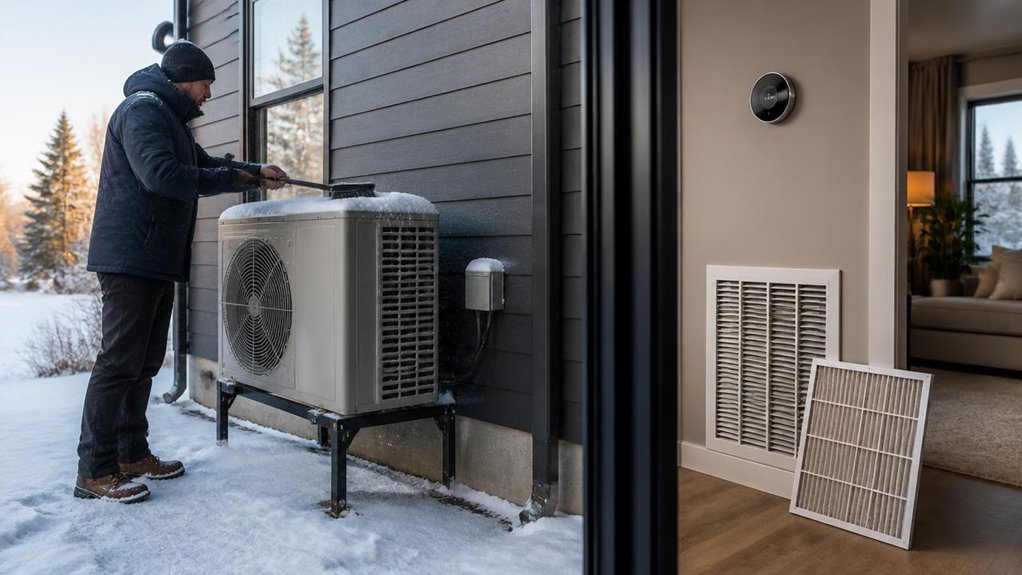
Set the thermostat to a steady, comfortable temperature and avoid large setbacks that trigger electric backup heat. Keep the heat pump’s air inlets and outlets clear, and check the filter as the manufacturer directs.
Seal small draughts around doors and windows, but do not block ventilation or cover the outdoor unit. Avoid changing installer settings or fitting controls without checking compatibility: the wrong adjustment can increase running costs.
A competent DIYer can clear leaves, check filters and seal minor draughts. Leave refrigerant work and changes to the heat pump’s electrical supply to a qualified installer; electrical work must comply with Part P of the Building Regulations in England and Wales.
Set Steady Winter Thermostat Settings
Keep your heat pump’s thermostat at a steady temperature through the day. Frequent changes can make the system work harder to recover from large temperature swings.
When you leave home, use a modest setback rather than switching the heating off. A deep setback can mean a longer recovery period, especially in cold weather.
A programmable thermostat can follow your routine; adjust the setting gradually and give the system time to respond.
Keep Heat Pump Vents and Filters Clear
Good
- Keep furniture, rugs and curtains clear of indoor supply vents.
- Dust vent grilles regularly so debris doesn’t restrict airflow.
- Check the air filter monthly during heavy winter use.
- Keep return vents clear so the heat pump can draw air.
Not so good
- A dirty filter can make the heat pump work harder.
- A clogged filter can reduce airflow and comfort.
- Replacing a clean filter early adds unnecessary cost.
A competent DIYer can clean vent grilles and check or replace the filter, following the manufacturer’s instructions.
Don’t remove covers or work on electrical parts; use a qualified installer for repairs. These routine checks don’t require an electrician, Gas Safe engineer or MCS-certified installer.
Best for: Heat pump owners checking winter airflow
Skip it if: Your vents and filter are already clear
Avoid Unnecessary Auxiliary Heat
Keep the heat pump in its normal heating mode and set the thermostat to a steady, comfortable temperature. A large temperature increase can trigger auxiliary heat, often electric resistance elements that use more electricity than the heat pump.
Check your thermostat manual to see how it displays auxiliary heat and what settings control it. Use emergency heat only if the heat pump can’t keep the home warm or a qualified technician advises it.
A competent DIYer can check thermostat settings and replace batteries if the manual allows.
Leave inspection or adjustment of heat-pump controls, sensors and electrical components to a qualified heat-pump technician; electrical work must comply with UK wiring regulations and be carried out by an appropriately qualified electrician.
Seal Drafts to Keep Heat Inside
Draughtproofing can reduce heat loss, but the savings depend on how leaky your home is and how much heating you use. Check for cold air around exterior doors and window frames on a windy day.
Draughtproofing can reduce heat loss, but the savings depend on your home’s leaks and heating use. Check for cold air on a windy day.
Replace worn door weatherstripping and seal small gaps around window frames with suitable caulk; don’t cover drainage holes or seal moving parts.
A competent DIYer can fit weatherstripping, apply window caulk and use a draught excluder. These jobs don’t normally need a qualified installer.
Don’t block ventilation grilles or flues: that can create a safety risk, particularly in homes with fuel-burning appliances.
Draughtproofing materials vary in cost, and savings depend on the size and condition of the home, heating system, energy use and unit rate. Without those figures, a reliable annual saving or payback can’t be calculated.
Draughtproofing is more likely to pay back quickly where there are obvious gaps; curtains and draught excluders may cost little, but won’t fix gaps in the building fabric.
Put your own figures into our payback calculator.
Schedule Winter Heat Pump Maintenance
A qualified technician should check the heat pump before winter, including its outdoor coil, refrigerant circuit, electrical connections, thermostat and defrost cycle. Ask them to clear leaves and dirt from the coil and check for damage or anything restricting airflow.
You can clean or replace the filter and clear loose debris around the outdoor unit if the manufacturer’s instructions allow it. Leave refrigerant work and electrical repairs to a qualified heat pump technician; don’t open the refrigerant circuit or remove electrical covers yourself.
Ask for a service report that records checks and any recommended repairs. Annual servicing may help maintain reliable operation, but follow the manufacturer’s maintenance schedule and warranty terms.
Frequently Asked Questions
Do Heat Pumps Work Effectively in Extremely Cold Temperatures?
Cold-climate heat pumps can keep heating a home in very low outdoor temperatures, but output and efficiency depend on the model and its rated operating range. Check the manufacturer’s data sheet for heating capacity in kW at the design outdoor temperature, not just its rating at mild conditions.
As outdoor temperatures fall, the heat pump may use more electricity and deliver less heat. Frost on the outdoor coil triggers a defrost cycle, which briefly interrupts heating; the frequency depends on temperature and humidity.
Good
- Low-temperature models are designed to operate in colder outdoor conditions.
- The data sheet shows heating capacity at specified outdoor temperatures.
- A correctly sized system can reduce reliance on a separate heating source.
Not so good
- Heating output can fall as outdoor temperatures drop.
- Defrost cycles briefly interrupt heat delivery.
- Higher electricity use can increase running costs in cold weather.
- Poor insulation can make it harder to keep rooms warm.
Good performance depends on the model, system design and the home’s heat loss. Ask an MCS-certified installer to show the unit’s capacity at your local design temperature and explain whether it needs backup heating. A competent DIYer can check the data sheet and improve draughtproofing, but should not install or connect the heat pump; installation and electrical work need qualified professionals and must meet applicable building regulations.
How Much Can a Heat Pump Reduce Winter Energy Bills?
Heat pumps can cut winter heating costs by 30–50% compared with electric resistance heating, but the result depends on your home and tariff. The comparison is less favourable if you are replacing a gas boiler: savings depend on the heat pump’s seasonal efficiency, your electricity and gas unit rates, insulation and heating controls.
For an estimate, compare the energy each system uses to deliver the same heat. For example, a heat pump with a seasonal coefficient of performance of 3 uses about 1 kWh of electricity to deliver 3 kWh of heat; resistance heating uses about 3 kWh of electricity for the same heat. Multiply each system’s annual energy use by the relevant unit rate. Check current tariffs before calculating, as prices change.
Are Cold-Climate Heat Pumps Worth the Investment?
Cold-climate heat pumps may be worth the investment if they can heat your home efficiently in winter and their running costs compare favourably with your current system. The answer depends on the heat pump’s output in kW, your home’s insulation, electricity and fuel prices, installation costs and available grants.
Compare a written quote with your current annual heating use and costs. Check the manufacturer’s data sheet for the unit’s output and efficiency at low outdoor temperatures; a heat pump’s performance can fall as the air gets colder. Ask the installer to explain how the system will meet your home’s heat demand on the coldest days.
For a UK payback estimate, use the installed cost after any eligible grant, then divide it by the expected annual saving. For example, annual heat demand in kWh × the relevant unit price gives an estimated running cost; compare that with your current system’s fuel use, tariff and efficiency. Use your own figures rather than a generic saving: house size, insulation, hot-water use, system design and tariffs all affect the result. Check current prices, tariffs and grants at the time of writing, as they can change.
A competent DIYer can improve insulation and draughtproofing, but should not install or connect the heat pump, refrigerant circuit or electrical supply. Use an MCS-certified installer and a qualified electrician registered with a competent person scheme for electrical work; a Gas Safe engineer is required for work on gas appliances. Check applicable Building Regulations and certification requirements before work begins.
Put your own figures into our payback calculator.
Can a Heat Pump Provide Cooling During Summer?
Yes. A heat pump cools your home by using its reversing valve to send heat from indoors outside. It works much like an air conditioner, but the cooling output depends on the system’s design and whether it has been set up for cooling.
What Rebates Are Available for Installing a Heat Pump?
UK heat pump support may include the Boiler Upgrade Scheme in England and Wales, Home Energy Scotland grants and loans, or local schemes. Eligibility, funding, deadlines and required paperwork vary by location and can change. Check GOV.UK, Home Energy Scotland or your local authority before agreeing to an installation; do not assume a rebate will cover a fixed share of the cost.