
Typical cost: £40 to £200
Best for: Gardens with dry summers
Main saving: Less mains water
DIY tasks: Planting and mulching
Payback: Depends on water use
Key measure: Water butt capacity in litres
Good
- Group plants by water needs to avoid watering drought-tolerant beds unnecessarily.
- Add mulch 50 to 75 mm deep, keeping it clear of plant stems.
- Fit a water butt to a downpipe and use stored rainwater for garden watering.
- Water deeply at the roots when soil is dry, rather than lightly and often.
Not so good
- A water butt saves little if you rarely water the garden.
- Small containers may run dry during prolonged dry weather.
- Mulch can hold excess moisture around stems if piled against them.
- Drought-tolerant plants still need watering while they establish.
A drought-resistant garden suits households that water often and can reduce mains water use by storing rainwater and choosing plants suited to local conditions. It is less worthwhile if your garden already needs little watering, because plant changes and a water butt may take years to repay. A competent DIYer can plant, mulch and fit a water butt, provided the downpipe connection follows the manufacturer’s instructions. Electrical or gas work is not needed.
Best for: Gardens with regular summer watering
Skip it if: Your garden rarely needs watering
Plan Your Drought-Resistant Garden
Assess sunlight, soil, slope and wind exposure before choosing plants. Note where rainwater collects or runs off, and which beds dry out quickly.
Group plants with similar watering needs to make irrigation easier to manage. Add compost to improve soil structure, then spread mulch to slow evaporation and reduce runoff.
A water butt can collect rain from a downpipe; check that it has a secure lid and a suitable overflow.
Plan paths and hose access so you can reach beds without compacting the soil. A competent DIYer can lay mulch, add compost and connect a water butt to a downpipe.
For work that alters plumbing or drainage, check local requirements and use a qualified tradesperson where needed.
Choose Drought-Resistant Plants for Sun and Shade
For dry, sunny areas, consider sedum or hens-and-chicks: their fleshy leaves store water, and many tolerate lean soil. Agave may suit a sheltered, well-drained spot, but check its mature size and local hardiness before planting.
In dappled shade, hostas, hellebores or native ferns may cope with occasional dry spells once established. They still need suitable soil and watering while they establish, so check each plant’s requirements rather than assuming it’s drought-resistant.
Match plants to the light, soil and space available. If a plant needs conditions your garden can’t provide, choose another rather than trying to make it fit.
Group Plants by Water Needs
Group plants with similar water needs in the same garden zone to make irrigation more efficient.
Keep drought-tolerant plants separate from thirstier ones, so you can water each group appropriately and avoid overwatering.
Match Plants to Zones
Group plants by water needs, then check whether each can cope with your local conditions.
A UK hardiness rating indicates how well a plant tolerates winter cold; it doesn’t guarantee success in your garden. Check the plant’s rating against your area, and consider summer heat, rainfall, soil and exposure.
A drought-tolerant plant suited to a dry, mild region may struggle with cold, wet winters. Read nursery labels and regional growing guides before buying.
Group by Water Needs
Group plants with similar water needs in separate irrigation zones so you can water each area without overwatering drought-tolerant plants or leaving thirsty ones dry. Match plants by watering frequency, root depth and how quickly their soil dries.
Check sun exposure and soil type, too, because both affect moisture.
Adjust each zone’s schedule as the weather, seasons and plants change. This is a straightforward garden-planning task, but any mains-fed irrigation connection must comply with UK water-fittings rules and may need a suitable backflow prevention device.
Separate Thirsty Plants
Give thirsty plants their own irrigation zone, separate from drought-tolerant plants, so you can water them more often without soaking the rest of the garden. Group vegetables, annuals and moisture-loving perennials near a hose or drip line.
Keep low-water island beds apart from thirsty borders, and avoid mixing plants with different watering needs.
Use separate valves or adjustable emitters to control water delivery, then check soil moisture before watering. This layout can reduce wasted water and help prevent excess moisture around drought-tolerant plants.
A competent DIYer can arrange planting groups and fit a hose or simple drip line; mains plumbing or electrical work may require a qualified professional, depending on the work and applicable regulations.
Improve Soil to Hold Moisture
Add compost or other well-rotted organic matter to improve the soil’s ability to hold water. Spread it on the surface as mulch to reduce evaporation and keep plant roots cool.
Avoid walking on wet soil, which can compact it, and dig only when necessary.
Add Organic Matter
Add organic matter such as finished compost, aged manure or shredded leaves to help garden soil hold moisture. Work it into the topsoil before planting, but wait until the ground is dry enough to avoid compaction. Add it gradually; these materials can affect soil acidity, so check the pH if you’re unsure.
Good
- Compost can improve soil structure as it breaks down.
- Shredded leaves add organic matter to the soil.
- Better soil structure can help water soak in and reduce runoff.
Not so good
- Digging wet soil can compact it.
- Aged manure and compost can affect soil acidity.
- Organic matter needs time to break down.
Verdict
Adding organic matter suits gardeners who already have compost or leaves, because it improves soil structure without buying a specialist product. It’s less useful if you need an immediate fix for dry soil, since materials take time to break down and results depend on the soil.
Best for: Improving soil gradually with available materials
Skip it if: You need an immediate moisture fix
Apply Compost Mulch
Spread a 25 to 50 mm layer of mature compost over the soil to reduce evaporation and add organic matter. Keep compost away from plant stems and tree trunks so moisture doesn’t collect against them.
Use fine compost that won’t form a dense crust, and top it up as it breaks down. You can mix it with shredded leaves if that suits your garden.
Protect Soil Structure
Protect soil structure by keeping off garden beds, particularly when the soil is wet. Compacted soil has less space for air and water, which can restrict root growth and make plants less able to withstand dry spells.
Use permanent paths and reach into beds from the edges. Keep digging to a minimum; when loosening soil, work gently and only where needed to avoid damaging soil organisms and stable aggregates.
Leave roots in the ground between crops and add organic matter to help retain moisture. These steps also reduce erosion.
Mulch to Slow Water Loss
A 50–75 mm layer of organic mulch, such as bark, leaves or straw, reduces water loss by shading the soil and slowing wind at its surface. Rain can pass through, but mulch doesn’t replace watering during dry spells.
Spread it after the soil has warmed in spring and water the ground first. Keep mulch clear of stems and tree trunks to reduce the risk of rot, then top it up as it breaks down. A competent DIYer can spread mulch; no qualified installer or electrical, gas or MCS certification is needed.
Add Gravel Paths and Water-Wise Features
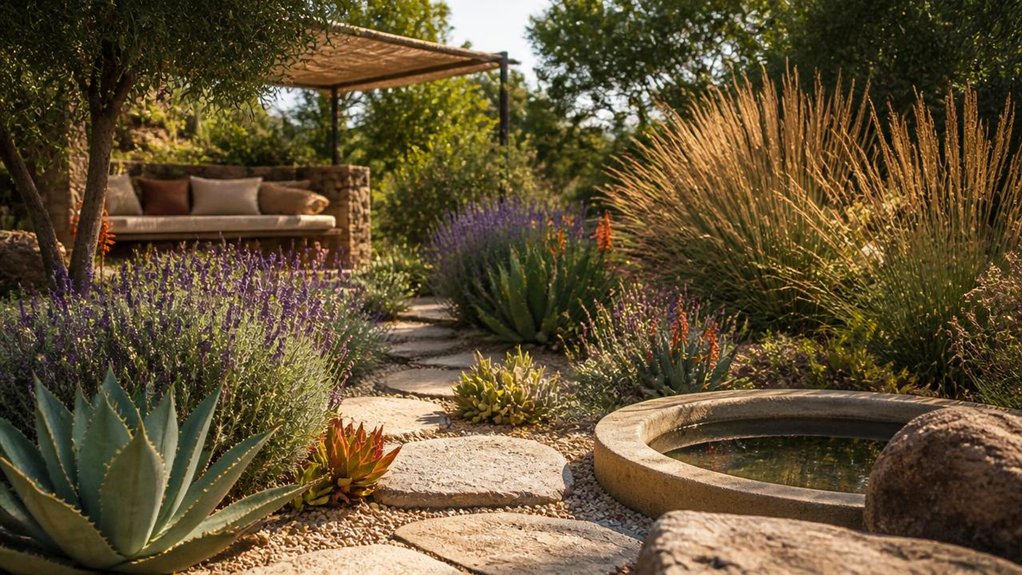
Gravel paths, rain barrels and shallow basins can help manage garden water, but they aren’t energy upgrades and usually have no direct bill saving.
Choose a permeable path where rain currently runs off paving, and size a water butt to suit your roof and available space. A dry creek bed can direct occasional runoff away from a building, but it needs a safe outlet and mustn’t send water onto neighbouring land.
A competent DIYer can lay a gravel path, fit a water butt to a suitable downpipe and shape a small basin, provided the work doesn’t affect drains or foundations.
Check local drainage rules before redirecting runoff; larger drainage work may need approval under building regulations. No electrician, Gas Safe engineer or MCS-certified installer is normally needed for these garden features.
Good
- Permeable gravel lets rain soak into the ground.
- A water butt stores roof runoff for watering plants.
- A shallow basin can hold water temporarily.
- Drought-tolerant path edging needs less frequent watering.
Not so good
- Gravel can spread onto lawns and paving.
- Water butts need space beside a downpipe.
- Standing water can attract mosquitoes.
- Poorly directed runoff can affect foundations or neighbours.
This suits homeowners who need a simple way to manage runoff or store rainwater for garden use, rather than cut energy bills.
It isn’t worth spending heavily on decorative paths or basins if the garden has no drainage problem and plants need little extra water.
Costs depend on path length, materials and whether you do the work yourself; there’s no reliable payback without a measured reduction in mains water use.
Best for: Gardens with runoff or watering needs
Skip it if: You expect lower energy bills
Put your own figures into our payback calculator.
Water Efficiently and Capture Rainwater
Drip irrigation can reduce water waste if you water beds regularly, but it may not be worth the cost for a small garden or occasional watering. A timer doesn’t guarantee savings: set it for early morning, then check the soil and adjust the schedule during wet or dry spells.
A competent DIYer can fit a basic drip line and timer, following the manufacturer’s instructions. Check for leaks and make sure each emitter suits the plant; a blocked or poorly placed emitter can leave roots dry.
A covered rain barrel is a simple way to collect roof runoff for garden use. Choose one with a secure lid and screened inlet, place it beneath a downpipe, and connect a hose or use a watering can. Check local rules before altering a downpipe or connecting the barrel to household plumbing; plumbing work may need a qualified plumber.
Typical cost and water-bill savings depend on the system, garden size, rainfall, water meter and local water charges. Without those figures, a reliable payback estimate isn’t possible. Put your own figures into our payback calculator.
Care for Your Garden During Dry Spells
Water deeply but less often during a dry spell, so roots grow down towards moisture. Water early in the morning and aim it at the soil, not the leaves.
How often you need to water depends on rainfall, soil type and temperature; check the soil before watering again.
Spread mulch around plants to slow evaporation and keep the soil cooler. Leave a gap around each stem to reduce the risk of rot.
Remove weeds, which compete with plants for water, and give vulnerable plants temporary shade during intense afternoon sun.
Check plants regularly for wilting, yellow leaves or crispy edges. These can indicate water or heat stress, but don’t prove that a plant needs more water.
Avoid pruning or fertilising until conditions improve, unless a plant’s specific care needs call for it. Adjust watering as rainfall and temperatures change.
Frequently Asked Questions
Can Drought-Resistant Gardens Support Pollinators and Other Local Wildlife?
Native flowering plants can provide nectar, seeds and shelter for pollinators and other wildlife, often with less watering than thirsty garden plants once established. Choose species suited to your soil and local conditions, leave some stems or leaf litter for shelter, and avoid pesticides that can harm wildlife.
Are Drought-Resistant Gardens Suitable for Balconies and Small Urban Spaces?
Balcony fit: Yes, with suitable containers
Best plants: Drought-tolerant varieties
Check first: Sun, wind and shade
Watering: Containers still need watering
Main limit: Pot size and weight
Do Local Rules Restrict Rain Barrels or Graywater Use?
Check with your local council before installing a rain barrel or using greywater. Rules may require a permit or set conditions for installation and use.
How Can I Prevent Invasive Plants From Spreading in a Drought-Resistant Garden?
Choose non-invasive plants suited to your local conditions, and avoid spreading them by seed or cuttings. Fit root barriers around aggressive growers, pull out seedlings promptly and dispose of invasive plant material securely rather than composting it.
What Are the Long-Term Costs of Converting a Lawn to a Drought-Resistant Garden?
Converting a lawn to a drought-resistant garden can cost more at the start for design, soil preparation, plants and irrigation. Ongoing costs may fall if you use less water and stop mowing, but budget for weeding, pruning and replacing plants. The saving depends on your lawn’s size, local water charges and how much maintenance you do yourself.