
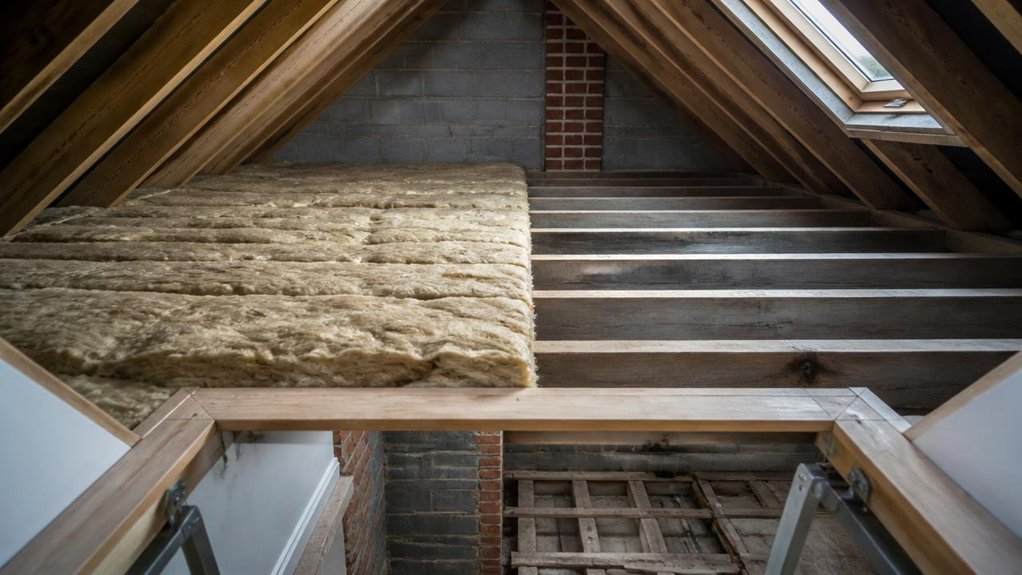
Loft insulation is often the cheapest first step when the loft is dry and has less than about 270 mm of insulation. Cavity-wall or floor insulation may save more in a suitable home, but damp, wall type, access and installation costs can change the payback.
Typical cost: Check current quotes
Likely saving: Depends on home and heating
Best option: Depends on existing insulation
Main check: Loft, wall and floor condition
Payback: Cost divided by yearly saving
Good
- Loft insulation can be topped up where the loft is dry and accessible.
- Cavity-wall insulation suits suitable, unfilled cavity walls.
- Floor insulation can reduce heat loss through suspended timber floors.
- Comparing itemised quotes helps reveal the cost of each measure.
Not so good
- Filling unsuitable cavities can cause damp problems.
- Insulating suspended floors can mean lifting floorboards.
- A damp loft needs attention before insulation.
- Savings depend on the home, heating use and energy tariff.
Loft insulation suits homeowners with a dry loft and thin insulation, because topping it up is often a relatively low-cost measure. Do not add insulation over damp or poorly ventilated areas until the cause is fixed, as this can worsen moisture problems.
Best for: Dry lofts with less than about 270 mm of insulation
Skip it if: The loft is damp or already well insulated
A proper comparison needs current local quotes and a household-specific estimate of yearly savings; without those figures, a payback period would be guesswork. A competent DIYer can top up a dry, accessible loft, but should follow ventilation and wiring guidance. Use a suitably qualified installer for cavity-wall or floor work where the building needs specialist checks; electrical work must comply with Part P of the Building Regulations, gas work must be done by a Gas Safe registered engineer, and heat-pump installations should use an MCS-certified installer. Put your own figures into our payback calculator.
How Do Insulation Costs and Savings Compare?
Typical cost: Varies by material and area
Cost check: Compare materials, labour and preparation
Savings estimate: Use energy use and fuel prices
Payback: Total cost divided by yearly saving
Best comparison: Similar quotes with clear inclusions
Does Loft Insulation Suit Your Home?
Loft insulation may suit your home if the loft is dry, accessible and safe to work in.
Check the roof space for leaks, condensation, blocked ventilation and damaged joists before adding insulation. If you plan to use the loft for storage or as a room, the floor, access and ventilation may need changes.
Loft Suitability Factors
Loft insulation may suit your home if the loft is accessible, dry and in sound condition.
Check that there’s enough space to fit insulation without blocking ventilation or damaging roof timbers.
If you use the loft for storage, insulation can reduce usable space. You may need raised boarding above the insulation; ordinary boards laid directly on it can compress the material and reduce its performance.
Fix roof leaks, damp and damaged timbers before insulating.
Check the position of water tanks, pipes, cables and ventilation routes, as these can affect where and how insulation is fitted.
When Loft Insulation Works
Typical benefit: Greatest with thin insulation
Check first: Leaks, damp and damaged timbers
Ventilation: Keep eaves and roof vents clear
Best for: Accessible, dry lofts
Installation: Match material and depth to the roof
Good
- Topping up thin, uneven or missing insulation can reduce heat loss through the roof.
- Repair roof leaks and damp before laying insulation.
- Keep insulation clear of eaves and vents to maintain airflow.
- Check the roof timbers and insulation occasionally for damp or damage.
Not so good
- Adding insulation over wet or damaged timbers can hide problems.
- Covering eaves can restrict airflow and increase moisture risk.
- A full top-up may not be worthwhile if insulation is already adequate.
- The right material and depth depend on the loft and roof.
This suits homeowners with an accessible, dry loft and thin or missing insulation, where topping it up can reduce heat loss. It isn’t worth adding more without checking the existing depth and condition, or if leaks, damp or damaged timbers need attention first. A competent DIYer can lay insulation if they can work safely and keep vents clear; use a qualified professional for roof repairs or uncertain structural issues.
Best for: Dry lofts with thin insulation
Skip it if: The roof is damp or damaged
Is Cavity Wall Insulation Right for Your Home?
Suitable walls: Cavities wide enough for insulation
Wall condition: Sound, dry and undamaged
Main risk: Driving rain can cause damp
Check first: Get a qualified installer’s assessment
When Does Floor Insulation Pay Off?
Floor insulation is most likely to pay off when an unheated cellar or ventilated crawl space sits below a cold ground floor. The result depends on the floor construction, insulation thickness and whether the work also needs repairs or changes to ventilation.
Typical cost: Get quotes for your floor
Likely saving: Depends on home and heating
Payback period: Compare cost with annual saving
Best for: Cold floors over unheated spaces
Check first: Floor type and damp
A reliable cost and saving estimate needs your floor area, insulation specification, installation quote and heating details; without them, a payback figure would be guesswork. For a simple estimate, divide the quoted cost by the estimated annual bill saving. For example, a £1,000 quote and £100 annual saving would give a 10-year payback; both figures are illustrative, not typical prices or savings.
Payback is faster when the floor is large, currently loses substantial heat and the work costs less. It’s slower when the floor is already insulated, the area is small or repairs add to the quote. Check current prices and any grant eligibility at the time of writing, as these can change.
Good
- Insulating a suspended timber floor can reduce heat loss into a ventilated void.
- Sealing gaps around floorboards can reduce draughts.
- Insulation can make a cold ground floor more comfortable.
- A cellar ceiling may be easier to insulate than lifting floorboards.
Not so good
- Solid concrete floors may need costly work to add insulation above or below the slab.
- Blocking air bricks can increase damp and timber-decay risks.
- Insulation can hide leaks or damaged joists if these aren’t checked first.
- Floor insulation may not pay back quickly where the floor is already insulated.
A competent DIYer can fit insulation between accessible suspended-floor joists, provided they keep ventilation paths clear and follow the product instructions. Check for damp, leaks and damaged timber before covering the floor; use a qualified professional if the structure needs repair or the work involves specialist building changes. Electrical work must meet Part P of the Building Regulations and be done by an electrician registered with a competent person scheme; floor insulation itself doesn’t normally require an electrician, Gas Safe engineer or MCS-certified installer.
Floor insulation suits homeowners with a cold floor over an unheated space when a quote shows a reasonable payback against likely annual savings. It’s less suitable if the floor is already insulated, damp or structural repairs are needed, or the installation cost outweighs the expected savings. Compare quotes and check the floor construction before deciding.
Best for: Cold suspended floors over unheated spaces
Skip it if: The floor is insulated or damp
Put your own figures into our payback calculator.
What Affects Insulation Payback in Your Home?
Insulation payback depends on heat loss, installation cost, heating use and the price you pay per kWh. A poorly insulated home may save more than one that already retains heat, but the result depends on the insulation type, area covered and preparation needed.
Allow for the full quote, including materials, labour and remedial work. Check whether a grant applies, but confirm its current terms and value before including it in your calculation.
Include materials, labour and remedial work in your quote, and check a grant’s current terms before factoring it into your calculation.
Compare the likely annual saving with the total cost, using your own energy use and tariff.
Time spent at home can affect heating demand, but it doesn’t determine savings on its own. A higher tariff can make each kWh saved worth more; future tariff changes can shorten or lengthen payback.
Without figures for your home and quote, a reliable cost, annual saving or payback range can’t be given. Put your own figures into our payback calculator.
Which Insulation Upgrade Suits Your Home Best?
Loft insulation: Best where insulation is below the recommended depth
Cavity walls: Suitable only after a survey confirms the cavity is clear and dry
Solid walls: Higher cost and may reduce room space or alter the exterior
Suspended floors: Useful where draughts come through floorboards
Installer check: Ask for a survey, material details and an itemised quote
Good
- Adding loft insulation can be straightforward when the loft is accessible and dry.
- Cavity-wall insulation needs a survey to check the walls are suitable.
- Internal solid-wall insulation reduces room space and can affect sockets and skirting.
- External solid-wall insulation changes the exterior and may need planning permission.
Not so good
- Insulation can worsen damp if moisture problems aren’t dealt with first.
- Loft insulation can block ventilation if eaves aren’t kept clear.
- Floor insulation can disrupt rooms when installers need access from above.
- A low price doesn’t show whether the proposed insulation suits the wall.
Loft insulation suits homes with a cold, accessible loft because topping it up can reduce heat loss without major work.
Cavity-wall insulation may suit a home with suitable, dry cavity walls, but a survey must confirm this before you accept a quote.
Don’t insulate walls with unresolved damp or unsuitable cavities; the work can create moisture problems.
Compare the quoted cost, expected yearly saving and payback using your home’s figures.
Best for: Homes with clear insulation gaps and suitable construction
Skip it if: Damp or ventilation problems remain unresolved
Frequently Asked Questions
Can Insulation Improve Indoor Comfort During Summer as Well as Winter?
Insulation slows heat entering through the roof, walls and floors in summer, and reduces heat loss in winter. How much it improves comfort depends on the insulation already in place, the part of the home treated and how well the work is fitted.
Does Insulation Help Reduce Noise From Outside?
Yes, insulation can reduce outside noise, but it is not soundproofing. Dense insulation in walls, floors or ceilings can help, while gaps around windows, doors and pipes can let noise through. Seal those gaps first; the result depends on the noise source and the construction of your home.
How Can I Check Whether My Home Already Has Insulation?
Check loft insulation by lifting the hatch and measuring the depth in millimetres. Check wall insulation records, or look for existing inspection holes and vents; do not drill into a wall or remove a vent cover unless you know what is behind it. A qualified insulation installer can assess cavity walls and check whether they are suitable for filling. The Energy Saving Trust says around a third of heat can escape through the walls of an uninsulated home.
Are There Grants or Government Schemes Available for Insulation?
Grants may be available through government schemes, energy suppliers or local councils, but eligibility and funding change. Check GOV.UK and ask your council or energy supplier about current programmes before arranging work. Support can depend on your income, benefits, property and location; do not assume a grant will cover the full cost.
What Maintenance or Ventilation Changes Might Insulation Require?
Check loft insulation for damp, compressed material, gaps and signs of pests. Keep airbricks and other ventilation openings clear; blocked vents can trap moisture and increase condensation risk.
A competent DIYer can clear an accessible airbrick and inspect insulation. Get a qualified installer to alter ventilation where work affects a heating appliance, flue or electrical extractor fan; use a Gas Safe engineer for gas appliances and a registered electrician for electrical work. Check Building Regulations requirements with your local authority before adding vents.