
Typical panels cost: Check current quotes
Solar tiles cost: Check current quotes
Best for panels: Sound, unshaded roofs
Best for tiles: Roof replacement projects
Main trade-off: Roof appearance versus cost
Payback depends: Usage, tariff and roof
Good
- Panels can suit a sound roof that does not need replacing.
- Roof tiles can form part of a new roof covering.
- Both options can generate electricity for household use.
- A battery can store surplus electricity for later use.
Not so good****
- Solar tiles usually cost more than panels.
- Panels need suitable roof space and a sound structure.
- Shading can reduce generation from either system.
- Removing a roof covering to fit tiles can add work.
Verdict
Solar panels suit homeowners seeking a lower-cost route to generating electricity, especially when the roof is sound and has space. Solar roof tiles may suit a planned roof replacement, but are hard to justify if appearance is the only reason for choosing them.
Best for: Panels on a sound, suitable roof.
Skip it if: Your roof needs repair before installation.
A competent DIYer can check roof space, shading and electricity use, but should not connect a solar system to household wiring. Use an MCS-certified installer for the installation and an electrician registered with a competent person scheme for electrical work and notification under Part P of the Building Regulations. A Gas Safe engineer is not needed unless the work also involves gas appliances.
Panels vs. Solar Roof Tiles: What’s the Difference?
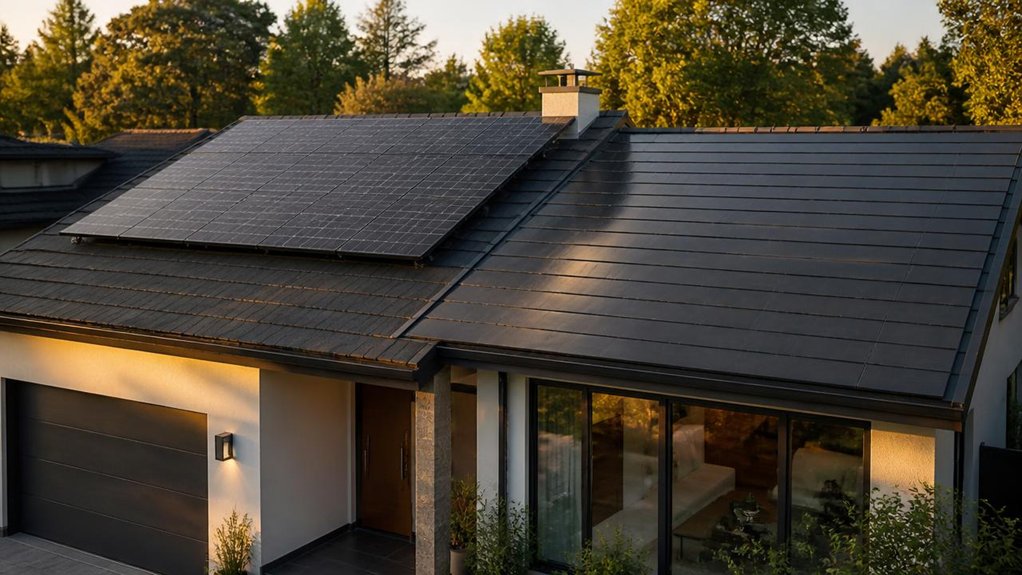
Standard solar panels sit above your existing roof covering. Roof-integrated solar tiles replace some or all of that covering, so the tiles provide both weather protection and electricity.
Standard panels sit above your roof, while solar tiles replace roofing to provide weather protection and electricity.
Panels attach to mounting rails fixed to the roof structure. Tiles form part of the roof surface and usually need a compatible roof system.
Both generate electricity, but their installation methods and appearance differ.
Panels are generally simpler to fit when the roof is in good condition. Solar tiles may suit a new build or a roof that already needs replacing, but replacing sound roofing just to get a more integrated appearance may not be worth the added work and cost.
The right choice depends on roof condition, system design and installer quotes.
Good
- Panels mount above existing roof tiles or slates.
- Solar tiles replace conventional roofing materials in the covered area.
- Panels use mounting rails fixed to the roof structure.
- Both systems generate electricity from sunlight.
Not so good
- Panels remain visible above the roof surface.
- Solar tiles require roofing work as well as electrical work.
- Solar tiles may require a compatible roof system.
- Replacing sound roofing for appearance adds work and cost.
A competent DIYer can compare quotes, check roof plans and monitor generation, but shouldn’t install or connect either system.
Roof-integrated tiles involve weatherproofing and roof work; electrical connections must be completed by a qualified electrician registered with a competent person scheme.
For an MCS-certified installation, use an MCS-certified installer and check the current requirements for the chosen system.
Which Option Fits Your Roof and Home?
A sound, unshaded roof with enough usable space often suits solar panels; solar tiles are more relevant if you’re replacing the roof or need a flush finish.
Check the roof’s age, slope, orientation, structure and shading before comparing quotes.
Panels mount above the existing roof and need suitable fixing points. Solar tiles replace some or all of the roof covering, so they may suit a complex roof, but they aren’t automatically cheaper or easier to fit.
Compare the full cost of the solar system with the cost of the roof work you’d need anyway.
A competent DIYer can check roof plans, note shading and compare quotes. Don’t work on the roof or connect solar equipment yourself.
A qualified installer should assess the roof and design the system; use an MCS-certified installer if you need an MCS certificate for a grant or export tariff.
Electrical work must comply with Part P of the Building Regulations in England and Wales and be notified through the relevant route. Check local planning rules, especially for listed buildings or conservation areas.
How Much Do Solar Panels and Roof Tiles Cost?
Solar panels usually cost less than solar roof tiles because roof tiles also replace the roof covering. The price depends on system size in kW, roof condition, equipment and local labour.
Panels can often use an existing roof; tiles may need more roof work, particularly when the covering needs replacing.
Get itemised quotes and check whether they include scaffolding, permits, electrical work and roof repairs. Ask about warranties and finance, and check current grants or tax relief on GOV.UK; eligibility and amounts can change.
Without a quoted system size, installation price and expected annual generation, a yearly saving or payback estimate would be guesswork.
A competent DIYer can compare quotes and check their own electricity use. A qualified installer should design and fit the system; electrical work must meet Part P of the Building Regulations, and MCS certification may be needed for some schemes or export arrangements.
Check current requirements before signing.
Put your own figures into our payback calculator.
How Do Panels and Tiles Compare on Performance?
Panels usually produce more electricity per square metre than solar tiles, but the difference depends on the products’ rated power in kW and your roof. Compare manufacturers’ output ratings and efficiency figures for the same roof area; tiles may produce less because they must fit the roof’s shape and design.
Shading, roof angle and local weather also affect annual output in kWh. Check the manufacturer’s low-light performance data if your roof gets little direct sun, and compare estimated generation with your household’s electricity use.
How Do Installation and Repairs Differ?
Solar panels sit on rails above the roof, while solar tiles replace some of the roof covering. Panels usually need less coordination with roofing work; tiles require the installer to integrate them with the roof and electrical system.
A competent DIYer can compare quotes and check roof access, but shouldn’t install or connect a solar system.
Use an MCS-certified installer, and have electrical work completed by an electrician registered with a competent person scheme. Ask how the installer will protect the roof and provide access for future repairs.
Choose an MCS-certified installer, use a registered electrician, and ask how they’ll protect your roof and enable future repairs.
Technicians can often replace an individual panel without removing the roof covering.
A damaged solar tile may need a matching replacement and roofing work, so check parts availability, repair access and warranty terms before choosing.
Frequently Asked Questions
Are Solar Panels or Roof Tiles Eligible for Tax Credits?
Federal solar tax credits are US incentives, so they do not apply to UK homes. In the UK, check current GOV.UK guidance for grants and tax rules; eligibility depends on the scheme and your circumstances.
Solar panels and solar roof tiles may qualify for support under some schemes, but do not assume they are eligible. Check the scheme’s current terms before accepting an installer’s quote.
How Long Do Solar Panels and Solar Roof Tiles Last?
Solar panels typically last 25–30 years; solar roof tiles typically last 20–30 years. Maintenance is usually modest, but check the manufacturer’s warranty and maintenance requirements for the specific product.
Recycling options vary by manufacturer and location. Check what happens to the panels or tiles at end of life before you buy.
Can I Add Battery Storage to Either Solar System?
Battery storage may work with either solar system, but compatibility depends on its inverter, wiring and battery chemistry. Check the inverter manufacturer’s data sheet before buying; some systems need a compatible hybrid inverter or AC-coupled battery.
A competent DIYer can compare specifications and estimate usable capacity in kWh. A qualified electrician registered with a competent person scheme should connect the battery and alter fixed wiring; use an MCS-certified installer if required by your installation or scheme. Ask the installer to confirm compliance with BS 7671 and applicable building regulations.
Do Solar Panels or Roof Tiles Increase Home Resale Value?
Solar panels can improve resale appeal, but they do not guarantee a higher sale price. The effect depends on whether you own the panels, their age and condition, and local buyer demand. Leased panels or a roof lease can complicate a sale; provide buyers with the agreement, generation records and warranties. Roof tiles are a different matter: replacing worn or damaged tiles may prevent a price reduction, but ordinary tiles are not a reliable way to add value.
What Happens to My Solar System During a Power Outage?
A standard grid-connected solar inverter shuts down during a power cut to prevent electricity flowing into the grid and endangering workers. Solar panels alone therefore will not keep your home powered.
Backup requires a compatible battery, inverter and changeover equipment. Check which circuits the system can supply and its maximum output in kW; a battery’s capacity in kWh determines how long it can run them. A qualified electrician registered with a competent person scheme should install and connect the equipment. DIYers can compare quotes and check which appliances they need to power, but should not carry out the electrical installation. Follow the applicable wiring regulations and check whether the work needs Building Regulations notification in England and Wales.