
A competent DIYer can lower the thermostat, fit draught excluders and switch off unused lights. Do not block air vents: they provide ventilation and may be required for safe appliance operation. Leave gas-heating work to a Gas Safe registered engineer and electrical work that requires certification to an electrician registered with a competent person scheme. For renewable heating or solar work, check whether the job needs an MCS-certified installer for certification or grant eligibility.
Cut Energy Costs With Simple Home Habits
Adjusting your thermostat, sealing draughts and using curtains can reduce energy use without major work. The savings depend on your home, heating system, energy tariff and how you use each room, so calculate them from your own bills rather than relying on a fixed estimate.
Good
- Lowering the thermostat by 1°C can reduce heating demand, depending on the home and heating system.
- Draught-proofing gaps around windows and doors can reduce heat loss.
- Closing curtains after dark can limit heat loss through windows.
- Switching off unused lights avoids their electricity use.
Not so good****
- Turning down the heating while you’re out saves less if you’re away briefly.
- Unplugging phone chargers saves little when they aren’t charging.
- Draught-proofing mustn’t block ventilation required for safe appliance operation.
- A thermostat change may not save much in a poorly insulated home.
DIY and safety: A competent DIYer can fit removable draught excluders, adjust curtains and change compatible bulbs. Don’t seal vents needed for combustion or ventilation.
Thermostat wiring and fixed electrical work should be done by an electrician registered with a competent person scheme; gas appliance work must be done by a Gas Safe registered engineer. For heating-system upgrades, check whether an MCS-certified installer is required for the work or any grant. Follow relevant Building Regulations, including Part P for electrical safety where applicable.
Verdict
These habits suit households that can reduce heating use or draughts at little cost, because the savings can outweigh the small expense. Anyone expecting large bill cuts from unplugging chargers or switching off a few lights shouldn’t bother: those actions usually make only a modest difference.
Best for: Homes with controllable heating and noticeable draughts.
Skip it if: You expect small electrical habits to transform bills.
Put your own figures into our payback calculator.
Save Water and Lower Household Bills
Fix dripping taps and leaking toilets promptly; even a small leak wastes water. Fit tap aerators or a water-efficient showerhead to reduce flow, but check the manufacturer’s flow rate and whether your water pressure is suitable.
Using less hot water can also cut energy use, particularly if you heat water with electricity.
A competent DIYer can replace a showerhead or fit a compatible tap aerator. Work involving electrical wiring needs an electrician registered with a competent person scheme; gas work must be done by a Gas Safe engineer.
There’s no single payback figure: it depends on the leak, water and energy tariffs, equipment cost and household use. Put your own figures into our payback calculator.
Fix Household Leaks
A dripping tap or leaking toilet cistern can waste water and increase your bills. Check a toilet by adding food colouring to the cistern; if it appears in the bowl without flushing, the flush valve may be leaking.
A competent DIYer can replace a tap washer or cartridge if the tap is isolated and the replacement part matches.
Check under sinks and around appliances for damp, corrosion or puddles. Don’t attempt repairs to hidden pipes or damaged pipework unless you have the right skills; call a plumber.
A leaking tap usually needs a washer, cartridge or connection repair, not a major upgrade.
The cost and savings depend on the leak, water use and whether your water is metered, so there’s no reliable payback estimate without those details. Fix leaks promptly to limit wasted water and prevent damage.
Install Water-Saving Fixtures
Low-flow showerheads, dual-flush toilets and tap aerators can reduce water use, but the savings depend on how much water your household uses and your water and energy tariffs.
Check the product’s flow rate in litres per minute (L/min) and compare it with your existing fixture; a lower flow rate may take longer to fill a bath or rinse long hair.
A competent DIYer can usually fit a showerhead or screw-on tap aerator by following the manufacturer’s instructions. Replacing a toilet or altering fixed plumbing may need a plumber; electrical or gas work isn’t normally required for these fixtures.
Check the product instructions and any requirements from your water supplier before buying.
Typical cost: £5 to £300
Best for: High-use showers and taps
Main saving: Lower water and heating use
Payback: Depends on use and tariffs
DIY suitability: Showerheads and aerators
Good
- A tap aerator screws onto a compatible tap outlet.
- A lower-flow showerhead uses less water per minute.
- A dual-flush toilet offers separate flush volumes.
- Using less hot water can reduce water-heating costs.
Not so good
- An aerator may not fit every tap.
- Low flow can make rinsing take longer.
- A new toilet costs more than a showerhead or aerator.
- Savings are smaller where water use is already low.
A low-flow showerhead or tap aerator may suit households with frequent showers or taps left running, because it can reduce water and hot-water use for a modest outlay.
A household with low water use, or a shower that already has a low flow rate, shouldn’t bother if the small potential saving won’t repay the purchase.
The exact payback depends on fixture use, water charges and the cost of heating water.
Best for: High-use showers and compatible taps
Skip it if: Existing fixtures already use little water
Use Less Hot Water
Shorter showers, cooler laundry cycles and full dishwasher loads can reduce hot-water use without buying new equipment. Fix dripping hot taps promptly, as they waste heated water.
Check the water-heater manual before changing its thermostat. Keep stored hot water at a safe temperature to reduce the risk of Legionella; ask a qualified plumber or heating engineer if you’re unsure.
A lower setting may not suit every system.
Good
- Shorter showers use less hot water.
- Cold laundry cycles suit many everyday loads.
- Full dishwasher loads avoid running partial loads.
- Fixing a hot tap stops heated water leaking.
Not so good
- Cold cycles may not remove every stain.
- Short showers may not suit every household.
- A lower water-heater setting can create safety risks.
- Savings depend on your hot-water use and energy tariff.
Typical cost: £0 to repair yourself
Best for: Homes with frequent hot-water use
Payback period: Depends on use and tariffs
DIY tasks: Showers, laundry and dishwasher settings
Professional help: Water-heater safety concerns
A competent DIYer can shorten showers, change laundry and dishwasher settings, and fix a tap only if they can do so safely.
Use a qualified plumber or heating engineer for water-heater adjustments if you’re unsure; gas work must be done by a Gas Safe registered engineer. Electrical work may require an electrician registered with a competent person scheme.
Check the relevant UK Building Regulations and manufacturer’s instructions.
This suits households that use a lot of hot water, because using less can reduce water and heating bills. It’s less worthwhile if your hot-water use is already low or your water is heated cheaply.
Savings depend on shower length, laundry habits, hot-water system, water charges and energy tariff, so a reliable payback estimate needs your own figures. Avoid lowering a stored-water temperature without checking safety guidance.
Best for: Households with frequent hot showers
Skip it if: Hot-water use is already low
Put your own figures into our payback calculator.
Plan Meals to Waste Less Food
Plan weekly meals around food already in your fridge and cupboards. Check what you have before shopping, then make a list with quantities to avoid duplicate purchases and food you won’t use.
Choose recipes that share ingredients, such as greens for salads and soups, and use leftovers for lunches or another meal. Store food where you can see it, label containers with dates and freeze portions you can’t eat soon. These habits can help reduce waste and grocery spending.
Swap Disposables for Reusable Essentials
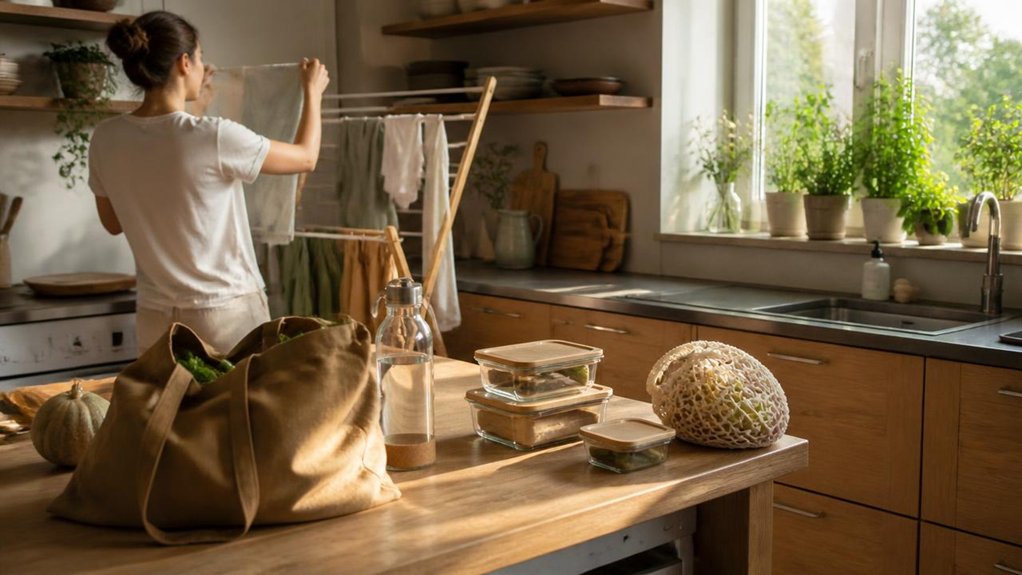
Reusable bags, cloth napkins and washable towels can cut repeat spending, but savings depend on what you replace and how often you use them. Reusable shopping bags need no special installation; keep them by the door or in the car and follow the manufacturer’s washing instructions.
Reusable bags and washable linens can reduce repeat spending when they replace disposables you use regularly.
Typical cost: varies by item and material
Best for: regular users of disposables
Payback: depends on replacement frequency
DIY: washing and minor repairs
Installation: none required
Good
- Reusable bags can replace disposable shopping bags on regular trips.
- Cloth napkins can replace paper napkins at meals.
- Prompt rinsing can help prevent stains on washable items.
- Small repairs can extend the useful life of cloth items.
Not so good
- Buying items you rarely use may not reduce household spending.
- Washing reusable items uses water and energy.
- Thin fabric can wear or tear with frequent washing.
- Reusable bags still need cleaning, especially after carrying food.
Walk, Bike, or Take Transit More Often
Walking, cycling and public transport can cut travel costs if they replace car journeys.
The saving depends on the trip: compare the fare or bike costs with the fuel, parking and other costs you’d avoid.
No typical cost, yearly saving or payback can be given without your route, travel frequency and local fares.
Good
- Walking avoids fuel and parking costs on short trips.
- Cycling can replace car journeys when routes feel safe.
- Bus and train fares are easy to compare with driving costs.
- Combining errands can reduce the number of separate trips.
Not so good
- Public transport may cost more than driving for some journeys.
- Infrequent services can make travel less convenient.
- Cycling may not suit routes without safe facilities.
- Buying a bike adds a cost that takes time to recover.
Best for: People with nearby errands and useful local services.
Skip it if: Routes or services don’t suit your regular journeys.
Repair, Reuse, and Buy Less for Longer
Repair a broken item where practical, or ask a repair service to assess it before replacing it.
For a replacement, check the expected lifespan and repair options, then choose a durable model if its higher cost is justified by longer use. Buying less can save money, but the value depends on the item’s price, lifespan and repair costs.
Repair Before Replacing
Repairing a loose button, torn seam or wobbly chair can cost less than replacing the item. Check the damage first: a missing button or loose screw may be a simple fix, while a cracked appliance casing or damaged electrical cable needs professional attention.
A competent DIYer can sew on a button, mend a seam or tighten a chair joint.
For appliances and electronics, check the manual and ask the manufacturer or a repair shop about replacement parts and repair costs. Don’t open mains-powered equipment unless you’re qualified; electrical work must comply with the UK wiring regulations, BS 7671.
Compare the repair cost with the price of a suitable replacement, including any call-out fee and parts.
Repair may not be worthwhile if parts are unavailable, the item is unsafe, or the repair costs nearly as much as replacing it.
Choose Lasting Goods
Choose durable goods that you can repair and keep using. Compare construction, warranties and the availability of replacement parts, not just the price. A sturdy pan may cost more upfront but avoid repeated purchases of cheaper ones. For furniture, look for solid construction and finishes you can maintain, repair or renew.
Before buying, consider borrowing, renting or buying second-hand. Care for what you own, repair damage promptly and replace items when they no longer serve you—not simply because a newer style appears. Buying less can help your budget and reduce waste.
Frequently Asked Questions
How Can I Find Local Rebates for Sustainable Home Improvements?
Check your council’s website and GOV.UK for grants available in your area, then ask your energy supplier about current schemes. Eligibility can depend on your location, income, property type and the improvement you plan to make, so check the rules before accepting an installer’s quote. Confirm that any grant is still open and whether the work must be done by an MCS-certified installer.
Are Community Gardens a Cost-Effective Way to Grow Food?
Community gardens can make vegetables affordable, but the savings depend on the plot fee, travel, tools and how much produce you actually use. Shared costs for seeds and equipment help; they do not guarantee a lower food bill.
Typical cost: Varies by garden
Main savings: Shared tools and seeds
Best for: Regular growers nearby
Payback factor: Plot fees and harvest
Check first: Water access and rules
What Should I Consider Before Installing Solar Panels?
Roof suitability: sound structure, suitable orientation
Shading check: trees, chimneys, nearby buildings
Roof timing: replace first if needed soon
Quote check: compare itemised installer quotes
Incentives: check current local and national schemes
How Can I Make Sustainable Choices While Traveling?
Travel Lightly: Pack reusable essentials such as a water bottle and shopping bag; compare train, bus and direct-flight options for your route.
Choose Locally: Stay in eco-conscious accommodation, eat seasonal food and support neighbourhood businesses. Follow local customs and keep your distance from wildlife.
Which Eco-Friendly Habits Are Easiest for Renters to Adopt?
Refillable cleaning products and reusable shopping bags are simple, low-cost choices for renters. Switching to LED bulbs can cut lighting use, but check the fitting and ask your landlord before changing fixed fittings. Unplug chargers and appliances when they are not in use; this saves little if they draw no standby power. A competent DIYer can replace a plug-in bulb, but fixed electrical work must be done by an electrician registered with a competent person scheme.