
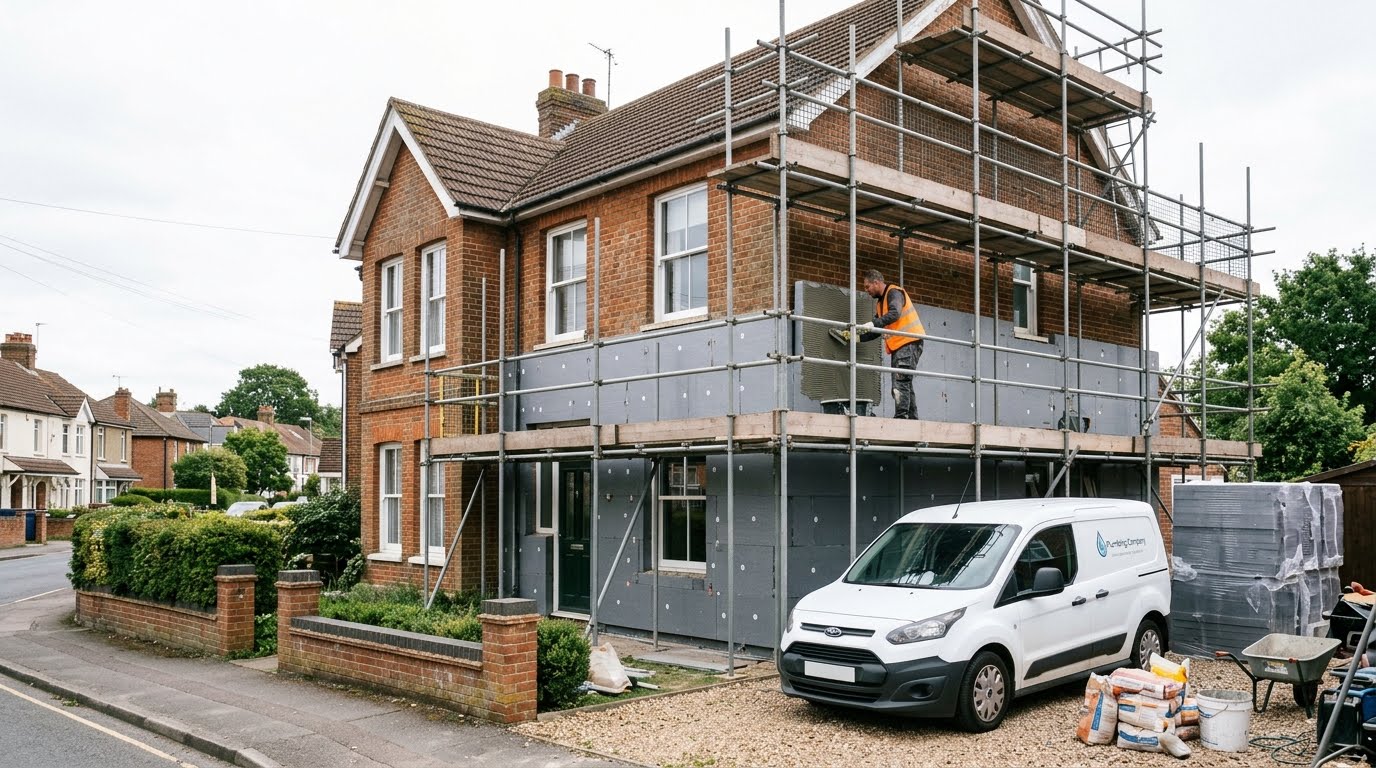
Cavity wall insulation can help your home retain heat and may lower your energy bills, but the results depend on your walls and how you heat your home. If the cavity isn’t suitable or moisture has another cause, problems can follow. Before you install insulation—or blame it for damp—you’ll need to know what to check and when to call a specialist.
How Cavity Wall Insulation Works
Cavity wall insulation works by filling the gap between a home’s inner and outer walls with material that slows heat loss. When you add this barrier, less warmth escapes through the walls, so your heating system can work more efficiently.
Common insulation materials include mineral wool beads, foam, and loose fibres; each traps air to reduce heat transfer. During the installation process, a trained installer drills small holes in the outer wall, injects the chosen material into the cavity, then seals the holes. You’ll usually see little disruption indoors.
The insulation forms a continuous layer, helping you keep rooms warmer in winter and more comfortable year-round.
Which Walls Suit Cavity Wall Insulation?
Before installing insulation, check that your walls have a suitable cavity and are in sound condition.
A qualified installer can assess your wall construction, cavity width and suitability for filling. You’ll generally need two masonry leaves with a clear, continuous gap between them. Solid walls, timber frames and walls with cavities that are too narrow or obstructed aren’t suitable for standard cavity wall insulation.
Your exposure level matters, too. If your home faces driving rain, the cavity may need to be wider, or insulation may not be appropriate.
If your home faces driving rain, a wider cavity may be needed, or insulation may not be suitable.
Check for cracks, damp, damaged pointing and debris first. Ask an installer to inspect the walls and explain any concerns.
The Benefits of Cavity Wall Insulation
Once you’ve confirmed your walls are suitable, insulation can help reduce heat loss through them, keeping your home warmer and potentially lowering energy bills. By slowing heat escaping through the walls, cavity insulation can help your heating system maintain a comfortable temperature with less effort.
You may notice improved comfort, especially in rooms that previously felt chilly or took longer to warm up. Lower energy bills can follow if you use less heating, though your savings depend on your home, energy prices and heating habits. You could also find that temperatures feel more consistent throughout your home, helping you enjoy a warmer living space year-round.
When Cavity Wall Insulation Can Cause Damp
Although cavity wall insulation can improve comfort, it may contribute to damp if moisture gets trapped or the cavity wasn’t suitable for filling. Wind driven rain can pass through porous or damaged outer brickwork, then soak insulation and reach your inner walls.
You’re more at risk if your home has exposed walls, narrow cavities, debris inside the gap, or bridging between the outer and inner leaves. Insulation defects, such as uneven coverage or gaps, can also create cold spots where condensation forms.
Poor installation may worsen these problems, especially around openings and rooflines. Damp can damage plaster, encourage mould, and affect indoor air quality.
How to Check Existing Insulation
To check existing cavity wall insulation, start by looking for installation records, guarantees or certificates, which may identify the insulation type and installer. Check your property files and ask previous owners if documents are missing.
Next, inspect accessible areas, such as the loft, for clues about the cavity or past work. Don’t drill holes or remove materials yourself; hidden services and unsuitable methods can create risks.
A qualified specialist can carry out an insulation survey, using a borescope to inspect the cavity through a small opening. Thermal imaging may help identify uneven coverage, though it can’t confirm insulation type or condition on its own. Ask for clear findings and photographs.
What to Do About Insulation-Related Damp
If you notice damp after cavity wall insulation, first identify its source rather than assuming the insulation caused it.
Check for leaks, condensation, or water penetrating the walls. Once you know the cause, you can choose the right remedy.
Identify the Damp Source
When damp appears after cavity wall insulation is installed, trace the source before assuming the insulation is to blame. Check when and where moisture appears, then compare affected areas with wind direction, rainfall, and plumbing routes.
Look for water stains, peeling paint, mould, or salt deposits, and note whether they cluster around windows, roofs, pipes, or external walls. To trace water ingress, inspect brickwork, seals, gutters, downpipes, and roof edges for cracks, gaps, or overflow.
Inspect drainage faults around the property, including blocked gullies and poor ground falls. Check indoor humidity and ventilation too; condensation can mimic leaks and may affect several rooms.
Choose the Right Remedy
Choose a remedy that matches the confirmed cause of the damp. If a leak or faulty gutter is responsible, repair it first and let the wall dry.
When insulation bridges the cavity or traps moisture, ask a qualified specialist to assess whether partial or full removal is needed. Don’t assume extraction alone will solve the problem; you may also need to fix damaged masonry, improve ventilation, or replace affected plaster.
Choose Suitable Repairs based on a professional inspection, not guesswork. Compare Remediation Options by considering effectiveness, disruption, cost, and guarantees.
Before work begins, confirm the contractor will address the underlying cause and check that the cavity is suitable for re-insulation.
Frequently Asked Questions
How Much Does Cavity Wall Insulation Typically Cost?
You’ll typically pay £500–£1,500 for cavity wall insulation—a price range that isn’t set in stone. Typical installation costs depend on your home’s size; price comparison factors include access, materials, location, and installer fees.
Are There Grants Available for Cavity Wall Insulation?
Yes, you may qualify for cavity wall insulation grants through national programmes or regional funding schemes. Eligibility by household depends on your income, benefits, home efficiency, and location, so check current criteria with your local authority.
How Long Does Cavity Wall Insulation Installation Take?
Installation Time is usually a half-day to one day—a quick pit stop for your home. You’ll move through Process Stages: inspection, drilling, insulation injection, and hole sealing; larger homes or complications may take longer.
Does Cavity Wall Insulation Require Ongoing Maintenance?
You generally don’t need ongoing maintenance after cavity wall insulation, but you should watch for damp patches or changing comfort. Arrange Routine inspections if problems appear, and check your Installation warranty for coverage and guidance.
Can Cavity Wall Insulation Be Removed?
Yes, you can remove cavity wall insulation, but it’s not a walk in the park. If you spot signs of failure, hire specialists to assess your walls and manage the removal process safely.