
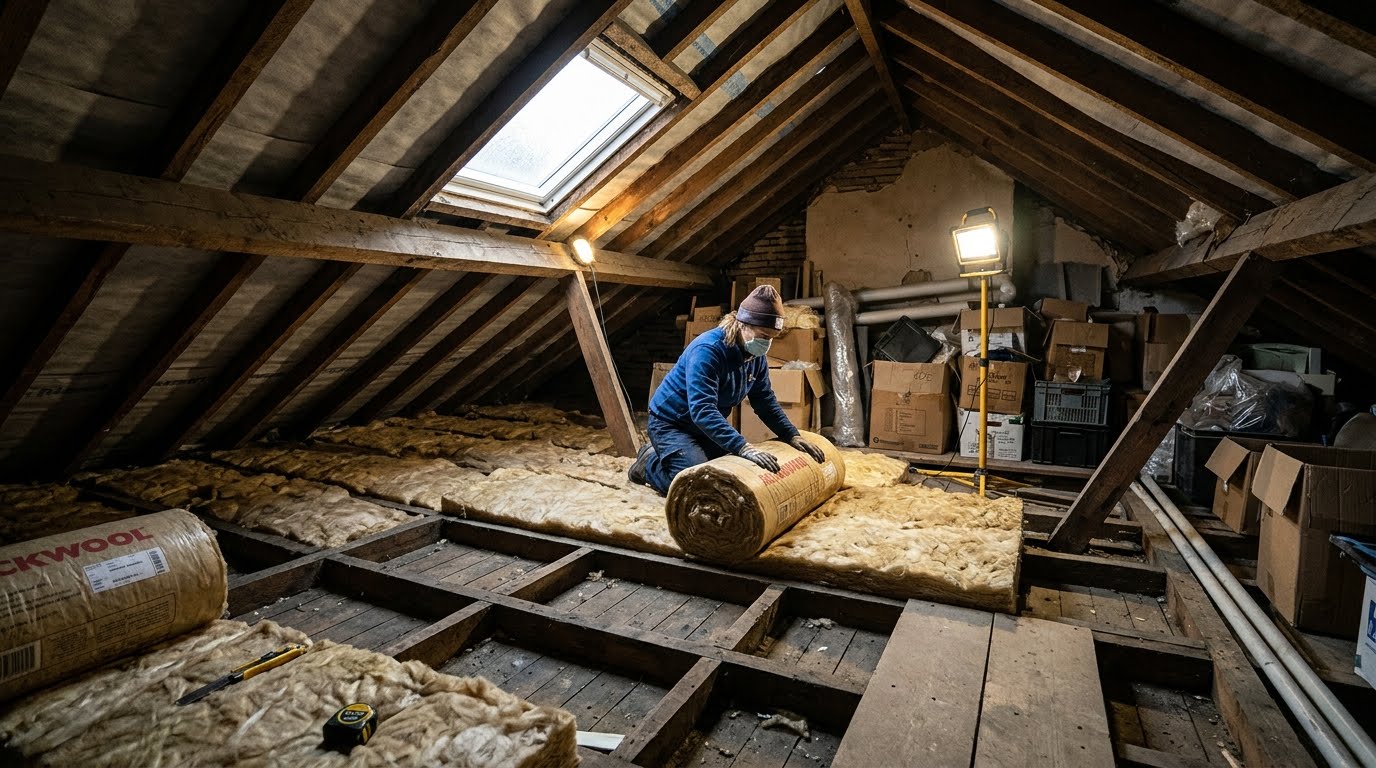
If your loft insulation is thin, topping it up could help keep your home warmer, but the right depth and cost depend on what’s already there, your loft’s size and the material you choose. You might be able to fit it yourself, though access, wiring and ventilation can make the job less straightforward. Before you decide, it’s worth knowing what to measure, what to budget for and when to call a professional.
How Thick Should Loft Insulation Be?
How thick should loft insulation be?
For most UK homes, aim for a Recommended depth of 270mm if you’re using mineral wool. If your loft already has insulation, measure it before adding more; you may only need to top it up to reach this level.
Insulation standards and guidance can change, so check current advice for your area and property. Don’t cover ventilation gaps at the eaves, and keep insulation clear of heat-producing equipment where required.
Check current local guidance, keep eaves ventilation clear, and maintain safe distances from heat-producing equipment.
If you’re unsure about safe clearances or your home’s construction, ask a qualified professional to assess the loft before you begin work.
Which Loft Insulation Material Should You Choose?
Choose a loft insulation material that suits your loft’s layout, your budget and how you plan to install it.
Mineral wool comes in rolls or slabs, making it a practical choice for covering accessible, regularly shaped spaces. You can cut it to fit around joists, but wear gloves, eye protection and a mask while handling it.
For irregular gaps, loose-fill insulation can reach awkward areas, though you’ll need to keep it clear of vents and electrical equipment.
If you prefer natural or recycled options, consider Sheep wool or recycled denim. Check each product’s suitability, installation guidance and moisture requirements before choosing.
How Much Does Loft Insulation Cost?
Once you’ve chosen a suitable material, estimate the total cost by considering the loft’s size, the insulation type and whether you’ll install it yourself or hire a professional. Get several quotes, as labour rates and access requirements can vary.
Insulation cost comparisons should include materials, fitting, removal of old insulation and any necessary repairs, not just the headline price. Check whether grants or energy-efficiency schemes could reduce your bill.
Your home’s heat loss, energy prices and insulation level affect long term savings estimates, so treat online figures as guides rather than guarantees. Ask installers for an itemised quote and expected payback period before committing to work.
Can You Install Loft Insulation Yourself?
Yes, you can install loft insulation yourself if the loft is accessible, dry and safe to work in.
For many homeowners, DIY suitability depends on the loft’s layout, the insulation type and your confidence with basic home improvement tasks. You can often lay rolls between and over joists, following the product instructions and keeping access points clear.
Before starting, check current building regulations and guidance for your area, including requirements for ventilation and safe electrical clearances. Choose insulation with the recommended thickness and use suitable protective clothing.
If you’re unsure whether the work meets standards, ask a qualified installer or building professional for advice before you begin.
What Makes Loft Insulation Difficult?
Loft insulation can be difficult when the space is cramped, uneven or poorly lit, making it hard to move safely and fit materials neatly. You may face awkward access through a narrow hatch or have to work around roof supports and stored belongings.
Uneven joists make it tricky to keep insulation level, while low headroom can leave you crouching for long periods. Dust, fibres and heat can also make the space uncomfortable.
Watch for hidden wiring, pipes and ventilation gaps beneath existing materials; covering or disturbing them can create problems. Careful measuring and steady movement matter, especially when you’re carrying bulky rolls overhead.
When Should You Hire a Loft Insulation Professional?
When should you hire a loft insulation professional? Consider your options when your loft has an awkward layout, limited access, or existing insulation that needs replacing.
If you’re unsure about the right material or depth, an expert can assess your home and recommend a suitable solution. Professional help also makes sense when your roof has unusual features or you want the work completed efficiently.
When to Hire depends on the job’s complexity and your confidence in handling it. Before choosing someone, check Installer Qualifications, experience, references, and insurance.
Hire a professional when the job feels beyond your confidence, and check their qualifications, experience, references, and insurance.
Ask for a written quote that explains the materials, labour, and any preparation included. Compare options before you commit.
How Can You Fit Loft Insulation Safely?
If you’re tackling the job yourself, prepare the loft before you start: wear gloves, a dust mask, eye protection and long sleeves, and work only from secure flooring or crawling boards.
Keep your weight off the ceiling below.
For Electrical safety, switch off circuits before working near cables, and don’t bury wiring, recessed lights or ventilation equipment.
Keep insulation clear of hot fittings unless they’re rated for contact.
If you find damaged wiring, stop and call an electrician.
Maintain dust protection by handling insulation gently, cutting it with a sharp knife, and avoiding unnecessary disturbance.
Don’t block eaves: leave airflow clear to help prevent damp and condensation.
Follow the product instructions throughout.
How Can Grants Lower Loft Insulation Costs?
Grants can reduce the upfront cost of loft insulation, and you may qualify for help based on your income, benefits, location or home’s energy efficiency. Check current energy grants through your local council, government schemes or an approved energy supplier.
Each programme sets its own eligibility criteria, so confirm the rules before arranging any work. You might need to receive certain benefits, own or rent your home, or meet a minimum energy-efficiency rating.
Some grants cover the full cost, while others contribute a fixed amount. Compare available support, gather requested documents and use an approved installer if required. Don’t start work until you’ve confirmed funding.
Frequently Asked Questions
How Long Does Loft Insulation Typically Last?
Loft insulation typically lasts 40 years or more, but Insulation lifespan factors include moisture, pests, and settling. Check regularly; replacement timing signs include dampness, mold, damage, or reduced performance. Address problems promptly to protect your home’s efficiency.
Can Loft Insulation Help Reduce Noise From Outside?
Yes, loft insulation can reduce some outside noise, especially airborne sounds like traffic or rain. For better Outside noise reduction, consider loft soundproofing options such as acoustic insulation, sealing gaps, and adding dense boards.
Does Loft Insulation Prevent Condensation and Damp?
Loft insulation can help, but it won’t guarantee condensation prevention or damp reduction. For example, you’ll still get window condensation if moist air lingers; ventilate rooms and fix leaks to protect your home.
How Can You Tell if Existing Loft Insulation Needs Replacing?
Check your insulation condition for dampness, mould, pests, compressed or damaged material, and uneven coverage. These replacement indicators suggest reduced performance. If you’re unsure, ask an insulation professional to inspect it and recommend next steps.
Should Loft Insulation Cover Water Tanks and Pipes?
Yes, but don’t bury water tanks beneath loft insulation: protect water tanks with jackets, and insulate loft pipes separately. Keep tanks above insulation so warmth from your home helps prevent freezing, and maintain access for checks.