
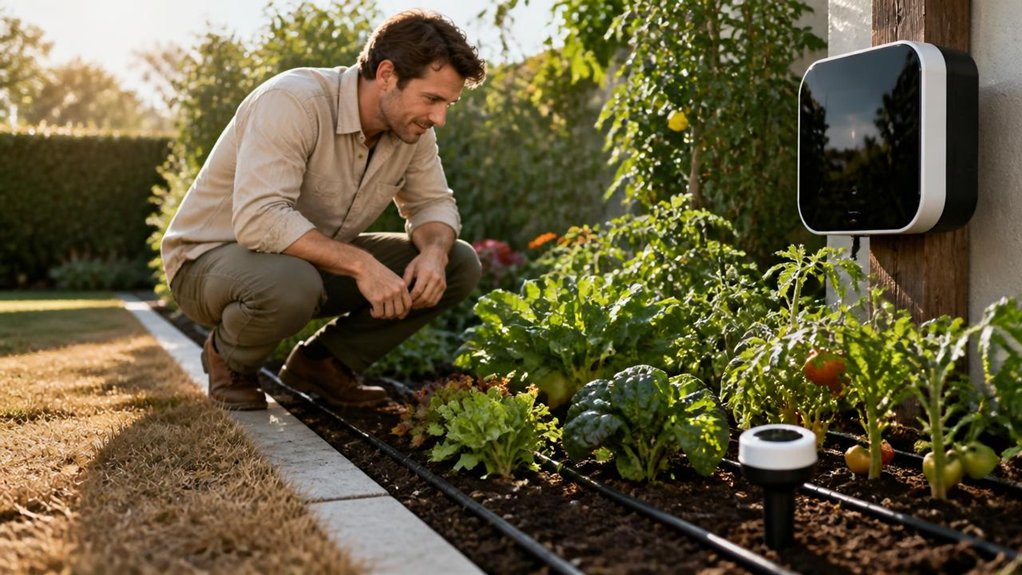
Smart irrigation can reduce wasted watering, but savings depend on your water supply, garden and system cost. A soil-moisture sensor can pause watering when the ground is wet; a rain sensor or local weather data can also prevent scheduled watering after rainfall. Check that the controller works with your existing valves and that its sensors suit your soil.
DIYers can fit many battery-powered controllers and sensors by following the manufacturer’s instructions. Electrical work on mains-powered equipment may need a qualified electrician; check the requirements in Part P of the Building Regulations in England and Wales. A smart irrigation system does not normally need a Gas Safe engineer or an MCS-certified installer.
Typical cost: Varies by system and garden
Water saving: Depends on current use
Best for: Gardens with scheduled watering
Check first: Water meter and system compatibility
Payback: Depends on bill and installation cost
Good
- A soil-moisture sensor can stop watering when soil is already wet.
- A rain sensor can prevent a scheduled cycle after rainfall.
- A controller can adjust watering using local weather data.
- Battery-powered devices may avoid mains electrical work.
Not so good
- Savings may be small if you already water by hand.
- Sensors need correct placement to reflect the wider garden.
- Some controllers may not work with existing valves.
- A water meter affects whether lower use cuts your bill.
A smart irrigation system may suit households that use a water meter and regularly water a large garden, because reducing metered use can lower bills. It is less likely to pay back for small gardens or households that already water only when plants need it. Compare the equipment and installation cost with your current water use before buying; without those figures, a reliable payback estimate is not possible.
Best for: Metered homes with regular garden watering
Skip it if: You water by hand only
How Does Smart Irrigation Know When to Water?
Smart irrigation uses a controller, local weather data and, on some systems, soil-moisture sensors to decide when to water. Weather-based controllers estimate how quickly your garden loses moisture from factors such as temperature, sunlight, humidity and rainfall; soil sensors measure moisture at their location.
The controller can delay watering after rain or when rain is forecast, and adjust schedules as conditions change. Plant type, soil and shade also affect how quickly an area dries, so one sensor or schedule may not suit every part of a garden. Check the settings and sensor placement: a sensor in shade may not reflect the needs of plants in a sunny bed.
How Soil Sensors Detect Dry Soil
Soil moisture sensors help a watering system respond to the water around plant roots. A probe measures moisture using electrical resistance or capacitance; the reading changes as the soil dries or becomes wetter.
Soil moisture sensors track changing water levels near plant roots, helping irrigation systems respond when soil dries out.
Set a moisture threshold in the irrigation controller. When the reading falls below it, the controller can signal that watering is needed.
Check the sensor’s instructions for calibration and placement: soil type, probe depth and distance from the plant affect readings.
A competent DIYer can place a low-voltage probe and set its threshold, following the manufacturer’s instructions. Mains wiring should be done by an electrician registered with a competent person scheme. There’s no need for a Gas Safe engineer or MCS-certified installer for a standalone soil sensor.
Good
- A probe near the roots measures moisture where plants take up water.
- Resistance and capacitance sensors detect changes in soil moisture.
- A controller can use a threshold to trigger a watering signal.
Not so good
- Compacted soil can affect readings.
- Salts in the soil can reduce accuracy.
- A shifted probe may no longer measure the intended root zone.
- Incorrect calibration can give misleading readings.
Verdict
A soil moisture sensor suits gardeners who can use its readings to avoid unnecessary watering and the cost of wasted water.
It isn’t worth buying if you water by hand and won’t change your routine in response to the readings.
Sensor accuracy depends on correct placement, calibration and soil conditions, so check readings periodically rather than relying on one threshold alone.
Best for: Automated irrigation with adjustable controls
Skip it if: You won’t act on readings
How Weather Data Adjusts Watering Schedules
A smart irrigation controller can skip a watering session or shorten it when its local weather data detects rain or cooler conditions.
Its response depends on the forecast, the settings you choose and whether the controller has reliable local data.
Rainfall prediction can reduce watering before expected rain, but forecasts aren’t guarantees.
Check whether the controller uses a local rain sensor as well as forecast data; a sensor can stop watering when rain actually reaches your garden.
In hot, dry weather, the controller may keep the schedule or increase watering, depending on your settings.
Review changes in the app and check the soil before increasing watering, particularly in heavy clay or shaded areas where it may stay damp.
Good
- Forecast data can delay watering before expected rain.
- A rain sensor can stop watering after rainfall.
- App settings let you review schedule changes.
- Hot, dry forecasts can maintain or increase watering.
Not so good
- Forecasts can miss local showers.
- A controller may need a stable internet connection for forecast updates.
- Incorrect settings can leave plants short of water.
- Weather adjustments don’t measure soil moisture unless a sensor is fitted.
Verdict
Weather-based scheduling suits gardeners who already use automatic irrigation and want to avoid watering before forecast rain.
Its financial value depends on your water source, garden size and current watering habits, so it may not justify buying a new controller for a small garden.
You can usually set up app schedules yourself; wiring a mains-powered controller may require a qualified electrician.
Best for: Existing irrigation systems with app control
Skip it if: You water by hand or have a small garden
Lower Your Water Bill With Smart Irrigation
Weather-based schedules can reduce unnecessary watering, but smart irrigation only lowers bills if it uses less water than your current routine. Compare water bills or meter readings before and after, allowing for changes in rainfall and garden use.
Results depend on your water company’s charging method, local rates, garden size and watering habits.
Set each zone to suit its plants and soil, then check for leaks and oversaturated areas. A smart controller won’t save money if the system waters for too long or runs when plants don’t need it.
Check your water company’s current charges before estimating savings.
Choose and Set Up Your Smart Irrigation System
Typical cost: Check current UK prices
Best for: Garden beds with separate watering needs
Controls: Controller, valves and sensors
Check first: Wi-Fi and weather-service compatibility
Payback: Usually hard to justify on bills
Good
- A soil-moisture sensor can pause watering when the soil is already damp.
- Separate zones let you set different schedules for beds and lawns.
- Weather-based scheduling can reduce watering after rain.
- A compatible controller can manage existing irrigation valves.
Not so good
- A smart controller doesn’t save water if you already water efficiently.
- Wi-Fi loss can prevent app control or weather updates.
- Sensors need correct placement to measure the soil they’re meant to monitor.
- New valves or wiring can add installation cost.
A smart irrigation system suits gardeners who want to control separate watering zones and avoid watering damp soil; the financial case depends on water charges and how much water the system actually saves.
Homeowners on a metered supply may save money, but those on unmetered bills shouldn’t expect a direct bill reduction.
A competent DIYer can map zones, fit compatible low-voltage sensors and set schedules, following the manufacturer’s instructions.
Electrical work on mains-powered equipment may need a qualified electrician registered with a competent person scheme; check the relevant UK electrical rules and product instructions.
Best for: Metered homes with several irrigation zones
Skip it if: You water a small garden by hand
Frequently Asked Questions
Can Smart Irrigation Systems Work During a Power Outage?
Battery backup may keep a smart irrigation controller running during a power cut, but it will not necessarily power the pump or valves. Check the manufacturer’s data sheet for which parts the backup supports and how long it lasts.
You can usually operate the system manually if its controller and water supply still work. Schedules and app controls may stop if the controller, Wi-Fi router or internet connection loses power.
Good
- A controller battery may preserve schedules during a power cut.
- Manual controls may work if the controller still has power.
- A gravity-fed system may water without an electric pump.
Not so good
- A controller battery may not power electric valves or a pump.
- Wi-Fi controls stop if the router loses power.
- Battery runtime depends on the controller and backup capacity.
- Mains-powered pumps stop unless a suitable backup powers them.
Verdict: This suits homeowners who need scheduled watering during short power cuts and whose controller supports battery backup. A backup is not worth buying if the pump or valves also need power and the battery cannot run them. Check the system’s data sheet before paying for extra equipment.
Best for: Controllers with documented battery backup
Skip it if: The pump has no backup power
Are Smart Irrigation Systems Compatible With Existing Sprinkler Systems?
Smart controllers can often replace an existing sprinkler timer without replacing the valves or sprinkler heads. Check that the controller supports your system’s valve type and wiring; compatibility is not guaranteed. A DIYer can check the model numbers and wiring with the power switched off, but should use a qualified electrician if the controller needs new mains wiring.
Can I Control My Smart Irrigation System While Traveling?
A compatible smart irrigation controller can let you adjust watering and check system status from your phone while you’re away. It needs an internet connection at home and on your phone; remote access will not work if either connection is down.
Set a watering schedule before you travel and check whether the controller has a holiday or rain-delay setting. Follow the manufacturer’s instructions, and check local water-use restrictions before changing your schedule.
How Secure Is the Data Collected by Smart Irrigation Systems?
Protect irrigation data with a unique password, multifactor authentication and restricted account sharing. Check whether the controller encrypts data in transit and at rest, and review app permissions and privacy settings regularly. Data about watering schedules and device locations can reveal details about your home; check the manufacturer’s privacy policy before connecting the system to other services.
Do Smart Irrigation Systems Require Regular Maintenance?
Check the irrigation system at the start of each watering season and after heavy rain or frost. Look for leaks, blocked emitters and damaged pipes; clean filters and remove debris from sensors.
Test soil-moisture and rain sensors against actual conditions, and update the controller’s watering schedule as the weather and plants change. A competent DIYer can clean emitters and adjust schedules; use a qualified electrician for mains-powered wiring.