
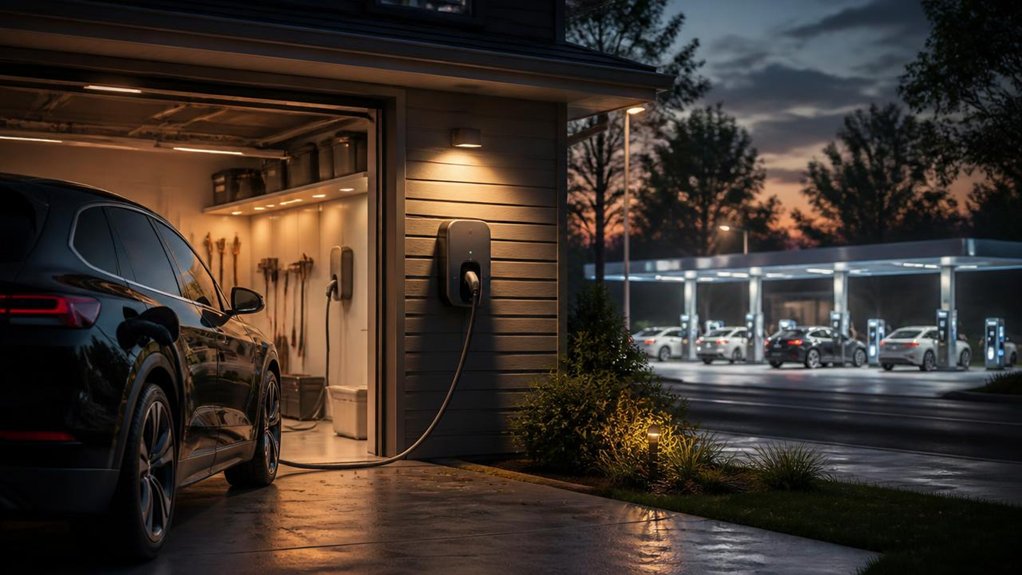
Home charging: usually cheaper off-peak
Public charging: fees may apply
Main variables: tariff, charger and location
Extra costs: charging losses and parking
Best for: drivers who can charge off-peak
Which Costs Less: Home or Public EV Charging?
Home charging usually costs less per kWh than public charging, but the difference depends on your electricity tariff and local charging prices. Compare the prices shown by your supplier and public charging network; check whether public prices vary by time or include connection, parking or overstay fees.
To compare costs, multiply the electricity used by your EV by the price per kWh. For example, if your car uses 3,000 kWh a year, the home cost is 3,000 × your home unit rate; the public cost is 3,000 × the public rate. These figures exclude charging losses and any standing charge you’d pay anyway.
Compare annual charging costs by multiplying the electricity your EV uses by each option’s price per kWh.
A home charger’s installation cost and payback depend on the quote, annual charging, tariff and how much public charging it replaces. Without those figures, a typical cost, yearly saving or payback period can’t be stated reliably.
Check current prices and any grant eligibility before making a decision.
A competent DIYer can compare tariffs and calculate charging costs. Don’t install or alter a home EV charger yourself: use an electrician registered with a competent person scheme. The installation must comply with Part P of the Building Regulations in England and Wales; rules differ elsewhere in the UK.
Put your own figures into our payback calculator.
How Much Does Home EV Charging Cost?
Home EV charging costs depend on the electricity your car uses, your unit rate and charging losses. A simple estimate is:
- Energy taken from the meter: battery energy needed ÷ charging efficiency.
- Cost: energy taken from the meter × your electricity price per kWh.
For example, if a charge adds 30 kWh to the battery and charging is 90% efficient, the meter supplies about 33 kWh. Multiply that by your tariff’s unit rate; check your current bill, as rates change.
A home charger’s installation cost depends on the charger, cable route, consumer unit and any electrical work needed. Get an itemised quote that separates the charger from installation.
A qualified electrician registered with a competent person scheme should install a fixed EV charge point and confirm the work meets Part P of the Building Regulations. A competent DIYer can compare tariffs, estimate charging costs and schedule charging, but shouldn’t install or wire the charger.
Typical cost: Check current installer quotes
Running cost: Energy used × unit rate
Best for: Regular home charging
Lower costs: Off-peak electricity tariffs
Payback: Depends on charging and tariff
Good
- A dedicated home charger can charge faster than a standard domestic socket.
- An off-peak tariff can lower costs if its charging hours suit your routine.
- A smart charger can schedule charging for cheaper tariff periods.
- Charging losses mean the meter supplies more electricity than reaches the battery.
Not so good
- A home charger may not be worthwhile if you rarely charge at home.
- Installation costs can rise if the cable route or consumer unit needs work.
- An off-peak tariff may cost more if daytime rates are higher and you use them often.
- A larger battery needs more electricity for a full charge.
Put your own figures into our payback calculator.
What Do Public EV Chargers Cost?
Public EV charging usually costs more per kWh than charging at home, but the price depends on the charger, network and location.
You may pay by the kWh, by the minute or a flat session rate; some networks also charge a session fee.
Check the station’s displayed rate and the network’s app or payment screen before charging, as prices can change.
Compare the total cost for the energy you need, not just the headline rate.
What Changes Your EV Charging Costs?
Charging at home costs less when your electricity tariff has a cheaper off-peak rate and your car can charge then. Check your tariff and charger settings; a smart tariff isn’t worth switching to unless its lower rates outweigh any higher charges elsewhere.
Your bill depends on the electricity drawn from the meter, measured in kWh, not just the energy stored in the battery. Charging losses mean the meter records more electricity than the battery receives.
Battery size, vehicle efficiency, journey length and weather all affect how much electricity you need.
Cold weather, high speeds and heating or air conditioning can increase your car’s energy use. Charger power, measured in kW, affects how quickly it charges, not the amount of energy needed for a journey.
How Do Charging Costs Compare in Practice?
Home charging is usually cheaper per mile than public charging, but your tariff and the charger’s fees decide the difference.
Compare costs using your car’s energy use in kWh per mile and the price you actually pay per kWh.
For example, at 0.3 kWh per mile, electricity at 15p per kWh costs 4.5p per mile. At 45p per kWh, it costs 13.5p per mile.
These are illustrative rates, not fixed UK prices; check your current tariff and public charger prices. Add any session or parking fees to the public charging cost.
When Should You Charge at Home or in Public?
Charge at home when your electricity tariff makes it cheaper; use public chargers when you need faster charging or can’t charge at home.
Compare the price per kWh, charging speed and any connection fees. Check current tariffs before calculating costs, as prices change.
Home Charging Savings
Home charging often costs less than public charging, but the difference depends on your electricity tariff, charger and public charging fees.
Compare the full cost per kWh, including standing charges only if they change because of your charging choice, and any public session fees.
A smart charger can schedule charging for cheaper off-peak hours, if your tariff offers them. Check the tariff’s unit rates and any conditions before switching; rates change, so confirm current details with your supplier.
Solar panels may reduce the cost of charging when they generate surplus electricity, but the saving depends on when you charge, your export rate and any battery or charger controls.
Good
- Off-peak scheduling can lower the unit rate for overnight charging.
- Comparing costs per kWh includes public charging session fees.
- Solar can supply some charging when panels produce surplus electricity.
Not so good
- A cheaper tariff may have higher rates at other times.
- Solar output may not match the hours you need to charge.
- A home charger has an upfront cost that may not pay back.
Verdict
Home charging suits drivers who can charge regularly at home and use a cheaper tariff, because each kWh may cost less than at a public charger.
It’s less useful if you can’t park near your home, rarely charge there or would need an expensive installation for limited use.
Best for: drivers with off-street parking and suitable tariffs
Skip it if: installation costs outweigh likely charging savings
A competent DIYer can compare tariffs, calculate charging costs and set schedules using the charger app.
Electrical work to install or alter a home charge point should be done by a qualified electrician registered with a competent person scheme, in line with applicable Building Regulations.
Solar or battery integration should be checked by an MCS-certified installer; don’t assume it will reduce bills without comparing the equipment cost and expected savings.
Put your own figures into our payback calculator.
Public Charging Convenience
Public charging suits drivers who can’t charge at home, need extra range or are travelling beyond their usual routes.
Check live charger availability before setting off: busy stations and out-of-service plugs can add delays. Look for restrooms, food, seating and reliable Wi-Fi if you expect to wait.
Home charging is usually more convenient for regular overnight charging. Use public chargers when you need access or extra range; check the price per kWh and any parking or connection fees before you plug in.
Choosing The Right Time
Home charging can cost less when your electricity tariff has an off-peak rate, but compare the rate per kWh with public charging prices and fees.
Set the vehicle or charger to start during the cheaper period; check that your tariff and charger support scheduled charging.
Public charging may suit journeys, quick top-ups or access to a cheaper nearby station.
Check the charging app for the current price and any session or parking fees, as rapid charging can cost more than home electricity.
Cold weather can reduce your car’s range, so allow for extra battery use and keep enough charge for unexpected trips.
Put your own figures into our payback calculator.
Frequently Asked Questions
Can I Install an EV Charger in a Rented Home?
A rented home does not rule out an EV charger, but get your landlord’s written permission before arranging work. Check your tenancy agreement and ask who will pay for installation and removal if you move.
A qualified electrician should assess the supply and install the charger. For a new circuit, Part P of the Building Regulations applies; use an electrician registered with a competent person scheme, or arrange the required building-control approval. A competent DIYer can compare quotes and check the agreement, but should not install or wire the charger.
Do I Need a Licensed Electrician to Install a Home Charger?
A qualified electrician should install a home EV charger, particularly a hardwired unit. In the UK, choose an electrician registered with a competent person scheme, such as NICEIC or NAPIT, to check the consumer unit, cable route and available electrical capacity, and to handle any required notification or building regulations compliance.
A competent DIYer can compare charger specifications, check whether the charger suits the car and gather details about the property. Do not connect the charger to the mains yourself; installation involves electrical work that must meet the current edition of BS 7671, the IET Wiring Regulations. Check local requirements before work starts.
Can I Use a Standard Household Outlet to Charge My EV?
A standard household socket can charge an EV using its portable charging cable, but it is slow. The charging rate depends on the car, cable and socket; check the vehicle manual for the permitted charging current and expected range added.
Use a sound, dedicated socket on a circuit suitable for the load. Do not use an extension lead or multi-plug adaptor. Stop charging if the plug or socket becomes unusually hot, and ask an electrician to check the circuit if you are unsure.
A competent DIYer can check the manual and plug in the manufacturer-approved cable. Do not install a new socket or alter the circuit yourself: use an electrician registered with a competent person scheme, who must follow BS 7671 wiring regulations. A standard socket may be useful for occasional charging, but regular charging is usually better suited to a dedicated EV charge point.
Are Home EV Chargers Compatible With EVery Electric Vehicle?
A home EV charger may not fit every electric vehicle. Check that the charger’s connector matches your car’s charging port and that both support the same charging standard. Compatibility can vary by vehicle and region; an adapter may work, but check the car and charger manufacturers’ guidance before buying.
How Can I Schedule Charging to Use Renewable Energy?
Use the charger app or vehicle settings to set charging times. Check whether your electricity tariff offers cheaper off-peak periods, then schedule charging to match them; renewable supply may vary by time and location, so check your supplier’s alerts rather than assuming a set time is greener. This usually costs nothing if your charger already supports scheduling.